SC criticises Calcutta HC order on adolescent girls, says judges not expected to preach
New Delhi, Dec 8: Judges are not expected to express their personal views or preach, the Supreme Court remarked on Friday, strongly criticising a Calcutta High Court judgement which advised young girls to "control sexual urges" and adolescent boys to train themselves to respect women.
Terming the High Court observations as "highly objectionable and unwarranted", a bench of Justices Abhay S Oka and Pankaj Mithal said the observations are completely in violation of the rights of adolescents under Article 21 of the Constitution.
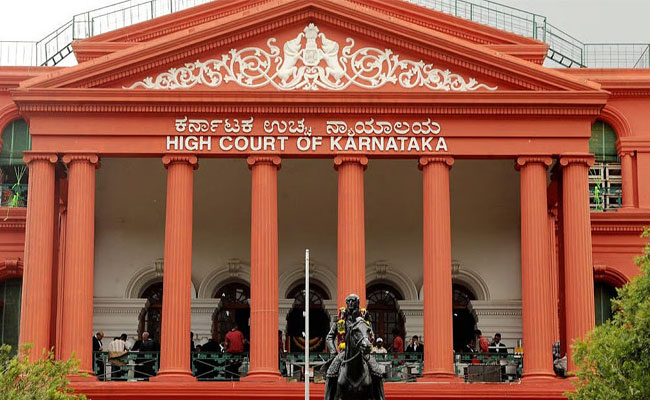
In its October 18 judgement, a division bench of Justices Chitta Ranjan Dash and Partha Sarathi Sen of the Calcutta High Court said that adolescent girls should "control sexual urges" and "not give into two minutes of pleasure".
The apex court said the issue before the High Court was legality and validity of order and judgement dated September 19/20, 2022 by which a man was convicted for offences under sections 363 (kidnapping) and 366 (kidnapping, abducting or inducing woman to compel her marriage) as well as Section 6 of the Protection of Children from Sexual Offences (POCSO) Act.
"As per the order of the CJI, suo motu writ petition has been initiated mainly due to sweeping observations/findings recorded by the division bench of the High Court.
"In an appeal against conviction, the High Court was called upon to decide only the merits of the appeal and nothing else. Prima facie, we are of the view that in such a case, the Hon'ble judges are not expected to either express their personal views or preach.
"After having carefully perused the judgement, we find that many parts thereof, including paragraph 30.3, are highly objectionable and completely unwarranted. Prima facie, the said observations are completely in violation of rights of adolescents under Article 21 of the Constitution," the bench said.
"Prima facie, we are of the view that the judges are not expected to express personal views or preach," the bench said while issuing notice to the West Bengal government and other parties in the case.
The top court appointed senior advocate Madhavi Divan as amicus curiae to assist the court and advocate Liz Mathew to assist the amicus.
The matter has now been posted for hearing on January 4, 2024.
The High Court had made the observations while hearing an appeal by a boy who was sentenced to 20 years in prison for the offence of sexual assault. The High Court had acquitted the boy stating that this was a case of "non-exploitative consensual sexual relationship between two consenting adolescents, though consent in view of the age of the victim is immaterial".
The High Court had also said it is the duty/obligation of every female adolescent to "protect her right to integrity of her body; protect her dignity and self-worth; thrive for overall development of her self transcending gender barriers; control sexual urge/urges as in the eyes of the society she is the loser when she gives in to enjoy the sexual pleasure of hardly two minutes; protect her right to autonomy of her body and her privacy".
"It is the duty of a male adolescent to respect the aforesaid duties of a young girl or woman and he should train his mind to respect a woman, her self-worth, her dignity and privacy, and her right to autonomy of her body," the High Court had said.
Let the Truth be known. If you read VB and like VB, please be a VB Supporter and Help us deliver the Truth to one and all.
Uttarakhand Assembly passes censure motion against opposition over women's reservation bill
Dehradun (PTI): The Uttarakhand Assembly passed a censure motion against the Congress and other opposition parties on Tuesday for allegedly blocking the passage of the Constitution (131st Amendment) Bill, 2026, in Parliament.
The motion, which expressed the House's formal disapproval of the opposition's conduct, triggered a massive uproar by Congress members, leading to the adjournment of the House sine die.
Parliamentary Affairs Minister Subodh Uniyal moved the censure motion, citing the "uncooperative attitude" of opposition parties toward the bill seeking 33 per cent reservation for women in legislative bodies.
Addressing a special daylong session convened specifically to discuss "Nari Samman -- Rights in Democracy", Chief Minister Pushkar Singh Dhami said the bill's passage would have benefitted every political party.
Dhami noted that after delimitation, the number of Assembly seats in the hill state would have gone up to 105, with 35 reserved for women. He added that the number of Lok Sabha seats from Uttarakhand would have risen from five to seven or eight.
"The opposition fears that if women from ordinary households enter politics, the shops of dynastic politics run by certain parties will shut down," the chief minister claimed.
He compared the opposition's conduct in Parliament to the assembly in Mahabharat where Draupadi was insulted. Dhami further likened the opposition's behaviour to the "arrogance of Ravan".
The chief minister highlighted his government's initiatives, asserting that Uttarakhand was the first state to implement a Uniform Civil Code (UCC) to protect women's rights. He said the UCC freed Muslim women from practices like "halala", "iddat", polygamy and child marriage.
Leader of Opposition Yashpal Arya questioned the technical feasibility of the bill, calling the ruling Bharatiya Janata Party's (BJP) claims of providing reservation by 2029 "misleading".
He argued that the bill is linked to census and delimitation processes. The Congress leader said the 2026 census would conclude by 2027 and the final data publication would take two more years.
"The delimitation process will take another six years. The actual implementation of this bill is not possible before 2034," Arya said, describing the move as a strategy to protect the BJP's "political ground".
The session also saw high drama outside the Assembly gates, where Congress MLA Virendra Jati staged a protest, demanding the payment of "outstanding" dues to farmers by sugar mills.
Jati arrived at the Assembly's main gate with a tractor-trolley loaded with sugarcane and dumped it on the road. The move brought the traffic to a halt, prompting traffic and security personnel to intervene and clear the area.
Women Congress workers also staged a demonstration against the "anti-people policies" of the state government.