SC directs states, UTs to provide complete information on open prisons
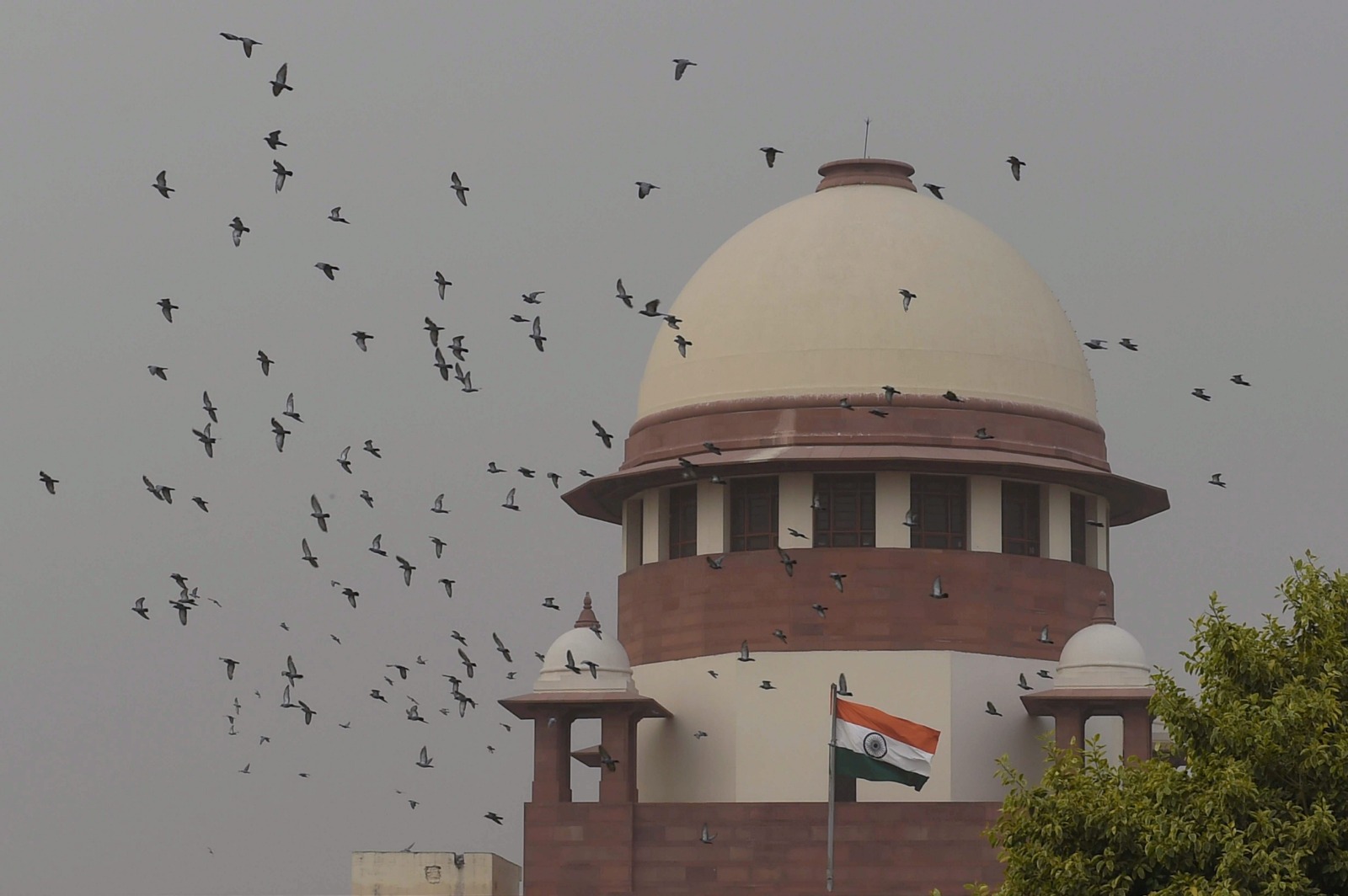
New Delhi (PTI): The Supreme Court has directed several states and Union Territories (UTs) to provide complete information with regard to the functioning of open prisons within four weeks.
Semi-open or open prisons allow convicts to work outside the premises during the day to earn a livelihood and return in the evening. The concept was introduced to assimilate the convicts with society and reduce psychological pressure as they faced difficulties in leading normal lives outside.
A bench of Justices B R Gavai and K V Viswanathan was informed by senior advocate K Parameshwar, who is assisting the top court as an amicus curiae in a matter related to congestion in jails, that several states and UTs have not yet filed their responses.
The bench noted that states and UTs like Delhi, Himachal Pradesh, Madhya Pradesh and Punjab have not yet submitted the qualitative/quantitative charts despite circulation of a questionnaire seeking information in respect of the status and functioning of open correctional institutions and whether such institutions exist within their jurisdiction.
"We, therefore, direct that all the States/Union Territories, which have not yet filed their response, to file complete response within a period of four weeks from today," the bench said in its order passed on August 20.
It said the states and UTs, which have not given complete information, shall also ensure compliance within four weeks.
"We further clarify that if any of the state governments or Union Territories do not respond in terms of the orders passed by this court, we will be compelled to direct the presence of the chief secretary of the states/Union Territories concerned before this court," the bench said and posted the matter for further consideration after four weeks.
The apex court noted that on July 15, it had directed the chief secretaries of various states and UTs to submit their responses on the issue of open jails.
The amicus told the bench that states and UTs of Gujarat, Haryana, Jammu and Kashmir, Maharashtra, Manipur, Nagaland, Telangana, Uttar Pradesh, Dadra and Nagar Haveli, Daman and Diu, Lakshadweep, Puducherry and Ladakh, have not filed their responses yet.
While hearing the matter on May 9, the apex court had observed that establishing open jails can be one of the solutions to overcrowding and also addressing the issue of rehabilitation of prisoners.
In its May 17 order, the bench had noted the submission of the amicus that a
model draft manual has been prepared by the Union of India where the nomenclature 'open correctional institutions' is used for such facilities.
Let the Truth be known. If you read VB and like VB, please be a VB Supporter and Help us deliver the Truth to one and all.
Maharashtra sets up state vaccination task force to strengthen immunisation programme

Mumbai (PTI): The Maharashtra government has set up a State Vaccination Task Force to strengthen the regular immunisation programme and review the progress of related campaigns, a health department official said on Monday.
The State Vaccination Task Force will comprise at least 29 members and will be headed by the administrative head of the health department, he informed.
The government has also constituted separate district-level and municipal vaccination task forces to improve implementation and address challenges at the grassroots level, he said.
Municipal task forces, chaired by respective civic commissioners, have been constituted in view of the vast urban population in Maharashtra and the role of civic bodies in implementing different health programmes.
The district-level task forces will function under the chairmanship of collectors.
"Complete immunisation of children at the appropriate age is an extremely simple, cost-effective and highly effective measure to reduce child mortality and the prevalence of diseases among kids. Immunisation is a powerful tool for reducing illness in children," maintained the official.
To ensure full vaccination of all children, the state government implements various campaigns from time to time as per the central government guidelines, he pointed out.
"Active participation and cooperation of other relevant government departments are essential (in making these campaigns successful)," according to the official.
The state-level body will review the regular immunisation programme, associated campaigns and vaccine-preventable diseases in detail. It will also conduct focused assessments of high-risk districts and municipal corporations, including vacancies at district, municipal and sub-district levels, availability of cold chain equipment, resource gaps and training requirements, he noted.
The state task force will review allocation and utilisation of funds for immunisation and ensure timely action by officers concerned based on reports from district and municipal task forces and state-level monitoring mechanisms, the official said.
It will also ensure active coordination and participation of other government departments in immunisation drives, while district and municipal task forces will carry out similar functions at their respective levels, the official added.