SC disturbed over trend of Govt not implementing its directions relating to tribunals
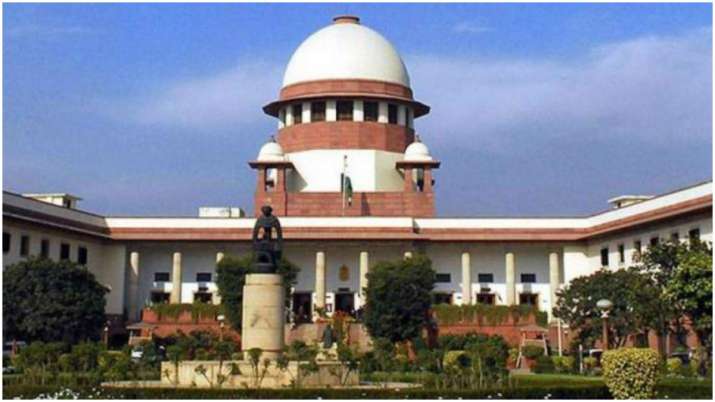
New Delhi, Nov 27: Disturbed over the trend of government not implementing repeated directions issued by it to ensure that tribunals should not function as another department under the control of executive, the Supreme Court Friday said it is high time that this practice is stopped.
The apex court said dispensation of justice by tribunals can be effective only when they function independent of any executive control and this renders them credible and generates public confidence.
We have noticed a disturbing trend of the Government not implementing the directions issued by this court. To ensure that the tribunals should not function as another department under the control of the executive, repeated directions have been issued which have gone unheeded forcing the petitioner to approach this court time and again, said a bench headed by Justice L Nageswara Rao.
It is high time that we put an end to this practice. Rules are framed which are completely contrary to the directions issued by this court, the bench, also comprising Justices Hemant Gupta and S Ravindra Bhat, said.
The observations by the apex court came in its judgement delivered on a batch of pleas challenging the constitutional validity of the Tribunal, Appellate Tribunal and other Authorities (Qualification, Experience and Other Conditions of Service of Members) Rules, 2020.
The bench said since tribunals are expected to be consistent and adhere to their precedents as they oversee regulatory behaviour in several key areas of the economy, it is crucial that these institutions are run by a robust mix of experts.
It directed the Centre to constitute a National Tribunals Commission which would act as an independent body to supervise appointments and functioning as well as take care of the administrative and infrastructural needs of tribunals across the country.
Upon the tribunals has devolved the task of marking boundaries of what is legally permissible and feasible (as opposed to what is not lawful and is indefensible) conduct, in a normative sense guiding future behavior of those subject to the jurisdictions of such tribunals, the bench said.
It further said this task becomes even more crucial as the appeals against the decisions of the tribunals lie directly to the Supreme Court and public law intervention on the merits of such decisions is all but excluded.
Therefore, it is crucial that these tribunals are run by a robust mix of experts, i.e. those with experience in policy in the relevant field, and those with judicial or legal experience and competence in such fields. The functioning or non-functioning of any of these tribunals due to lack of competence or understanding has a direct adverse impact on those who expect effective and swift justice from them, it said.
The bench said the resultant fallout is invariably an increased docket load of cases, especially by recourse to Article 226 of the Constitution of India.
The top court said it was highlighting these aspects once again to stress that these tribunals do not function in isolation, but are a part of the larger scheme of justice dispensation envisioned by the Constitution and have to function independently and effectively to live up to their mandate.
The involvement of this court, in the series of decisions, rendered by no less than six Constitution Benches, underscores the importance of this aspect. The role of both the courts as upholders of judicial independence, and the executive as the policy making and implementing limb of governance, is to be concordant and collaborative, it said.
The apex court said it expects that these directions are adhered to and implemented, so that future litigation is avoided.
The Government is, accordingly, directed to strictly adhere to the directions given above and not force the Petitioner-Madras Bar Association, which has been relentless in its efforts to ensure judicial independence of the Tribunals, to knock the doors of this Court again, the bench said.
Let the Truth be known. If you read VB and like VB, please be a VB Supporter and Help us deliver the Truth to one and all.
4 workers die after being buried under coal slurry in Jharkhand's Dhanbad

Dhanbad (Jharkhand) (PTI): At least four workers died after being buried under coal slurry in Jharkhand's Dhanbad district on Saturday, a police official said.
The incident took place at Moonidih coal washery in the command area of Bharat Coking Coal Limited (BCCL).
"Bodies of all four workers were dug out of debris during a rescue operation," Putki police station in-charge Waqar Hussain told PTI.
The incident took place when coal slurry was being loaded into trucks by workers, during which a large chunk of slurry fell and trapped several workers underneath, officials said.
The deceased have been identified as Manik Bauri, Dinesh Bauri, Deepak Bauri, and Hemlal Gope.
Meanwhile, the family members of the deceased and local villagers placed the bodies in front of the washery gate and began a protest.
They demanded compensation, jobs for dependents and action against those responsible for the incident.
Police and administration officials are trying to pacify the protesters, an official said.