SC dropped in-house probe against Justice Shekhar Kumar Yadav after Rajya Sabha claimed jurisdiction

The Supreme Court had initiated steps to launch an in-house inquiry against Allahabad High Court judge Shekhar Kumar Yadav for his controversial speech at a Vishva Hindu Parishad (VHP) event in 2024, but dropped the plan following a formal intervention from the Rajya Sabha secretariat, which asserted exclusive jurisdiction over the matter.
Justice Yadav's speech, delivered at the Allahabad High Court Bar Association premises during a VHP legal cell event, contained majoritarian rhetoric and remarks targeting the Muslim community. Among other things, he had claimed India should run as per the wishes of the majority, only a Hindu could make India a ‘Vishwa Guru’, and that triple talaq and halala contributed to societal backwardness. The comments sparked widespread outrage and led to calls for his impeachment.
Chief Justice of India (CJI) Sanjiv Khanna had initially moved to examine the judge’s conduct, following a report from the Allahabad High Court chief justice. The apex court collegium later held a closed-door meeting with Justice Yadav in December 2024, during which he reportedly promised to apologise. However, in a January 2025 letter, he stood by his remarks, claiming they were misrepresented.
As the judiciary deliberated further action, the Supreme Court received a letter from the Rajya Sabha secretariat in March 2025. It pointed out that an impeachment motion had already been filed by 55 MPs, and that only Parliament and the President had the authority to act under the Judges (Inquiry) Act, 1968. Consequently, the in-house inquiry was shelved to avoid constitutional overlap.
Despite no action taken yet on the impeachment notice, Vice President and Rajya Sabha chairman Jagdeep Dhankhar confirmed in February that Parliament held exclusive jurisdiction. The Supreme Court collegium agreed not to proceed further, citing the need to avoid parallel proceedings.
Justice Yadav is set to retire in April 2026. He has not issued any public apology and maintains that his remarks were in line with constitutional values and cultural ethos, even as pressure mounts from Opposition MPs and civil society for clarity on the impeachment process.
Let the Truth be known. If you read VB and like VB, please be a VB Supporter and Help us deliver the Truth to one and all.
Austrian police detain suspect in case of rat poison found in baby food jars on supermarket shelves
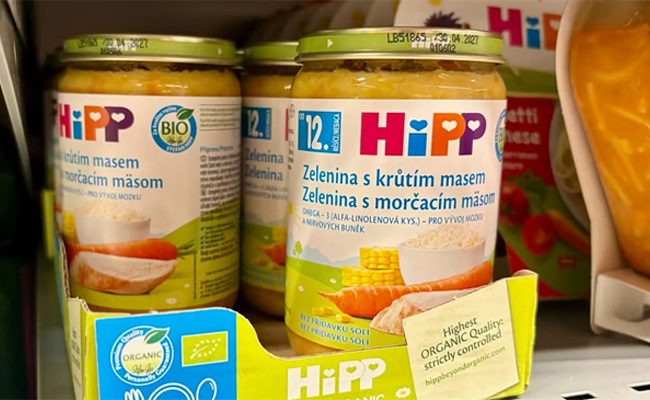
Vienna (AP): Police in eastern Austria say a 39-year-old suspect has been arrested after rat poison turned up in some HiPP baby food jars on supermarket shelves in central Europe.
HiPP, which recalled some of its baby food jars in Austria, Slovakia and the Czech Republic after the case came to light last month, said in a statement Saturday it was “greatly relieved” by the arrest, and would provide further updates as verified details come in.
The Burgenland State Criminal Police Office, under the direction of prosecutors, said a probe was launched after poison turned up in a baby food jar purchased at a supermarket in the city of Eisenstadt on April 18.
It said the suspect was being questioned, and that no further details would be immediately provided. The Burgenland public prosecutor's office has announced an investigation into suspected “intentional endangerment of the public.”
The Austrian Press Agency reported that an expert report on the toxicity of the poison was pending. A total of five tampered baby food jars were seized before they could be consumed, APA reported.
Authorities said previously they believe the tampering occurred in 190-gram (6.7-ounce) jars of baby food made with carrots and potatoes for 5-month-olds that were sold from SPAR supermarkets in Austria.
HiPP responded by recalling all of its baby food jars sold at SPAR supermarkets — which include SPAR, EUROSPAR, INTERSPAR and Maximarkt stores — in Austria as a precaution. Vendors in Slovakia and the Czech Republic also removed all of the brand's baby jars from sale.
The company said the recall was not due to any product or quality defect on its part, and said the jars left its facility in “perfect condition.”
Police said a customer at the time of the discovery had reported that a jar appeared to have been tampered with, but no one had consumed the baby food.