SC ensures govt-supported medical care for vegetative-state man after parents plead for euthanasia
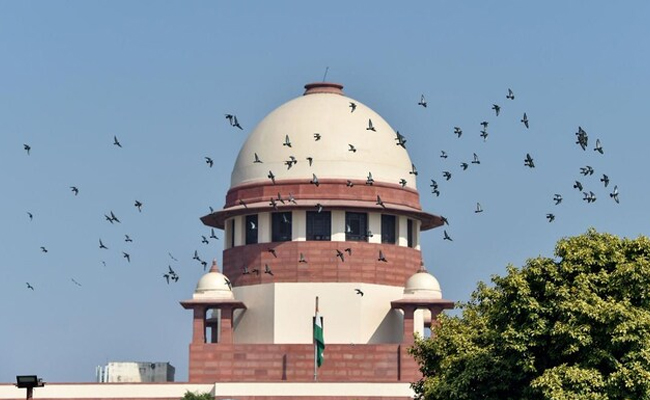
New Delhi (PTI): The Supreme Court has come to the help of the distraught parents of a 30-year-old man, who has been in a permanent vegetative state for over 11 years following a severe head injury, by ensuring government-supported medical care and assistance for him.
The parents, who had slipped into poverty due to the expenses being incurred during the prolonged treatment and care of their son Harish Rana and were unable to sustain it any more, had moved the top court against a Delhi High Court order refusing them a nod for passive euthanasia for their son.
In an order passed on his last working day, Chief Justice D Y Chandrachud perused a report of the Union Ministry of Health and Family Welfare and approved its plan to provide medical and other care to the bed-ridden Rana.
Justice Chandrachud-led bench had said it was not the case of passive euthanasia as he was not on a ventilator or other mechanical support to sustain life and rather, was being fed through a food pipe.
Instead of allowing passive euthanasia, which is not permissible in this case, it would explore the possibility of shifting him to a government hospital or a similar place for treatment and care, it had said.
Passive euthanasia is the intentional act of letting a patient die by withholding or withdrawing life support or treatment necessary for maintaining life.
The apex court had agreed with the findings of the high court, which refused to constitute a medical board to consider the parents' plea that their son be allowed to undergo passive euthanasia.
On August 20, the bench issued a notice to the Centre to explore alternative solutions for his care and this was followed by a status report submitted by the Ministry of Health and Family Welfare, detailing three care options for Rana.
The ministry, in the report filed on November 8, said, “Consequent upon all the efforts made by the central government in compliance with the instructions given by the Supreme Court on 20 August 2024, the following viable solutions have emerged for consideration …:
“(i) Home care of Shri Harish Rana with assistance from the Government of Uttar Pradesh as under: a. Regular Physiotherapist’s visit; b. Regular Dietician’s visit; c. Medical Officer on call d. Nursing care provision at home e. Availability of all required medicines and consumables free of cost.”
"If home care is not feasible, shifting of Rana to District Hospital, Noida, Sector-39 for ensuring availability of proper medical care considering his health condition, the ministry said, adding support from NGOs, if deemed fit, may also be considered.”
The parents of Rana agreed to the government's report.
“The Special Leave Petition is accordingly disposed of taking the arrangement on the record. However, liberty is granted to either of the parents of the petitioner to move the Court in future should it become necessary to obtain further directions,” the court said in its November 8 order.
Earlier, the court was considerate of the fact that the man had been in a vegetative state for 11 years after he suffered a fall from the fourth floor of a building and his elderly parents were finding it difficult to sustain as they had even sold their house.
In July, the high court refused to refer Rana's case to a medical board for allowing him to undergo passive euthanasia.
The high court had said the facts of the case indicate that the man is not being kept alive mechanically and he was able to sustain himself without any extra external aid.
"The petitioner is not on any life-support system and the petitioner is surviving without any external aid.
"While the court sympathises with the parents, as the petitioner is not terminally ill, this court cannot intervene and allow consideration of a prayer that is legally untenable," it had said.
The high court had also referred to several Supreme Court verdicts in which it was held that active euthanasia is legally impermissible.
"The petitioner is thus living and no one, including a physician, is permitted to cause the death of another person by administering any lethal drug, even if the objective is to relieve the patient from pain and suffering," it had said.
According to the petition, Rana, who is about 30 years old, was a student of Punjab University and had suffered head injuries after falling from the fourth floor of his paying guest accommodation in 2013.
The plea says the petitioner's family has done its best to treat him. However, he has been confined to bed due to diffuse axonal injury with a permanent vegetative state and 100 per cent disability.
The plea says his family has consulted various doctors and has been informed that there is no scope for his recovery.
Rana, who has not responded for the last 11 years, has developed deep and large bedsores that have caused further infection.
It says Rana's family has lost all hope for his recovery and his parents are not in a position to take care of him as they are getting old.
Let the Truth be known. If you read VB and like VB, please be a VB Supporter and Help us deliver the Truth to one and all.
Kohli's U-19 teammate Amanpreet Singh Gill dies at 36
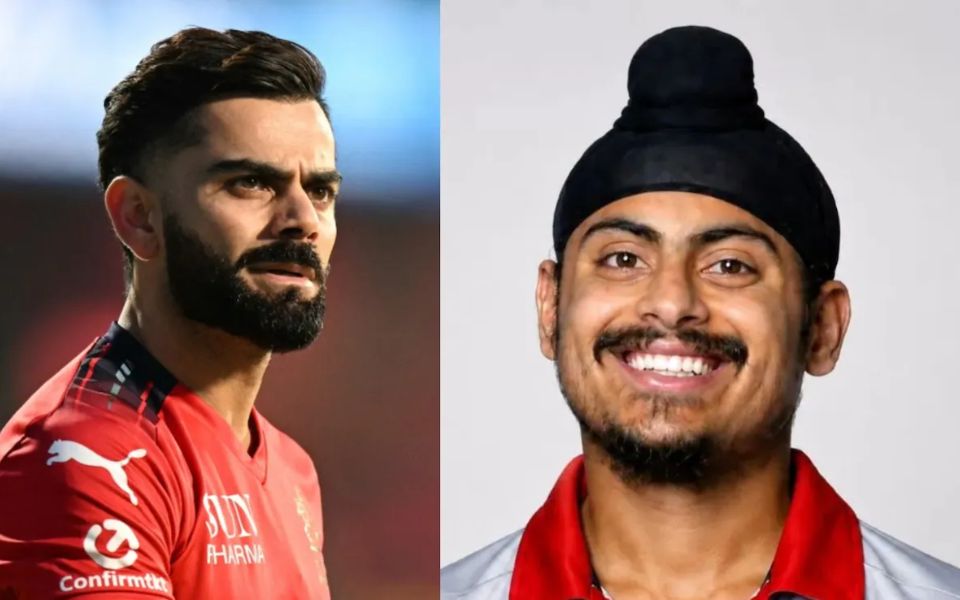
New Delhi (PTI): Former India U-19 and Punjab medium pacer Amanpreet Singh Gill died at the age of 36 in Chandigarh on Wednesday, leaving the cricket fraternity in mourning.
The cause of death is not yet known.
Gill, who was Virat Kohli's U-19 teammate, featured in six first-class matches for Punjab, picking up 11 wickets.
He was also part of the Punjab franchise (Kings XI Punjab) in the inaugural Indian Premier League season, and later served as a member of Punjab's senior selection committee.
"Punjab Cricket Association deeply mourns the sad demise of Amanpreet Singh Gill, former Punjab cricketer and Member, Senior Selection Committee Punjab,” the Punjab Cricket Association announced on X.
"Our heartfelt condolences to the bereaved family and loved ones. May Waheguru grant eternal peace to the departed soul and strength to the family in this difficult time."
Two-time World Cup-winning India all-rounder Yuvraj Singh also paid tribute to Gill.
"Deeply saddened to hear about Amanpreet Singh Gill’s passing. Shared the dressing room in our early days, he was a quiet, hardworking cricketer who loved the game. My heartfelt condolences to his family and loved ones. Rest in peace Om Shanti,” Singh posted on X.
Gill played five Youth ODIs and one Youth Test for India in 2007.
In the longer format, he claimed the wicket of former Sri Lanka all-rounder Thisara Perera.
However, he did not make the Virat Kohli-led India U-19 side that went on to win the 2008 World Cup.
“Deeply saddened by the passing of Amanpreet Singh Shergill, who proudly represented Punjab and was a part of the Punjab Kings family. Our heartfelt condolences to his family, friends, and the entire cricketing fraternity,” Punjab Kings posted on their official Instagram account.