Section of media gives communal colour to news bringing bad name to nation, says SC
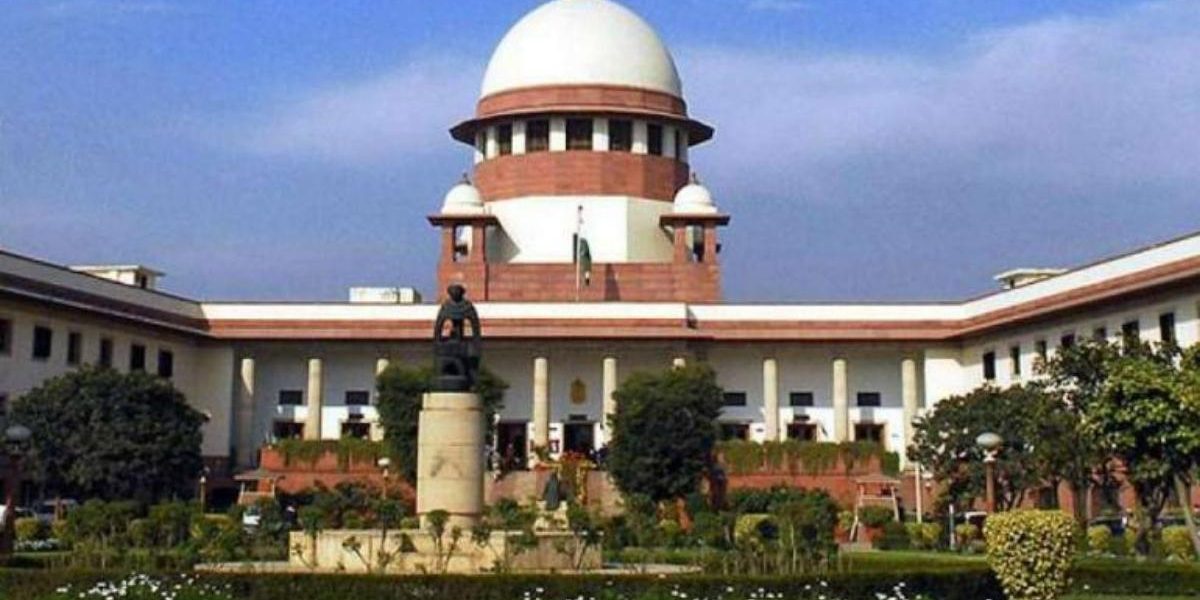
New Delhi, Sep 2: A section of media gives communal colour to news bringing bad name to the country, the Supreme Court rued on Thursday, expressing serious concern over fake news on social media including web portals and YouTube which listen only to the powerful voices and not judges and institutions.
The strong observations of the bench headed by Chief Justice N V Ramana came while hearing a batch of petitions, including the one filed by Jamiat Ulema-i-Hind, seeking directions to the Centre to stop dissemination of "fake news" related to last year's religious gathering at Nizamuddin Markaz and take strict action against those responsible for it.
The problem is, everything in this country is shown with a communal angle by a section of media. The country is going to get a bad name ultimately, said the bench, adding, "Did you (the Centre) ever attempt to regulate these private channels".
The bench also agreed to hear after six weeks the Centre's plea seeking transfer of petitions to the apex court that are pending in high courts against the validity of new Information Technology Rules which aims to regulate online content.
Solicitor General Tushar Mehta, appearing for the Centre, said, "Not only communal but also planted news" is there and the IT Rules have been framed to regulate content online, including web portals.
The social media only listens to the powerful voices and several things are written against judges, institutions without any accountability, said the bench which also comprised Justices Surya Kant and A S Bopanna.
Speaking for the bench, CJI Ramana said, I have not come across where these social media, Twitter and Facebook, respond to common people. They never respond. There is no accountability. About the institutions, they have written badly and they do not respond and say that this is their right.
"They only worry about powerful men and not judges, institutions or common man. That is what we have seen. This is our experience.
It further said: "There is no control over fake news and slandering in web portals and YouTube channels. If you go to YouTube, you will find how fake news is freely circulated and anyone can start a channel on YouTube."
The top court permitted Jamiat to amend its petition and serve it within four weeks to the Centre through the Solicitor General who may file the response in two weeks thereafter.
At the outset, Mehta sought an adjournment of hearing on the pleas by two weeks.
Referring to a few last orders, the bench asked the Centre whether it has appointed any regulatory commission for such news contents on social media.
Mehta referred to the affidavits of the Ministry of Information and Broadcasting filed on November 13 last year and said that the real concern has been to strike a balance between freedom of press and the right of citizens to have access to unadulterated news.
The bench said there seemed no control on web portals and sought to know about if any mechanism has been put in place.
For newspapers and television channels you have a regulatory mechanism. Are you suggesting that there is no such mechanism for web portals, the bench asked.
Mehta said new IT Rules have been framed to regulate such online mediums including web portals.
There is some mechanism for newspapers and so far as the TVs are concerned, you have some self-regulatory mechanism and one retired Supreme Court judge is also there, the CJI said.
The centre has framed the statutory mechanism under the Cable TV Networks (Regulation) Act, 1995 and for the online contents, the new IT rules have been framed, the law officer said.
Senior advocate Sanjay Hegde, appearing for one of the Muslim bodies, concurred with the submissions of the law officer on new regimes put to regulate the online social media.
The bench took note of Mehta's plea that some high courts are seized of petitions challenging the new IT Rules and for a holistic determination of the issues, they be transferred to the top court itself.
The top court said it would hear the transfer plea with the present batch of petitions.
Earlier, the Centre had told the apex court the petitioner Muslim body's attempt to obtain a blanket "gag order" on the entire media to prevent them from reporting the Markaz Nizamuddin issue will effectively destroy the freedom of the citizenry to know and the right of journalists to ensure an informed society.
The government had said that in the absence of any specific information about any objectionable news published or aired by a specific news channel/agency, the Constitution and the applicable statues do not give it any authority to unilaterally pass any censure order under the Cable Television Networks Rules.
The Jamiat Ulema-e-Hind had filed the plea seeking directions to the Centre to stop dissemination of "fake news" related to a religious gathering at Markaz Nizamuddin.
The Jamiat has alleged that the unfortunate incident of Tablighi Jamaat was being used to "demonise" and blame the entire Muslim community and sought to restrain the media from publishing/airing such reports.
The Tablighi Jamaat congregation at Markaz Nizamuddin in central Delhi in March last year was accused of accelerating the spread of the novel coronavirus, with its attendees carrying the infection to different parts of the country.
Let the Truth be known. If you read VB and like VB, please be a VB Supporter and Help us deliver the Truth to one and all.
Karnataka Muslim Convention to be held in Bengaluru on May 16
Muslim organisations to release report on Congress govt’s three-year performance
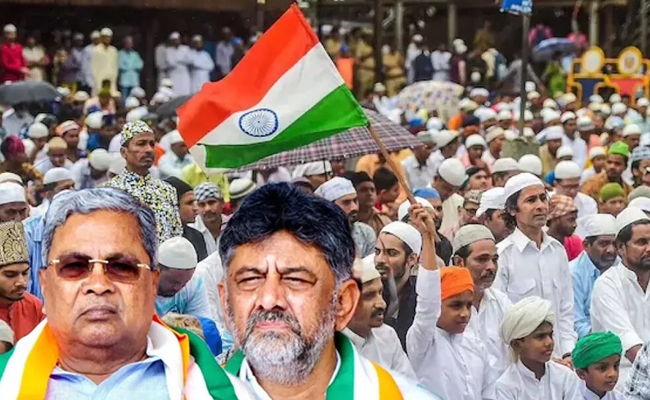
Bengaluru: Major Muslim organisations and federations in Karnataka have decided to organise a large public convention titled ‘Karnataka Muslim Convention’ at Town Hall in Bengaluru on May 16. During the convention, a comprehensive report reviewing the three-year performance of the Congress government under the theme “What did the Congress government promise? What did it do? What next?” will be released.
According to a statement issued on Friday, no politicians will be invited to the convention. The report will be submitted to the government and all MLAs after the event.
The convention is being held at a time when the Congress government is nearing the completion of three years in office on May 20. Muslim organisations have expressed dissatisfaction, alleging that despite extending strong support to the Congress in bringing it to power, the community is being neglected.
The Convention is being organised at time when there are concerns over inadequate political representation for Muslims, alleged neglect of community demands, and the suspension of senior Muslim leaders who had worked for the party for decades.
The organisers said the convention aims to raise questions on what the Congress government has delivered so far and what further steps are expected from the government.
The decision to hold the convention was taken during a meeting held on May 6 at A J International Hotel in Shivajinagar, Bengaluru. Representatives of major Muslim organisations, associations, ulema bodies, federations, and members of the ad hoc committee of Karnataka Rajya Muslim Okkoota attended the meeting.
More than 75 representatives and delegates, including senior ulemas, jamaat leaders, lawyers, retired officials, journalists and members of the KRMO ad hoc committee, participated in the discussions.
Members of the KRMO ad hoc committee’s report preparation team and experts from different sectors presented a detailed report on the Congress government’s three-year performance. The report examined promises made to Muslims on ten major issues, the extent to which they were fulfilled, pending promises, alleged discrimination in representation, and the demands now being placed before the government.
The report covered issues such as the hijab ban, reservation cancellation, hate speech and hate crimes, budget allocation, political representation, waqf matters, the anti-cow slaughter law, anti-conversion law, scholarships and educational grants.
Participants offered suggestions and recommendations on various points, and necessary corrections to the report were accepted after detailed discussions.
The meeting also reportedly expressed strong dissatisfaction over the manner in which the Congress government has treated the Muslim community. Participants are said to have opined that if the government and the Congress party continue in the same manner, the community should keep its political options open.
It was later decided that the report would be officially released at the large public convention on May 16 under the title “Karnataka Muslim Convention – What did the Congress government promise? What did it do? What next?”
The organisers appealed to people from all districts of the state to participate in large numbers and send a strong message to the government and the Congress party through the convention.
They also decided that all organisations, jamaats and associations should work towards ensuring participation from every district in Karnataka.
The statement reiterated that no politicians would be invited to the May 16 convention and that the report on the Congress government’s three-year performance would be submitted to the Chief Minister, Deputy Chief Minister, ministers and MLAs after the event.