SC flags 'trust deficit', orders deployment of judicial officers in Bengal's SIR exercise
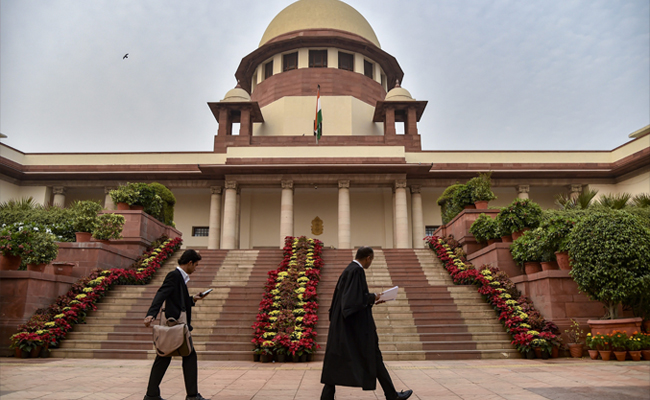
New Delhi (PTI): Dismayed over ongoing tussle between the West Bengal government and the Election Commission, the Supreme Court on Friday issued an "extraordinary" direction to deploy serving and former district judges to assist the poll panel in the controversy-ridden special intensive revision of electoral rolls in the state.
Ruing the "unfortunate blame game" and the "trust deficit" between the EC and the "democratically elected" TMC government, a bench of Chief Justice Surya Kant and justices Joymalya Bagchi and Vipul M Pancholi passed a slew of fresh directions to ensure completion of the special intensive revision (SIR) process.
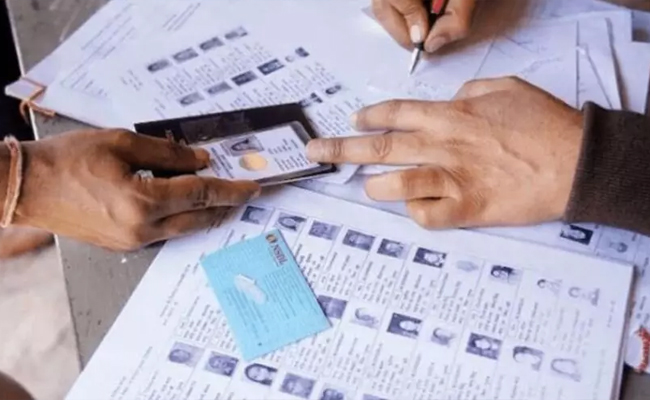
The bench ordered deputation of judicial officers for adjudication of claims and objections of the persons, who are put under the logical discrepancy lists and facing removal of their names from the electoral rolls.
Logical discrepancies in progeny linking with the 2002 voter list include instances of a mismatch in the parent's name and the age difference between a voter and their parent being less than 15 years or more than 50 years.
The top court asked Calcutta High Court Chief Justice Sujoy Paul to spare some judicial officers and find former judges to assist in the SIR work as it took serious note of the state government not sparing enough grade 'A'0 officers for the revision exercise.
Chief Justice Paul has been asked to convene a meeting on Saturday and the same will be attended by Chief Secretary, DGP, official from the EC, Advocate General of the state. Additional Solicitor General of the Union and the Registrar General of the high court on the issue of finalising modalities of deputing judicial officers in SIR process.
"In order to ensure fairness in the adjudication of the genuineness of the documents and consequential inclusion/exclusion in voters list, and as agreed to by both sides, we are left with hardly any other option but to request the Chief Justice of the Calcutta High Court to spare serving judicial officers along with some former judicial officers in the rank of Additional District Judge and District Judges who can then be requested to revisit/dispose of the pending claims under the category of 'logical discrepancy'," the bench ordered.
Disregarding the vehement objections of the state government, the top court permitted the EC to publish a final list of voters in the state by February 28, the deadline fixed earlier. However, it also permitted the election commission to come out with supplementary lists later.
It noted that no prejudice will be caused to anyone if supplementary voter lists are issued after February 28 as names of electors can be included till the last date of filing of nomination papers for the elections.
Senior advocate Shyam Divan, appearing for Chief Minister Mamata Banerjee, alleged that the orders passed by the electoral roll officers are now being scrutinised by a "new species of officers" called the 'special roll officers'.
"The 'special roll officers' cannot trump EROs. How can they on a wholesale basis reject what ERO has done?" Divan asked.
The election commission refuted that claim and said that the SROs are there since inception. The bench agreed with the submissions of the poll panel.
The bench further said that if there is non-cooperation then the court will deploy judicial officers or ask the EC to deploy the officials from other states.
During the hearing, senior advocate Kapil Sibal, appearing for the state government, said that there might be a law and order problem, if the poll panel is permitted to publish the final voter list by February 28.
In a bid to balance equity, the top court said such judicial officers/former judicial officers, while adjudicating the claims and objections, shall be assisted by poll panel's micro-observers and also by the officers of the state government.
"The circumstances being extraordinary, the entrustment of work to judicial officers and former judicial officers is also extraordinary," the bench said.
Senior advocate DS Naidu, appearing for the EC raised the issue of non-cooperation and the law and order enforcement alleging that the documents have been torn apart from miscreants and yet hardly any action has been taken.
He produced the statements made by different political functionaries against the poll officials and said no FIRs were registered against anyone.
CJI Kant, who perused the statements said, "Unfortunately, during the election such irresponsible statements are being made. If no action is taken, the DGP will face the consequences."
The bench then directed district collectors and SPs of the state to provide logistical support and security to the judicial officers deputed for the ongoing SIR work while making it clear that orders passed by judicial officers will be deemed as orders of court.
It said the collector and SPs will be considered under deemed deputation for the purpose of ensuring compliance of directions that may be issued from time to time by the court.
It directed the DGP to file an affidavit on the steps taken on complaints regarding threats to officers involved in the SIR process.
The bench directed the Calcutta High Court chief justice to evolve some alternate interim arrangement for shifting of matters requiring urgent relief to other courts for ten days.
On February 9, the top court made it clear to the states that it will not allow anyone to create any impediment in completion of the SIR and directed the WB DGP to file an affidavit on the EC allegation of burning of its notices by miscreants.
Let the Truth be known. If you read VB and like VB, please be a VB Supporter and Help us deliver the Truth to one and all.
4 held for sexually assaulting woman, girl on moving bus after social media alert in UP's Agra

Agra (UP) (PTI): Four people were arrested, after a prompt response by police following a social media alert, for allegedly sexually assaulting a woman and a girl inside a moving bus here, officials said on Tuesday.
According to an official police statement, at 12:27 am on April 27, information was received on the social media platform X about an incident of sexual assault on a bus travelling from Kanpur to Ahmedabad, which was approaching Namner crossing in Agra.
Acting under the direction of Police Commissioner Deepak Kumar, the Agra Police social media team immediately alerted the Rakabganj police station within minutes and coordinated with the victims to confirm the incident and obtain the exact location, it stated.
Police teams launched intensive checking at Namner crossing and intercepted the bus as it reached the spot. The four accused involved in the incident were apprehended on the spot, and legal action was initiated against them, the statement said.
The police said the swift response and coordination between the social media team and field units ensured timely action, bringing relief to the victims and other passengers, who expressed gratitude towards the police, it added.