SC gets 9 new judges, B V Nagarathna could be first woman CJI in 2027
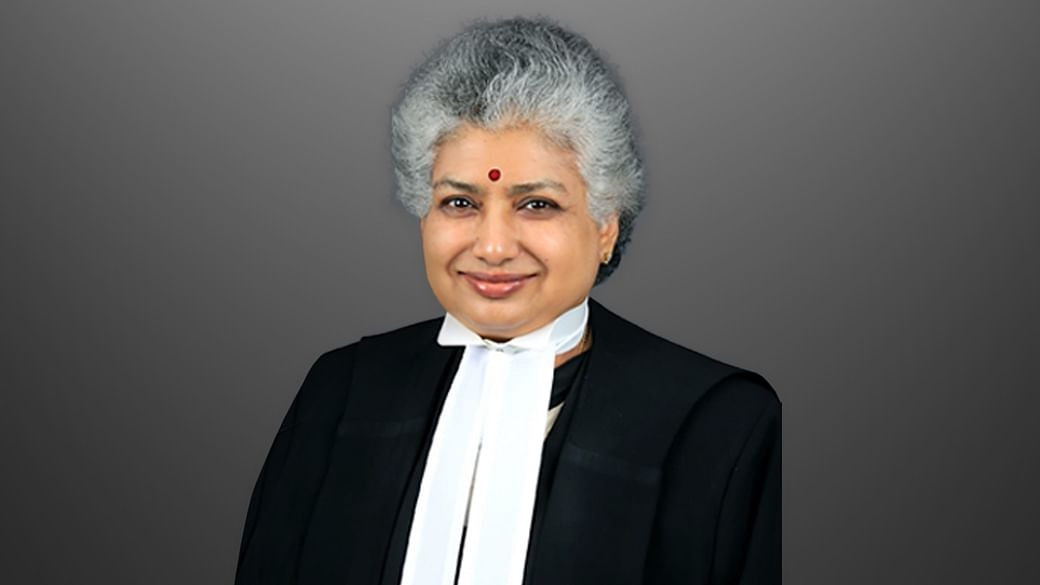
New Delhi, Aug 26: Nine new judges, including three women, were on Thursday appointed to the Supreme Court, with Justice B V Nagarathna in line to be the first woman Chief Justice of India (CJI) in September 2027.
President Ram Nath Kovind signed their warrants of appointment.
With a sanctioned strength of 34 judges, the Supreme Court as of now has 10 vacancies. Once the new judges take oath in the coming days, the top court will have only one vacancy.
Separate formal notifications by the law ministry announcing their appointments were issued in the afternoon.
In a first, the Supreme Court Collegium had last week recommended for appointment to the apex court three women judges. Besides Justice Nagarathna, the third senior-most judge of the Karnataka High Court, the other women judges who have been appointed to the apex court are Justice Hima Kohli, the Chief Justice of the Telangana High Court, and Justice Bela M Trivedi, the fifth senior-most judge of the Gujarat High Court.
Justice Kohli was to retire on September 1 on attaining the age of 62.
While high court judges retire at the age of 62, the retirement age of Supreme Court judges is 65.
Besides them, Justice C T Ravikumar of the Kerala High Court and Justice M M Sundresh of the Madras High Court have also been appointed to the top court.
Senior advocate and former Additional Solicitor General P S Narasimha has became the sixth lawyer to be elevated to the apex court bench directly from the Bar.
The chief justices of different high courts who have made it to the Supreme Court are Abhay Shreeniwas Oka (Chief Justice of the Karnataka High Court), Vikram Nath (Chief Justice of the Gujarat High Court) and Jitendra Kumar Maheshwari (Chief Justice of the Sikkim High Court).
Justice Nagarathna, born on October 30, 1962, is the daughter of former CJI E S Venkataramiah.
She enrolled as an advocate on October 28,1987 at Bangalore and practised in the fields pertaining to the Constitution, commerce, insurance and service.
She was appointed as an Additional Judge of the High Court of Karnataka on February 18, 2008 and became a permanent Judge on February 17, 2010.
She will have a tenure as an apex court judge till October 29, 2027 and may have a tenure of over one month as the first woman CJI after September 23, 2027.
Born on September 2, 1959 in Delhi, Justice Kohli did her LLB from the Campus Law Centre in Delhi University and was the standing counsel and legal advisor of the New Delhi Municipal Council in the High Court of Delhi from 1999-2004.
She was appointed as an additional judge of the High Court of Delhi on May 29, 2006 and took oath as a permanent judge on August 29, 2007 and later became the Chief Justice of the Telangana High Court on January 7, 2021.
Justice Trivedi, born on June 10, 1960, is the judge of the Gujarat High Court since February 9, 2016 and belongs to the judicial service category.
Besides Fathima Beevi, who became an apex court judge on October 6, 1989, seven more women judges have been appointed till now. They are justices Sujata Vasant Manohar, Ruma Pal, Gyan Sudha Mishra, Ranjana Desai, R Bhanumathi, Indu Malhotra and Indira Banerjee.
Justice Banerjee would demit office on September 23 next year.
Judicial appointments in the Supreme Court have remained frozen since September 2019. The first of the 10 vacancies in the Supreme Court arose following the retirement of Ranjan Gogoi in November 2019 as the chief justice of India.
The latest vacancy was created following the retirement of Justice Navin Sinha on August 18.
Let the Truth be known. If you read VB and like VB, please be a VB Supporter and Help us deliver the Truth to one and all.
CJI's advice to aspirant: Join the bar, become a lawyer, don't hanker for judicial services post
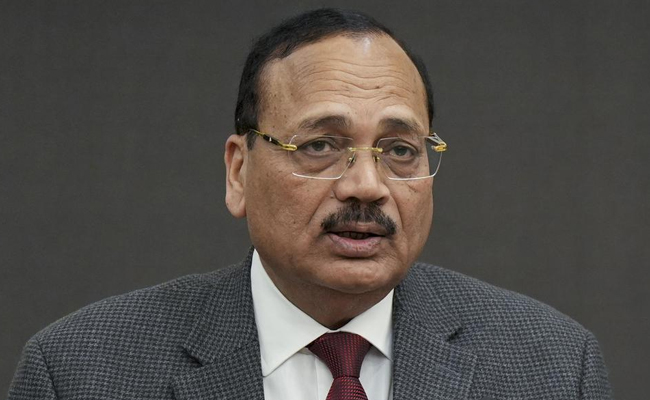
New Delhi (PTI): She came to the Supreme Court seeking a re-evaluation of her paper in the examination for joining judicial services as a magistrate. What she got instead was a rejection — and a candid confession by the Chief Justice that he too had wanted to join the judicial services in his youth but was advised by a senior judge to become a lawyer instead.
A bench comprising Chief Justice Surya Kant and Justice Joymalya Bagchi on Friday dismissed a plea filed by Prerna Gupta, the judicial services aspirant.
As Gupta pressed her case, the CJI intervened and said, "Let me share my personal story and I hope you will go happily as we cannot allow your petition."
He recounted his time as a final-year law student in 1984 when he wanted to become a judicial officer. As per requirement, he cleared the written test and was set to appear for an interview.
Judicial services is one of the two routes to become a judge after initially joining as a magistrate in lower court and thereafter rising through the ranks to become judge in a high court and possibly the Supreme Court.
The other route is to join the Bar, which means becoming a lawyer, and after building a reputation be picked from the Bar to become a judge at a senior level.
By the time the CJI's exam results came out, he had started practising at the Punjab and Haryana High Court when he was called for the interview.
The senior-most judge on the interview panel happened to be a judge before whom he had recently argued two significant matters.
"One of the matters was Sunita Rani vs Baldev Raj, where he had allowed my appeal in a matrimonial case and set aside the decree of divorce granted by the District Judge on the ground of schizophrenia," he noted.
Before the interview could take place, the judge called the young Surya Kant to his chamber and asked, 'Do you want to become a judicial officer?'
"I said 'yes.' He immediately said, 'Get out from (my) the chamber.'"
The courtroom fell silent as the CJI Justice described his initial heartbreak.
“I came out trembling. All my dreams were shattered. I thought he had snubbed me and that my career was over,” the CJI said.
However, the story took another turn the following day and the judge summoned him again, this time offering a piece of advice that would change the trajectory of his life.
“He said, ‘If you want to become (a judge), you are welcome. But my advice is, don’t become a judicial officer. The Bar is waiting for you,’” Justice Surya Kant recalled.
The CJI said he decided to skip his interview and didn't even tell his parents at first, fearing their disappointment, and instead chose to dedicate himself to his practice as an advocate.
“Now tell me did I make a bad right or bad decision,” the CJI asked and the litigant lawyer left the court with a smile on her face despite her case being dismissed.
Encouraging the petitioner to look toward the future rather than dwelling on the re-evaluation of a single paper, Justice Surya Kant said, "The Bar has much to offer."