SC grants bail to 75-yr-old man convicted after 40-year trial in rape & murder case
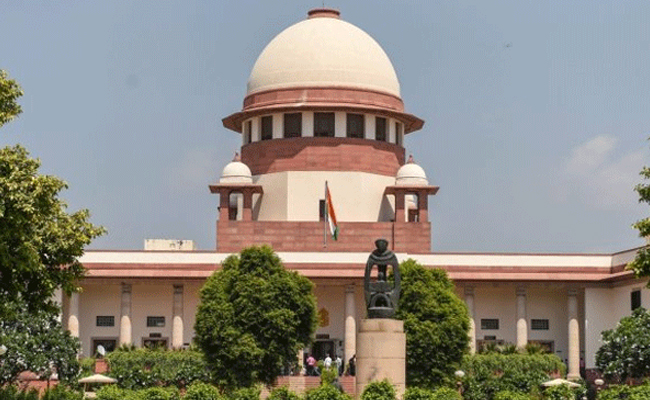
New Delhi (PTI): The Supreme Court has granted bail to a 75-year-old man, who was convicted in a 1983 rape and murder case, while taking note that it took the trial 40 years to conclude.
Noting the "peculiar feature" of the case, the apex court asked the Calcutta High Court to give "out of turn priority" to the disposal of the man's appeal against his conviction.
A bench of Justices Abhay S Oka and Pankaj Mithal said, normally, the top court should not issue a direction to a constitutional court or any other court to fix a schedule to decide a case.
"However, this case has a peculiar feature that the trial has taken forty years to conclude. We, therefore, request the high court to give out of turn priority to the disposal of the appeal in accordance with law," the bench said in its order passed on September 25.
The apex court was hearing an appeal filed by the man challenging the May 17 order of the high court which had rejected his prayer for bail.
While noting that the appellant was the maternal uncle of the victim, the high court had said in view of the material on record and the gravity of the offence, "we do not consider it appropriate to suspend the sentence of the appellant".
In its order, the high court had noted that the case involves brutal rape and murder of a girl who was found strangulated in a room.
The top court, while pronouncing its order, said the incident had taken place in 1983 and there are "reasons and reasons why the trial was delayed".
"The trial came to an end with the order of conviction of the appellant on April 21, 2023. The appellant was throughout on bail. The present age of the appellant is about 75 years. The appeal before the high court has been admitted for final hearing," it said.
The bench said considering the delay in disposal of the trial, the fact that the occurrence was of 1983 and the present age of the appellant, "he deserves to be enlarged on bail, pending the final disposal of the appeal before the high court on appropriate stringent terms and conditions".
Setting aside the May 17 order of the high court, the apex court requested it to fix appropriate stringent terms and conditions on which the appellant shall be enlarged on bail pending the final disposal of his appeal.
After the bench was informed that the appellant is a member of the Bar, it said he was expected to ensure that the apex court's order was scrupulously implemented and appeal is disposed of expeditiously.
"Therefore, we direct that the appellant shall not seek adjournments on any unreasonable grounds and shall cooperate with the high court for early disposal of the appeal," the bench said.
It said if the hearing of the appeal is delayed on account of default on the part of the appellant, it will be open for the state to apply to the high court for cancellation of bail.
Let the Truth be known. If you read VB and like VB, please be a VB Supporter and Help us deliver the Truth to one and all.
Man arrested with Rs 2.54-crore heroin in Mumbai

Mumbai (PTI): Police have arrested a man and seized over 500 grams of heroin worth Rs 2.54 crore in the illicit market from him in Mumbai, officials said on Friday.
The police's Anti-Narcotics Cell (ANC) made the drug seizure in Santacruz in the western suburbs. The operation was conducted by the Kandivali unit of the ANC on Thursday as part of a special crackdown against drug trafficking in the area, they said.
Acting on specific inputs, an ANC team conducted a raid in Santacruz (East) and intercepted a man. During a search, the team recovered 508 grams of high-grade heroin from his possession, an official said.
The seized contraband, a highly addictive, opioid drug derived from morphine, is estimated to be worth Rs 2.54 crore in the international market, he informed.
Following the seizure, a case was registered against the man under relevant sections of the Narcotic Drugs and Psychotropic Substances (NDPS) Act, 1985, and he was formally placed under arrest in the early hours of Friday.
The police are currently investigating the source of the drug and trying to identify the intended recipients of the consignment, he said.