SC issues contempt notice over scurrilous allegations against Telangana HC judge
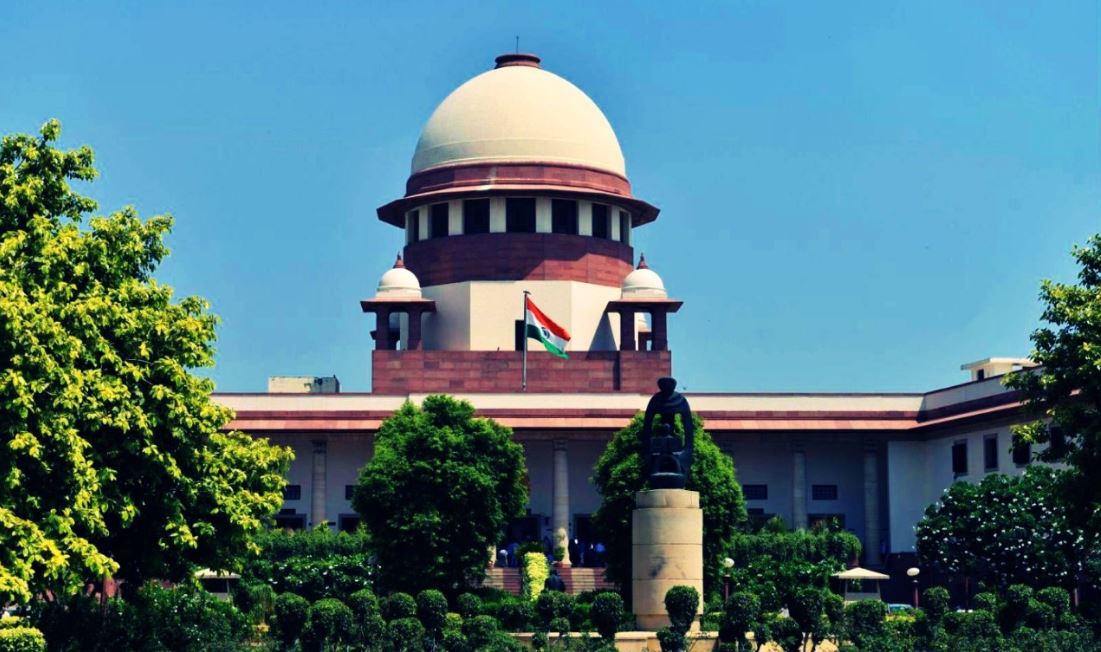
New Delhi (PTI): The Supreme Court on Tuesday issued contempt notices to a litigant and his lawyers for making "scurrilous allegations" against a sitting judge of the Telangana High Court in their plea.
The top court, while issuing the show cause notices to the petitioner and his lawyers, refused to allow withdrawal of the petition, and said, “We cannot permit judges to be out in a box and allow any litigant to make such allegations against a judge. Here we were trying to protect lawyers.”
A bench comprising Chief Justice B R Gavai and Justice K Vinod Chandran was hearing a transfer plea filed by petitioner N Peddi Raju filed through advocate-on-record Ritesh Patil.
The petition involved a case in which Telangana Chief Minister A. Revanth Reddy had received relief from a high court in a matter under the Scheduled Castes and Scheduled Tribes (Prevention of Atrocities) Act.
“Here we were trying to protect lawyers, but this kind of conduct cannot be condoned,” the bench, which earlier heard another suo motu case pertaining to summoning of lawyers by the ED for rendering legal advice, said.
“Scurrilous allegations have been made against the sitting judge of Telangana High Court. It has been held (in a judgement) that it is not only a litigant but also a lawyer who signs (the petition) is guilty of contempt of court.
“We thus issue notice to Peddi Raju as well as the lawyers … and the AoR. They are directed to state why contempt should not be initiated against them. Notice returnable on August 11,” the CJI said.
A counsel sought the liberty to withdraw the remarks after the court expressed strong displeasure. However, the bench dismissed the request.
“File apology …we will see whether to consider or not. We will see the apology is genuine or not. When we expressed displeasure at the language, liberty was sought to withdraw. We dismissed the request,” the bench said.
The case stems from the Telangana High Court's decision to quash a criminal case registered against the chief minister under the SC/ST Act.
The petitioner later approached the top court with a transfer plea, alleging bias and impropriety on the part of the high court judge.
Senior advocate Sidharth Luthra appeared on behalf of the chief minister.
Let the Truth be known. If you read VB and like VB, please be a VB Supporter and Help us deliver the Truth to one and all.
AIITA welcomes Karnataka’s ban on obscene songs in school events

Bhatkal: The Karnataka unit of the All India Ideal Teachers Association (AIITA) has welcomed the Karnataka government’s decision to strictly ban school children from dancing to obscene songs during educational and cultural programmes in government, aided, and private schools across the state.
AIITA Karnataka State President M. R. Manvi congratulated the government for taking what he termed an important step to preserve the sanctity of education.
“Such decisions to safeguard the dignity of school children and uphold the values of education are the need of the hour. This rule should not be limited to government schools alone but must be strictly implemented in all private educational institutions as well,” he said.
He further urged the government to address other concerns within school programmes.
“The government should not only prohibit obscene dances in the name of school anniversaries, but also ensure that plays and dialogues that incite religious hatred are avoided. Schools should be centres of harmony, not platforms for spreading hatred,” he added.
According to a recent circular issued by the Department of School Education and Literacy, obscene dances are adversely affecting the mental health and moral values of students.
In this regard, schools have been advised to use songs that promote nationalism, positive thinking, the greatness of Kannada culture, and value-based traditions instead of inappropriate content during programmes.
The circular also emphasises that students should be dressed in decent attire.
AIITA also backed the department’s warning that disciplinary action would be taken against head teachers if such guidelines are violated. The association has further demanded that district Deputy Directors of Public Instruction strictly monitor the implementation of these rules.