SC junks PIL seeking cooling off period for civil servants to contest polls
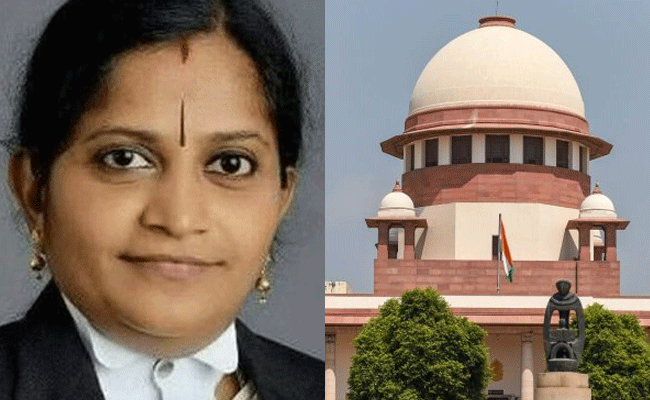
New Delhi (PTI): The Supreme Court has refused to entertain a PIL to impose restrictions to prevent civil servants from contesting elections immediately after retirement or resignation from service, by imposing a cooling off period , saying it cannot direct the legislature to enact a law.
A bench of Justices Indira Banerjee and A S Bopanna said whether there should be any cooling off period for civil servants for them to contest elections or not is best left to the legislature concerned.
"In this case, there is no complaint of violation of any fundamental right of the petitioner or any group of persons represented by the petitioner. Nobody has the fundamental right to get a mandatory order of this court directing the appropriate legislature to enact law or the executive to frame rules imposing restrictions on the eligibility of civil servants to contest elections. This writ petition cannot, therefore, be entertained by this court," the bench said.
The top court said a mandamus cannot be issued to direct the respondents to enact law and/or to frame rules even under the wider powers conferred under Article 226 of the Constitution.
"A mandamus lies for enforcement of a fundamental right or a statutory right, or the enforcement of a fundamental duty related to enforcement of a fundamental right or a statutory right.
"In exceptional cases, a writ may even lie for enforcement of an equitable right. The breach or threat to breach a fundamental, statutory or may be enforceable equitable right, is the sine qua non for issuance of a writ of mandamus," the bench said.
The apex court said this court or a high court cannot direct the legislature to enact a particular legislation or the executive to frame rules.
"This court, and/or the high court, does not give any direction to the State to enforce an Act passed by the legislature. Nor does the court enforce instructions in a departmental manual not having statutory force, any non-statutory scheme or concession which does not give rise to any legal right in favour of the petitioner, far less, any recommendation made by an authority such as the Election Commission.
"It is for the Union of India to take a decision on the recommendation of the Election Commission, in accordance with law. It is not for this Court to decide what should be the policy of the government. Policy matters are never interfered with, unless patently arbitrary, unreasonable or violative of Article 14 of the Constitution," the bench said.
The top court said it cannot even issue a mandamus to the government for enforcement of a Cabinet decision.
"It is only when an administrative order confers rights or creates estoppel against the government, that mandamus can be issued to enforce the circular. Similarly a mandamus may be issued to cancel an administrative order, which violates the rules of fairness," the bench said.
The apex court said there can be no doubt that law may be enacted, laying down the norms and qualifications for contesting specific elections.
"There can be no doubt that civil servants should maintain the highest ethical standards of integrity and honesty; political neutrality; fairness and impartiality in the discharge of duties, courtesy, accountability and transparency.
"Integrity, impartiality, neutrality, transparency and honesty are non-negotiable. Ethical standards necessarily have to be enforced and stringent action taken against the officer concerned whenever there is any breach of ethical standards as laid down in the All India Services (Conduct) Rules, 1968.
It is not for this court to interfere in matters relating to framing of law, rules or policy, the bench said.
"Whether there should be any 'cooling off period' for civil servants for them to contest elections or not is best left to the legislature concerned.The allegations of bureaucrats deviating from strict norms of political neutrality with a view to obtaining party tickets to contest elections, is vague, devoid of particulars and unsupported by any materials which could justify intervention of this court.
"No particulars have been given of the number and/or percentage of erstwhile bureaucrats, who have contested elections on the ticket of a political party, not to speak of any act on their part, prior to their retirement, in deviation of the standards required of bureaucrats," the bench said while dismissing a plea filed by one Vivek Krishna.
Let the Truth be known. If you read VB and like VB, please be a VB Supporter and Help us deliver the Truth to one and all.
Congress using hijab issue to pacify minority anger, alleges Karnataka LoP R Ashoka
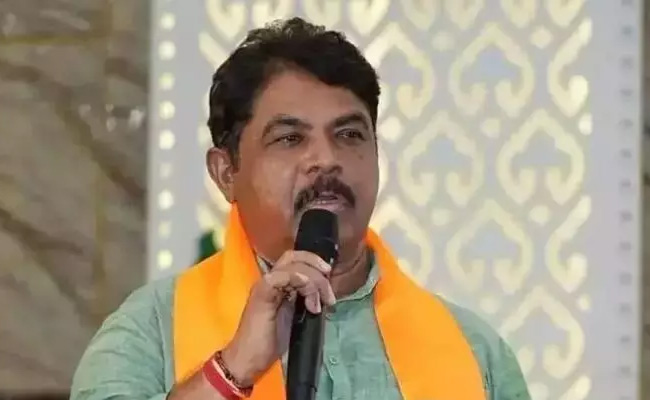
Bengaluru: Leader of Opposition in the Assembly R. Ashoka has accused the Congress government of using the hijab issue to placate what he described as discontent among minority voters after the Davanagere by-election.
In a post on X on Wednesday, Ashoka alleged that the state government, instead of addressing issues such as price rise, corruption, farmers’ distress and law and order, was attempting to retain its minority vote base by reviving the hijab issue.
Referring to the 2022 dress code introduced by the BJP government, which prohibited hijab in schools and colleges, Ashoka said the Karnataka High Court had upheld the policy and emphasised the importance of discipline in educational institutions.
He questioned the Congress government’s move to revisit the issue and asked whether setting aside the court-backed policy to benefit one community could be described as secularism.
Ashoka further alleged that while the government was willing to permit hijab, it continued to prohibit saffron shawls.
He accused the government of dividing students on religious lines rather than treating schools and colleges as spaces of equality.
Drawing a comparison with Mamata Banerjee’s government in West Bengal, Ashoka claimed that excessive appeasement politics had harmed the state and warned that the Congress in Karnataka could face a similar political response.
He said voters in Karnataka would teach the Congress a lesson for what he termed “vote-bank politics” and for compromising constitutional and judicial principles.