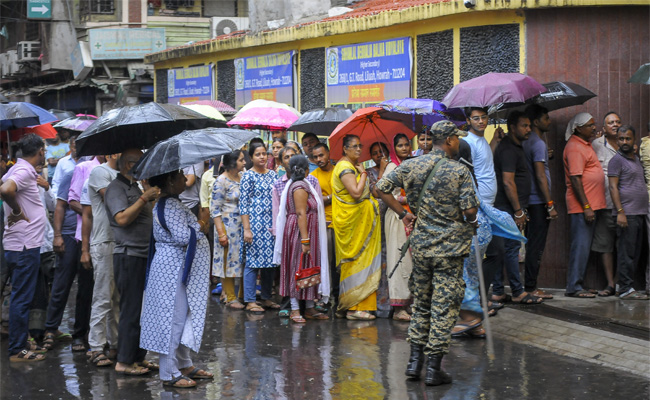
SC laments air pollution in Delhi, directs 5 states to file affidavits on remedial efforts
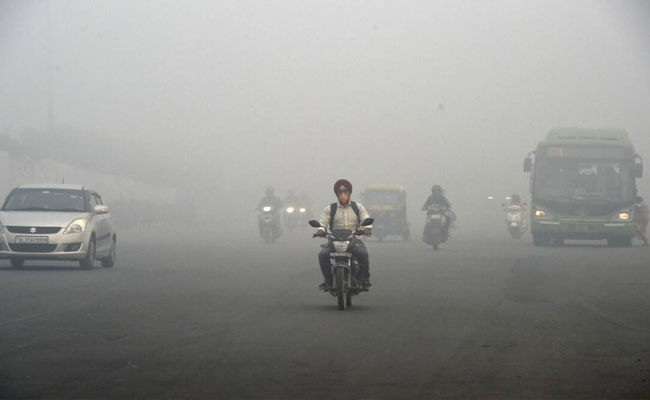
New Delhi (PTI): Noting that air pollution persists in the national capital despite several remedial steps having been taken by the Commission for Air Quality Management (CAQM), the Supreme Court on Tuesday directed Delhi, Punjab, Haryana, Uttar Pradesh and Rajasthan governments to file affidavits enumerating measures initiated by them to control it.
Observing that until a couple of decades ago this was the best time in Delhi, the court said the city is now marred by worsening air quality and it is difficult to even step outside the house.
A three-judge bench headed by Justice SK Kaul directed the five states to file affidavits within a week.
"The concerned states should file an affidavit setting forth what steps they have taken to redeem the position. We call upon the states of Delhi, Punjab, Haryana, Uttar Pradesh and Rajasthan to file an affidavit within a week," the bench, also comprising Justices Sudhanshu Dhulia and P K Mishra, said while posting the matter for further hearing on November 7.
The top court also directed the CAQM to submit in a tabular form the result of the relevant period when the problem started and the current ground situation, including parameters like the Air Quality Index (AQI) and the number of incidents of farm fires.
The bench said crop burning is one of the main reasons for air pollution in Delhi.
The top court had earlier sought a report from the CAQM on steps being taken to control air pollution in and around Delhi.
On October 6, the CAQM had directed government authorities in the National Capital Region to enforce a ban on use of coal in hotels and restaurants and to take punitive measures against polluting industries and thermal power plants as the air quality in Delhi deteriorated.
The directions were issued as part of the pollution control plan known as 'Graded Response Action Plan' (GRAP) which is implemented in Delhi-NCR to combat air pollution during the winter season.
The CAQM is an autonomous body tasked with improving the air quality in Delhi and its adjoining areas.
Let the Truth be known. If you read VB and like VB, please be a VB Supporter and Help us deliver the Truth to one and all.
Rickelton's ton in vain as SRH beat MI by 6 wickets

Mumbai (PTI): Ryan Rickelton's whirlwind unbeaten ton was overshadowed by Heinrich Klaasen's unbeaten 65 as Sunrisers Hyderabad defeated Mumbai Indians by six wickets in an IPL match here on Wednesday.
Chasing an imposing 244-run target, Travis Head (76 off 30) and Abhishek Sharma (45 off 24) shared 129 runs for the opening wicket to set the platform for SRH.
Klaasen (65 not out off 30 balls) then displayed his all-round hitting abilities to guide SRH home with the help of Nitish Kumar Reddy (21) and Salil Arora (30 not out off 10) in 18.4 overs.
Earlier, Rickelton's knock powered MI to 243 for five.
MI rode on a 93-run stand between Rickelton (123 not out off 55 balls) and Will Jacks (46 off 22) in 7.1 overs for the opening stand to power the side.
MI skipper Hardik Pandya scored a valuable 31 off 15 balls before being dismissed.
Praful Hinge (2/54), Eshan Malinga (1/29), Sakib Hasan (1/39) and Nitish Kumar Reddy (1/31) were the wicket-takers for SRH.
Brief Scores:
Mumbai Indian: 243 for 5 in 20 overs (Ryan Rickelton 123 not out; Praful Hinge 2/54).
Sunrisers Hyderabad: 249 for 4 in 18.4 overs (Travis Head 76, Heinrich Klaasen 65 not out; AM Ghazanfar 2/51).