SC nine-judge bench reserves verdict on definition of 'industry'
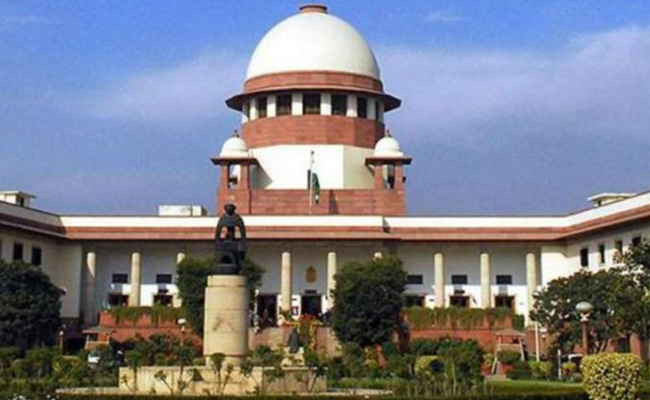
New Delhi (PTI): A nine-judge Constitution bench of the Supreme Court on Thursday reserved its verdict on the contentious issue of defining the word "industry" under the Industrial Disputes Act, 1947.
A bench headed by Chief Justice Surya Kant heard the submissions of various lawyers including Attorney General R Venkataramani, Additional Solicitor General K M Nataraj and others such as senior advocates Shekhar Naphade, Indira Jaising, C U Singh and Sanjay Hegde during the three-day-long hearing.
The bench, also comprising Justices B V Nagarathna, P S Narasimha, Dipankar Datta, Ujjal Bhuyan, Satish Chandra Sharma, Joymalya Bagchi, Alok Aradhe and Vipul M Pancholi, said it would examine the legal correctness of the 1978 judgment of a seven-judge bench giving an expansive interpretation of the term "industry" to govern labour relations.
ALSO READ: EC transferred over 50 officials, it's political interference of highest order: Mamata
On February 21, 1978, a seven-judge bench delivered a verdict on the definition of the term "industry" while deciding the plea of Bangalore Water Supply and Sewerage Board and expanded the definition which brought millions of employees in hospitals, educational institutions, clubs and government welfare departments under the protection of the Industrial Disputes (ID) Act, 1947.
On February 16, the top court had formulated the broad issues to be adjudicated by the nine-judge bench.
"Whether the test laid down in paragraphs 140 to 144 in the opinion rendered by Justice V R Krishna Iyer in Bangalore Water Supply and Sewerage Board's case (of 1978) to determine if an undertaking or enterprise falls within the definition of 'industry' lays down correct law?
"And whether the Industrial Disputes (Amendment) Act, 1982 (which seemingly did not come into force), and the Industrial Relations Code, 2020 (with effect from November 21, 2025), have any legal impact on the interpretation of the expression 'industry' as contained in the principal Act?" the bench had said.
It had said one of the issues to be adjudicated by the nine-judge bench would be whether social welfare activities and schemes or other enterprises undertaken by government departments or their instrumentalities can be construed to be "industrial activities" for the purpose of Section 2(j) of the Industrial Disputes Act, 1947.
Let the Truth be known. If you read VB and like VB, please be a VB Supporter and Help us deliver the Truth to one and all.
No unannounced load shedding in Kerala, outages due to overload, says Minister
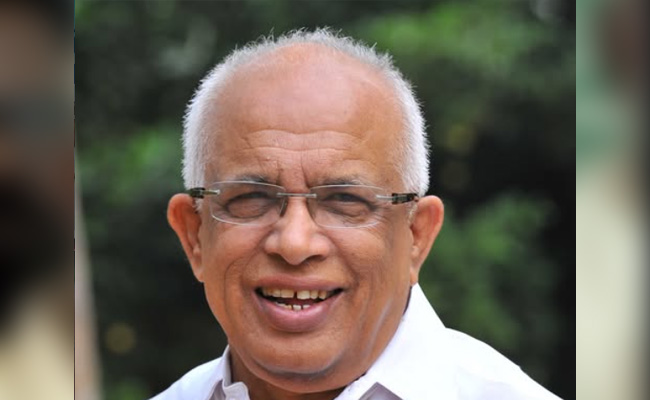
Palakkad (PTI): Kerala Electricity Minister K Krishnankutty on Saturday said there was no unannounced load shedding in the state, attributing recent power interruptions to temporary overload caused by high consumption.
Clarifying concerns raised from various parts of the state, the minister said the disruptions are not deliberate but occur when demand peaks, particularly between 10 pm and 11 pm.
"It is not being done intentionally. Power consumption has risen sharply, and when there is excessive and indiscriminate usage, the system experiences overload, leading to natural supply interruptions," he told reporters here.
His remarks come amid complaints that several areas have been witnessing frequent power cuts, often lasting around 15 minutes and occurring multiple times during the night.
Krishnankutty said the state's power demand has crossed 6,195 MW, putting pressure on the supply system. He added that around 70 per cent of Kerala's electricity is procured from outside, and existing power banking arrangements have been exhausted.
"We have approached the Regulatory Commission seeking permission to purchase more power. However, this will come at a higher cost," he said.
The minister said the government is trying to avoid increasing electricity tariffs and urged consumers to exercise restraint in usage to help manage the situation.
Responding to opposition criticism over the ruling LDF's earlier claims of a decade without power cuts, he said the current situation is not unique to Kerala.
A power crisis is emerging across the country, he said, and sarcastically asked the Opposition to take note of the role of natural factors in this.
Krishnankutty expressed confidence that the situation would improve within two days, while cautioning that long-term energy security would depend on enhancing in-state power generation.
He also warned that future generations could face serious challenges if adequate electricity production capacity is not developed within Kerala.