SC order on Waqf more than a rap on knuckles of govt: Derek O'Brien
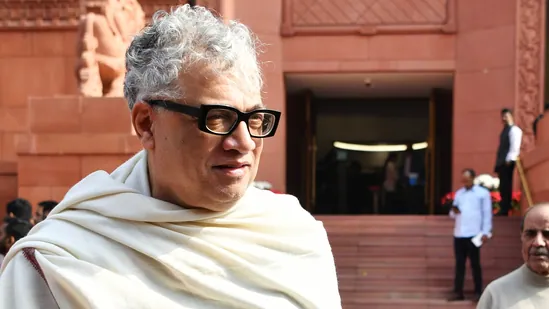
New Delhi (PTI): Trinamool Congress MP Derek O'Brien has slammed the government after the Supreme Court put on hold some key provisions of the Waqf Amendment Act, saying it was more than just a rap on the knuckles of those indulging in "subterfuge" legislation.
However, he said the Supreme Court will have to address probing questions like whether the Waqf Act flouts rights such as equality, and freedom of religion.
In a blog post, O'Brien said the week began for the Centre with another "black Monday".
O'Brien pointed that the Supreme Court stayed two of the most contentious provisions of the Waqf Act, 2025- One, a person has to be a practising Muslim for five years before he can dedicate a property as Waqf, and the provision that a designated officer can adjudicate the rights of personal citizens.
The TMC leader said the passing of the Waqf (Amendment) Bill, 2025 in Parliament was marked by "chicanery and evasive tactics".
"Even a casual observer of Parliament can outline how the BJP-led coalition is making a mockery of parliamentary procedure," the Rajya Sabha MP said.
He said the motion to refer the bill to a Joint Committee of both Houses of Parliament was, again, moved on the last day of the session, and when the report of the Joint Parliamentary Committee (JPC) was presented in Parliament, dissent notes by members of the Opposition had been "blotted out by using a whitener".
He said the Waqf (Amendment) Bill was passed in Parliament in the dead of night, around midnight in Rajya Sabha, and before one in the morning in Lok Sabha, and added that Manipur was discussed at 3 am.
O'Brien said a major argument made in this case was of the principle of presumption in favour of constitutionality, which means that when a law's constitutionality is challenged, courts should generally presume the law to be valid and uphold it unless it is clearly proven otherwise.
"It assumes that legislatures act in good faith and within their authority, and that invalidating laws should be an exception, not the default," he said in the blog post on Monday.
The TMC leader said the Supreme Court like many constitutional courts worldwide, has repeatedly affirmed this presumption, stating that courts should only strike down legislation if it is "manifestly unconstitutional" or violates fundamental rights beyond reasonable doubt.
"However, given recent trends where laws have been used selectively to impose disproportionate burdens, regulate minority rights restrictively, or enable the state to overreach in areas constitutionally protected (like religious freedom and equality), the presumption in favour of constitutionality merits re-evaluation," he said.
He said governance under the BJP has revealed a striking pattern.
"The rise of customised, targeted laws designed to affect specific communities while leaving others untouched. The legal pluralism in various religions governing themselves, was a system adopted by the country with the intention to respect diverse customs. But this is increasingly being made a source of legal exceptionalism, where groups are treated not as citizens under a single rule of law but as subjects of special, more restrictive, legal regimes," he said.
"The effect is highly symbolic, the law itself becomes a political message, not merely a regulatory tool. Citizens are left with a sense that laws are designed 'for them' not to protect or administer society, but for surveillance, constraint, and to signal hierarchy," he said.
He said some examples of these laws are the religion-specific Citizenship Law creating exclusions based on faith, and Anti-Conversion Laws in states targeting interfaith marriage and religious conversion.
"Along with targeting, what these laws also do is that they place the state into a position of the judge of identity. Including the five year requirement in the Waqf Act, these laws rely on the State to decide who qualifies as a minority and who does not," he said.
"Once the State assumes the right to decide who qualifies as a legitimate member of a community, it establishes a precedent that identity is conditional, citizenship, faith, and rights can all be reduced to state-certified categories. When the State gets to decide who counts, democracy itself is at risk," he said.
O'Brien added that the Supreme Court will have to answer "probing questions ".
"Does the Waqf Act flout rights such as equality before the law (Article 14)? Does it flout freedom of religion (Articles 25 and 26)? Does it flout the prohibition of discrimination on grounds of religion (Article 15)? These are the probing questions which India hopes will be addressed by the Supreme Court," he added.
The Supreme Court on Monday put on hold several key provisions of the Waqf law, including the clause that only those practising Islam for the last five years can dedicate a property as Waqf, but refused to stay the entire law.
Let the Truth be known. If you read VB and like VB, please be a VB Supporter and Help us deliver the Truth to one and all.
'Sarke Chunar' row: Sanjay Dutt apologises; to sponsor education of 50 tribal girls
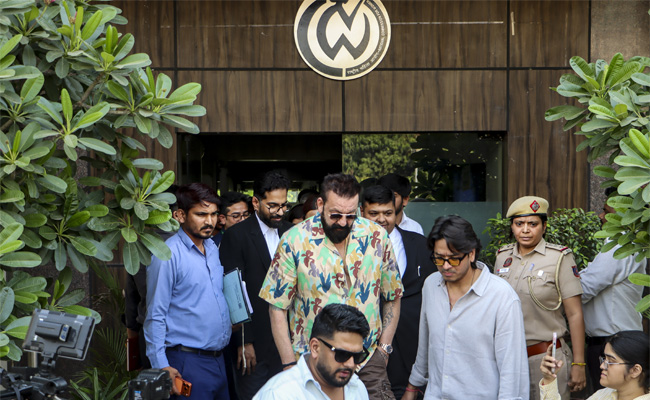
New Delhi (PTI): Actor Sanjay Dutt on Monday appeared before the National Commission for Women (NCW) in connection with the controversy over the song 'Sarke Chunar Teri Sarke' and submitted a written apology, expressing regret for any "unintended" harm caused to society.
During the hearing, held under NCW chairperson Vijaya Rahatkar, the commission raised concerns over alleged vulgarity and indecent representation of women in the song from the movie "KD The Devil" and questioned issues of intent, awareness and accountability.
The chairperson emphasised whether adequate due diligence was undertaken before participating in content that could be perceived as promoting objectification of women, while also underlining the responsibility of senior and influential public figures in ensuring that their work remains within the bounds of legal and societal standards.
As a corrective measure, Dutt committed to sponsoring the education of 50 tribal girl children as part of efforts towards social welfare and women's empowerment, the NCW said in a statement.
He also assured the commission that his future artist agreements would include mandatory legal due diligence provisions to ensure dignified and appropriate representation of women and children in films and related creative projects.
Actor Nora Fatehi, who was also summoned, could not appear as she is currently abroad and has sought a fresh date for the hearing.
On April 6, other individuals associated with the song, including director Kiran Kumar alias Prem, lyricist Raqueeb Alam and representatives of KVN Production Company Gautam K M and Suprith, appeared before the commission and submitted their apologies.
The NCW underscored that while artistic freedom is important, it must be exercised with responsibility and sensitivity, reiterating the need for accountability in content reaching wide public audiences and reaffirming its commitment to safeguarding the dignity and representation of women.
The Hindi version of the song, released on March 15 on YouTube, drew public ire for its sexually explicit lyrics.
After the outrage, the makers deleted the Hindi version of the song from YouTube, although it was widely played and shared across various platforms.
Fatehi, in a video later, distanced herself from the song, saying she shot the video for the Kannada version and her permission was not taken to use it in the Hindi version. The lyricist, singer and the director also apologised.
The issue was brought up in Lok Sabha during Question Hour by Samajwadi Party (SP) MP Anand Bhadoria last month.
Union Information and Broadcasting Minister Ashwini Vaishnaw said the song was already banned and the government was ready to take action against such vulgarity.
"KD The Devil" is a Kannada film, dubbed in four languages, including Hindi. It will release on April 30. The film features Dhruva Sarja, V Ravichandran, Ramesh Aravind, Shilpa Shetty, and Dutt.