SC questions Bihar govt on publishing caste survey numbers, but no bar on releasing further data
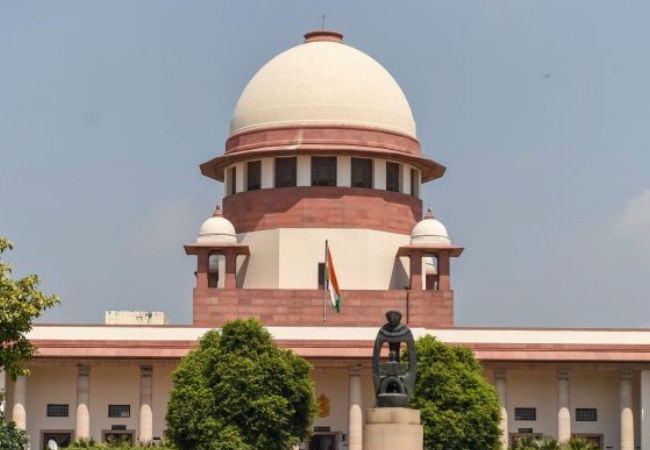
New Delhi (PTI): The Supreme Court Friday questioned the Bihar government as to why it published its caste survey data but refused to restrain it from making public further data, and said it may examine if the state has power to conduct such an exercise.
A bench of Justices Sanjiv Khanna and S V N Bhatti issued a formal notice on a batch of pleas challenging the August 1 order of the Patna High Court that gave the go-ahead for the caste survey in Bihar.
The SC bench listed the matter in January, 2024.
It rejected the petitioners' contention that the state government has already published some data preempting a stay. They sought a complete stay on further publication of data.
"We are not staying anything at this moment. We cannot stop the state government or any government from taking a policy decision. That would be wrong…We are going to examine the other issue regarding the power of the state government to conduct this exercise," the bench said.
The top court, however, questioned the counsel for the Bihar government, "Why did you publish the data?" It said it may examine whether the state has the power to conduct such a survey.
Appearing for the petitioners, Senior advocate Aprajita Singh said there is breach of privacy in the matter and the High Court order is wrong. "This data should not be acted upon as it was collected illegally. The High Court has given a detailed judgement. But it is wrong on every point of law. The data has not been collected under law as laid down by this court. Even the executive order is not in conformity with the law laid down in the K S Puttaswamy judgement (2018 verdict on right to privacy)," Singh said.
To this, the bench said since the name and other identities of any individual have not been published, the argument that there was a breach of privacy may not be correct. "The more important issue for consideration of the court is breakdown of data and its availability to the public," the bench said, adding there are various aspects of the data but the state government has not released that.
Justice Khanna said they have gone through the high court verdict and have formed a prima facie view which is subject to change.
Singh said that during the last hearing, the state government assured the bench that they will not publish the data. She said they will further publish the data by the next date of hearing in January if no restrained by the court, and the petitioners will be in the same position.
Justice Khanna said the state had not assured anything in the last hearing.
Senior advocate Shyam Divan, appearing for the state government, replied to the question of the bench on why they published the data and said there was no stay on publication of data, which was required for formulating welfare schemes.
He said there is a judgement of this court which allows collection of data.
On October 2, the Nitish Kumar government in Bihar released findings of its caste survey, months ahead of the 2024 Parliamentary elections. The data revealed that OBCs and EBCs constitute a whopping 63 per cent of the state's total population.
According to the data released, the state's total population stood at a little over 13.07 crore, out of which the Extremely Backward Classes (36 per cent) were the largest social segment followed by the Other Backward Classes at 27.13 per cent.
The survey also stated that Yadavs, the OBC group to which Deputy Chief Minister Tejashwi Yadav belongs, were the largest caste in terms of the population, accounting for 14.27 per cent of the total.
Dalits, also known as the Scheduled Castes, accounted for 19.65 per cent of the total population in the state, which is also home to nearly 22 lakh (1.68 per cent) people belonging to the Scheduled Tribes.
On August 7, the top court had refused to stay the Patna High Court's order giving the go-ahead for the caste survey, and deferred the hearing on petitions challenging it to August 14.
Besides a plea by NGO 'Ek Soch Ek Paryas', several other petitions have been filed including one by a Nalanda-resident, Akhilesh Kumar, who has contended that the notification issued by the state government for the exercise is against the constitutional mandate.
Kumar's petition says that according to the the constitutional mandate only the Union government is empowered to conduct a census.
The high court had said in its 101-page verdict, "We find the action of the state to be perfectly valid, initiated with due competence with the legitimate aim of providing development with justice." A day after the high court held the caste survey as "valid", the state government had swung into action and suspended all ongoing training programmes for teachers so they can be engaged for early completion of the exercise.
The Nitish Kumar government had said on August 25 that the survey has been completed and data will be made public soon.
Petitioners had opposed making the data public, contending it will infringe people's right to privacy.
Let the Truth be known. If you read VB and like VB, please be a VB Supporter and Help us deliver the Truth to one and all.
National Synodal Assembly 2026 begins in Bengaluru with over 220 delegates
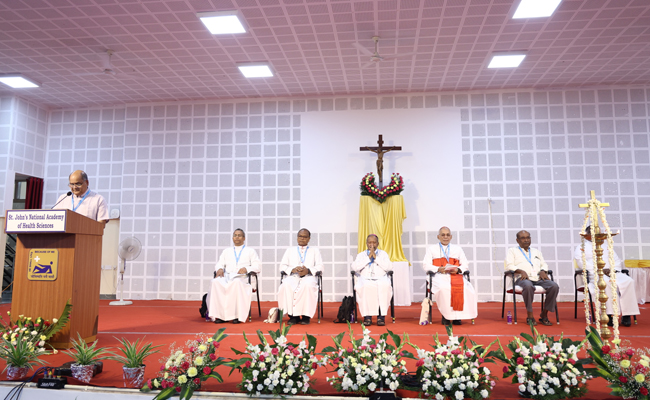
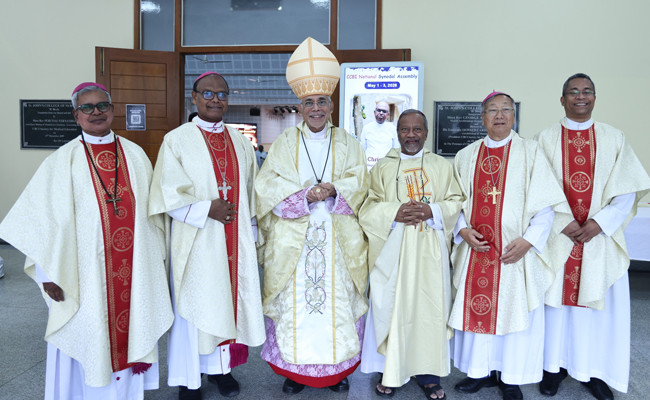
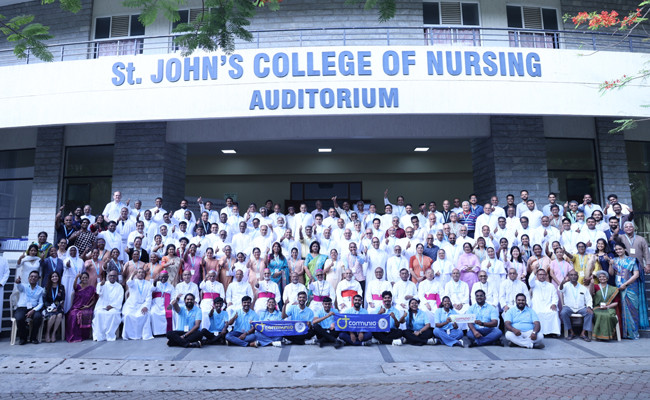
Bengaluru: The Conference of Catholic Bishops of India (CCBI) on May 1 inaugurated its National Synodal Assembly 2026 at St. John’s Medical College, bringing together more than 220 delegates from across the country under the theme Synodal Pilgrims of Hope.
The assembly is part of the global synodal process initiated in 2021 by Pope Francis, which calls for greater participation, dialogue and shared responsibility within the Church. In India, the process has involved consultations at diocesan, regional and national levels.
Participants at the assembly include two Cardinals, 25 Bishops, 65 priests, more than 20 women religious, and over 100 lay faithful, including youth and women leaders.
The gathering began with a Eucharistic celebration led by Filipe Neri Ferrão. In his homily, he described the assembly as a moment of grace and discernment and called on delegates to walk together in prayer, listening and missionary commitment.
He spoke about the importance of the Risen Christ in the mission of the Church and urged the faithful to be witnesses of the Gospel. Referring to the conversion of St Paul, he said every baptised person has a role in spreading the message of Christ. He also highlighted the example of St Joseph the Worker, stressing the dignity of labour and the call to holiness in everyday life.
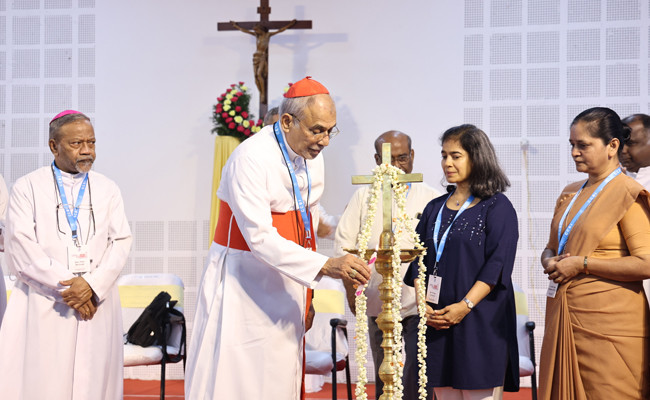
The formal inauguration included the invocation of the Holy Spirit through Veni Creator Spiritus and the lighting of the ceremonial lamp. Deputy Secretary General Fr. Stephen Alathara welcomed the delegates and described the gathering as a spiritual journey.
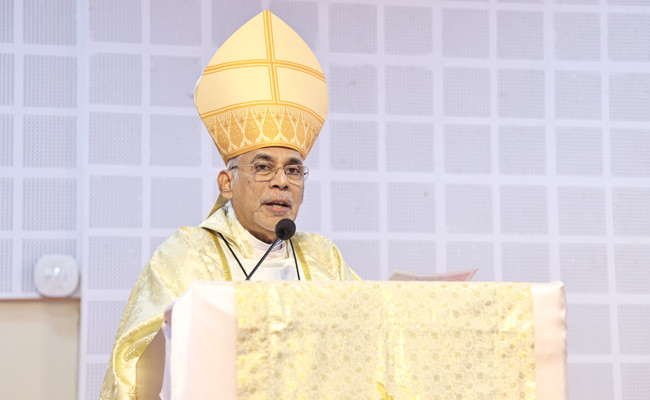
In his presidential address, Cardinal Ferrão referred to the CCBI pastoral plan titled Journeying Towards a Synodal Church: Mission 2033 and called on participants to build on the vision outlined at the 36th Plenary Assembly held in Bhubaneswar in 2025.
Delegates will reflect on four key themes identified from 16 pastoral priorities: interreligious dialogue and peacebuilding, inclusion of the excluded, poverty and integral ecology, and support for children and youth.
The discussions are being conducted through a method of spiritual conversation aimed at encouraging listening, dialogue and collective decision-making. The focus is on translating these discussions into practical actions within the Church.
The assembly also looks ahead to the Jubilee Year 2033, which will mark 2,000 years of the Redemption, and aims to strengthen the Church’s mission in the coming years.
Further consultations are scheduled for September 2026, with the process expected to conclude at the 38th Plenary Assembly of the CCBI in January 2027.
Organisers said the assembly seeks to strengthen unity within the Church and promote participation of all sections, including women and youth, in shaping its future direction.