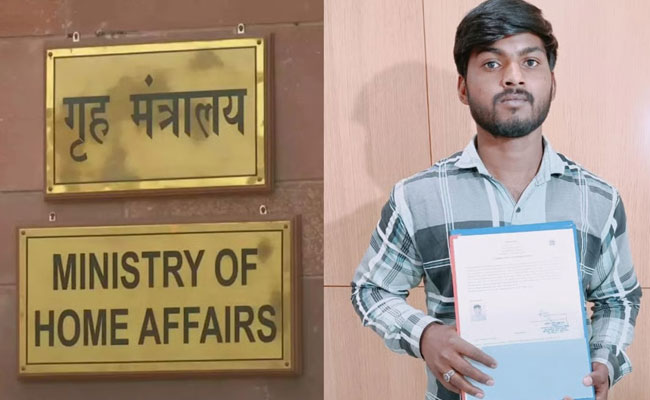
SC refers petitions challenging Waqf Amendment Act 2025 to Justice BR Gavai’s bench
Hearing scheduled for May 15
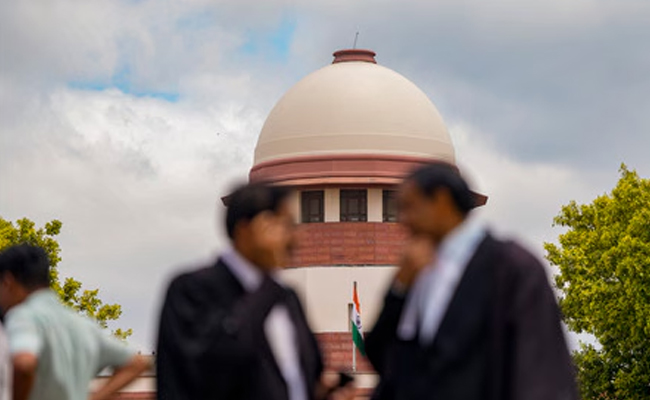
New Delhi: The Supreme Court on Monday directed that the petitions challenging the constitutional validity of the Waqf (Amendment) Act, 2025, be listed before a bench led by Justice B.R. Gavai. The decision was announced by Chief Justice of India (CJI) Sanjiv Khanna, who noted that Justice Khanna is nearing retirement and the matter requires an early hearing.
The case titled In Re: Waqf Amendment Act was heard by a bench comprising CJI Khanna, Justice Sanjay Kumar, and Justice K.V. Viswanathan. The CJI stated that although he had reviewed the counter-affidavit filed by the Union government and the rejoinders submitted by the petitioners, he did not wish to reserve judgment at the interim stage. With the consent of all parties, including Senior Advocates Kapil Sibal and A.M. Singhvi for the petitioners and Solicitor General Tushar Mehta for the Union, the matter was reassigned to Justice Gavai’s bench for hearing on May 15.
In previous hearings on April 16 and 17, the bench engaged in detailed discussions. Senior Advocate Kapil Sibal had raised strong objections to the omission of the ‘waqf by user’ provision, arguing that such waqfs — many centuries old — often lack formal registration documents. Solicitor General Mehta responded that the amendment was prospective and that registered waqf properties would not be affected.
The Court also took note of concerns about the inclusion of non-Muslim members in the Central Waqf Council and State Waqf Boards. CJI Khanna pointedly asked whether non-Hindus are similarly included in bodies overseeing Hindu religious endowments. In response to these concerns, the Court suggested interim directions to prevent any significant changes, including a proposal that only Muslims (barring ex-officio members) should serve on the Waqf Boards and Council. It also indicated that court-declared waqf properties should not be denotified during the pendency of the case.
The Union government, through SG Mehta, assured the Court that no fresh appointments would be made to the Waqf bodies and that the status of existing waqf lands would remain unaffected. These assurances were recorded by the Court.
The petitions, supported by a wide array of individuals and organisations including MPs from AIMIM, RJD, SP, TMC, CPI, DMK, the All India Muslim Personal Law Board, Jamiat Ulema-i-Hind, and others challenge multiple provisions of the Amendment Act.
Meanwhile, BJP-led state governments of Assam, Rajasthan, Chhattisgarh, Uttarakhand, Haryana, and Maharashtra have filed intervention applications supporting the amendment.
The matter will now be heard on May 15 by the bench led by Justice Gavai.
Let the Truth be known. If you read VB and like VB, please be a VB Supporter and Help us deliver the Truth to one and all.
India describes attack on Fujairah 'unacceptable'
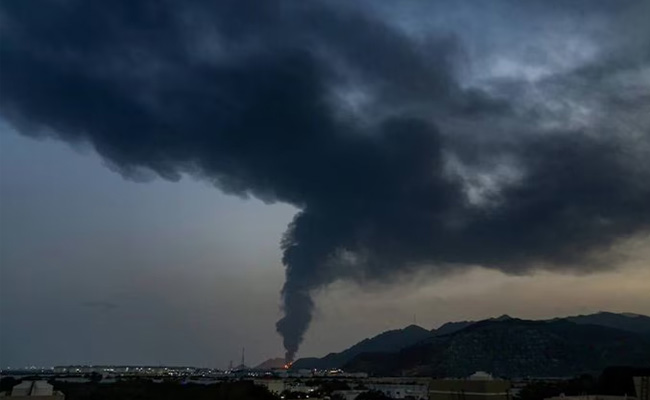
New Delhi (PTI): India on Tuesday described the wounding of three Indians in an attack on the United Arab Emirates' port city of Fujairah as "unacceptable" and pressed for an immediate cessation of hostilities targeting innocent civilians.
New Delhi's reaction came a day after the Indians were injured after a drone attack caused a fire at a major oil industry zone in Fujairah. The UAE had accused Iran of carrying out the strike.
"The attack on Fujairah that resulted in injury to three Indian nationals is unacceptable," External Affairs Ministry spokesperson Randhir Jaiswal said.
"We call for immediate cessation of these hostilities and the targeting of civilian infrastructure and innocent civilians," the spokesperson said.
Jaiswal said India continued to stand for dialogue and diplomacy to deal with the situation so that peace and stability could be restored across West Asia.
"We also call for free and unimpeded navigation and commerce through the Strait of Hormuz in keeping with international law. India stands ready to support all efforts for a peaceful resolution of issues," he said.
The attack on Fujairah city came as the ceasefire between the US and Iran came under strain in the Strait of Hormuz.
The Strait of Hormuz, through which roughly one-fifth of the world's oil and gas pass, remains a major sticking point in the talks. Shipping through the narrow Gulf waterway has been severely disrupted by the conflict, triggering a sharp increase in oil prices and energy shortages in several countries.
The UAE's defence ministry on Monday said its air defence systems engaged 12 ballistic missiles, three cruise missiles and four drones launched from Iran.
The ministry affirmed that it "remains fully prepared and ready to deal with any threats and will firmly confront anything that aims to undermine the security of the country."