SC refuses to entertain PIL seeking menstrual leave policy across country
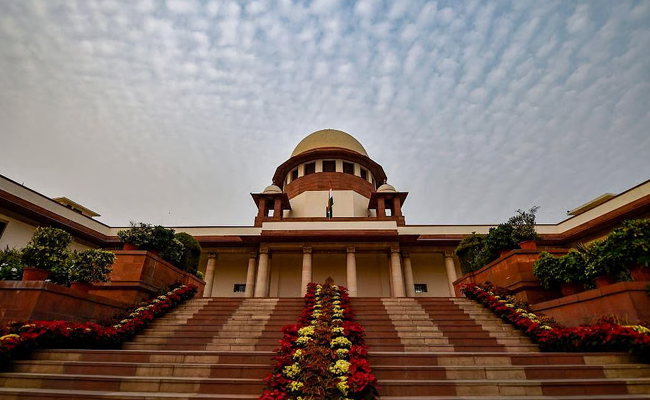
New Delhi (PTI): The Supreme Court on Friday refused to entertain a PIL seeking a nationwide policy providing paid menstrual leave for women students and workers, observing no one would give them jobs in such a scenario and that such a provision would unintentionally reinforce gender stereotypes.
The top court, however, asked the Centre and competent authorities to consider the representation of the PIL petitioner and examine the possibility of framing a policy on menstrual leave after consulting all relevant stakeholders.
A bench comprising Chief Justice of India Surya Kant and Justice Joymalya Bagchi observed that while the intent behind the petition might be welfare-oriented, the practical reality of the job market could lead to "counter-productive" outcomes for women.
ALSO READ: 'NATO air defences intercept third ballistic missile over Turkiye since start of Iran war'
"These pleas are made to create fear, to call women inferior, that menstruation is something bad happening to them... this is an affirmative right... but think about the employer who needs to give paid leave," the bench observed.
Senior advocate MR Shamsad, appearing for the petitioner, said the Karnataka government has formulated a policy to allow menstrual leave and some private organisations are also providing this facility.
"Voluntarily they are giving, then it is excellent. That is a very good thing. But the moment you introduce it as a compulsory condition in law, you do not know the damage it will do to the career of women. Nobody will give them responsibilities, even in judicial services, a normal trial will not be assigned to them," the CJI said.
During the hearing, the bench highlighted the risk of "unintended consequences", suggesting that a mandatory leave policy might discourage private employers from hiring women.
"The moment you introduce it as a compulsory condition in law, you do not know the damage it will do to the career of women," CJI Kant remarked.
"Nobody will give them responsibilities... This can be harmful to their growth," the bench added.
Justice Bagchi echoed these concerns from a business perspective, noting that affirmative action is constitutionally recognised but must be balanced against market realities.
"Look at the practical reality in the job market. The more unattractive the human resource, the less is the possibility of assumption in the market. Will any employer be happy with the competing claims of other genders," Justice Bagchi asked.
The bench was hearing a PIL filed by Shailendra Mani Tripathi.
At the outset, the bench raised the issue of locus of the PIL petitioner and pointed out that no woman herself has approached the court.
It was the third petition filed by Tripathi on the same issue.
The first petition was dealt by the bench in 2023 and it allowed the petitioner to give a representation before the Union Ministry of Women and Children.
The petitioner approached the court in 2024 again on the ground that the Centre did not respond to his representation. The PIL was disposed of in July 2024 again with the direction to the government to take a decision.
"These petitions are deeply rooted, designed PILs. You are not a bona fide petitioner. This is basically only to create a type of impression in young women that you still have some natural issues and you are not at par with male persons and you cannot work like them during a particular time," the bench observed initially.
Shamshad replied that while Odisha has a policy since 1992, Karnataka recently allowed such a leave policy, and Kerala allowed relaxation in schools.
He added that many private organisations are voluntarily allowing period leave.
"The petitioner has made a representation to the authority. It seems to us that whatever was required to be done at the end of the petitioner, he has done for the welfare of young women. It is not necessary for the petitioner to approach the court time and again and seek a positive mandamus.
"We direct that the competent authority shall consider the representation directed to be considered by this court by order dated February 24, 2023, and July 8, 2024, for modelling a policy in consultation with all," the bench ordered.
Let the Truth be known. If you read VB and like VB, please be a VB Supporter and Help us deliver the Truth to one and all.
Explosive device kills 13, injures 38 on bus in southwestern Colombia as violence persists
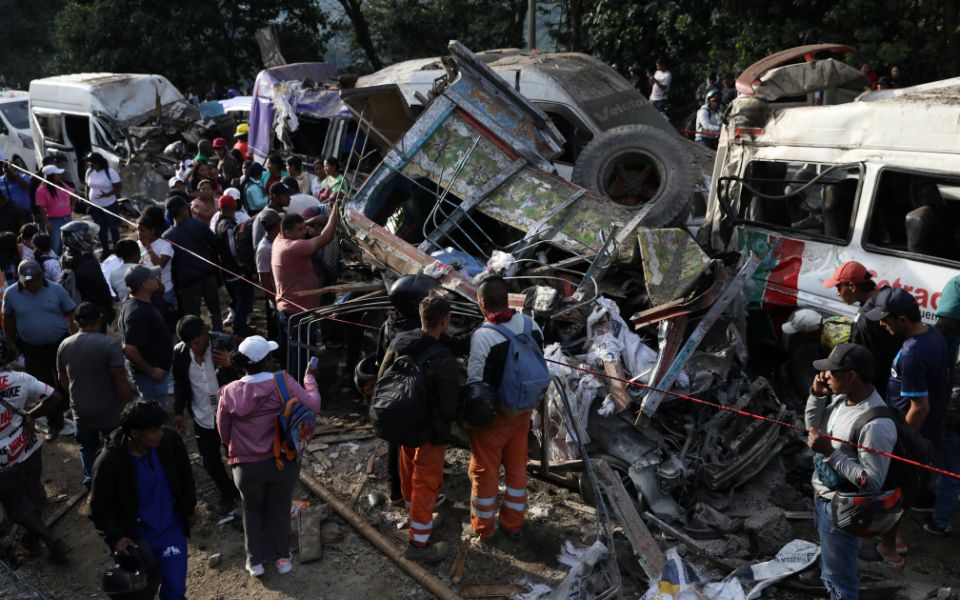
Bogota (Colombia) (PTI): An explosive device killed 13 people travelling on a bus in southwestern Colombia on Saturday, an attack the country's army chief described as a “terrorist act" that also left at least 38 injured as violence linked to drug trafficking in the region escalates.
Octavio Guzman, the governor of the region of Cauca, said on X that the device was set off while the bus was travelling along the Panamerican Highway in the municipality of Cajibio. Five children were among the injured, Cauca Health Secretary Carolina Camargo told Noticias Caracol, a TV news program.
Gen. Hugo Lopez, commander of Colombia's Armed Forces, told a news conference that it was a “terrorist act" and blamed the network of a man known as “Ivan Mordisco” — one of Colombia's most wanted figures — and the Jaime Martínez faction. Both are dissidents of the now-defunct Revolutionary Armed Forces of Colombia that operate in the region.
Neither Ivan Mordisco nor the Jaime Martínez faction abide by the peace agreement signed with the state in 2016.
Colombian President Gustavo Petro condemned the attack on X.
“Those who carried out the attack and killed seven civilians — and wounded 17 others — in Cajibío — many of them Indigenous people — are terrorists, fascists, and drug traffickers,” he wrote.
The attack is the latest in a spate of explosions that have attempted to target public infrastructure. At least 26 incidents have taken place in the past two days in southwestern Colombia, which Lopez said have only affected civilians.
They included a shooting at a police station in the rural area of Jamundi, and an attack on a Civil Aviation radar facility in El Tambo, where authorities took down three explosives-laden drones earlier on Saturday. No one was hurt.
On Friday, two vehicles rigged with explosives were detonated near military units in Cali and Palmira, causing material damage.
The escalation of violence in that region — a territory contested by illegal armed groups linked to drug trafficking — prompted the mobilisation of high-ranking officials on Saturday. Led by Defence Minister Pedro Sanchez, the delegation that includes regional governors and local authorities, was meeting in Palmira when the deadly explosion occurred.
“These criminals seek to instil fear, but we will respond with firmness,” Sanchez said on X.
Meanwhile, Francisca Toro, governor of Valle del Cauca, has called upon the national government to provide “immediate support.” In a message on X, Toro called for a reinforcement of public security forces, enhanced intelligence operations and “decisive actions” against crime in the face of a “terrorist-level escalation.”
According to authorities, Cauca and Valle del Cauca serve as a critical hub for illicit activities of illegal armed groups vying for control over sea and river access routes leading to the port of Buenaventura — a key transit point used to traffic drugs to Central America and Europe.
The government has also offered a reward of more than 1 million dollars for information leading to the capture of “Marlon,” who is identified as the leader of the region's dissident group. On Friday, local authorities offered more than USD 14,000 for information leading to the identification and location of those behind the attacks in Cali and Palmira.