SC refuses to entertain plea of 14 parties alleging misuse of central probe agencies
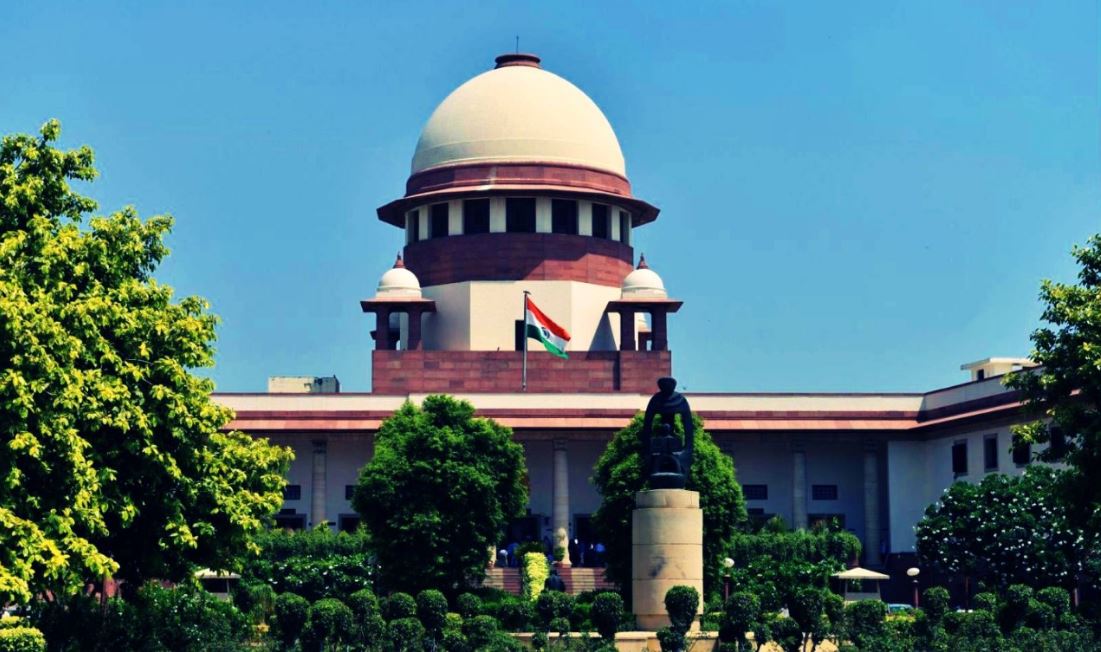
New Delhi, Apr 5: The Supreme Court on Wednesday refused to entertain a plea by 14 political parties led by the Congress alleging arbitrary use of central probe agencies against opposition leaders, asserting that laying down guidelines without facts of a criminal case will be "dangerous".
A bench of Chief Justice D Y Chandrachud and Justice J B Pardiwala expressed disinclination to entertain the petition, saying courts are always there for taking up the grievances of political leaders as they do for common citizens.
"Political leaders do not enjoy an immunity higher than the common citizens...once we accept that political leaders are absolutely on same footing as common citizens with no higher immunity, then how can we say there can be no arrests unless there is a three pronged test which is satisfied," the bench said.
Sensing its disinclination, senior advocate A M Sighvi, appearing for the political parties, sought permission to withdraw the petition which was granted.
"Learned counsel seeks permission to withdraw the plea at this stage. The petition is accordingly dismissed as withdrawn," the bench ordered.
"You please come back to us when you have an individual criminal case or group of cases," the bench said, adding "laying down general guidelines without having relation to facts of a case will be dangerous".
At the outset, Singhvi referred to certain statistics while trying to drive home the point that opposition leaders have been targeted by federal investigative agencies from 2014 to 2022 and that there has been a 600 per cent increase in CBI and ED cases.
"Between 2014 and 2022, 121 political leaders have been probed by the Enforcement Directorate out of whom 95 per cent are from opposition parties," he claimed.
The Narendra Modi government first came to power in May 2014.
The CBI has probed 124 political leaders and out of these, 108 are from opposition political parties, Singhvi claimed.
The bench said even the media, under Article 19(1)(a) (freedom of speech and expression) of the Constitution, does not have higher powers and "the political persons are also citizens and as a citizen they are subject to similar rules".
The senior lawyer said he was not seeking any particular relief in a particular case and the parties, which represent 42 per cent of the electorate in the country, wanted prospective guidelines of pre and post-arrest procedures to be adopted by the central probe agencies.
Earlier, the joint plea was mentioned for urgent hearing on March 24 by Singhvi.
"I am asking for the guidelines for the future. This is a remarkable convergence of 14 parties against the misuse of the agencies, both CBI and ED," Singhvi had said, and claimed that 95 per cent cases of the Central Bureau of Investigation (CBI) and the Enforcement Directorate (ED) are against the leaders of opposition parties.
The senior lawyer had referred to the rise in the number of cases filed by the CBI and ED after the Modi-led NDA government came to power in 2014.
"Second statistics, pre-2014 and post-2014: there is a humongous jump in cases. The rate of conviction is four to five per cent. We are asking for pre-arrest guidelines and post-arrest bail guidelines," Singhvi had said.
The plea alleged there has been an alarming rise in the use of coercive criminal processes against opposition political leaders and other citizens exercising their fundamental right to dissent.
"Investigating agencies such as CBI and ED are being increasingly deployed in a selective and targeted manner with a view to completely crush political dissent and upend the fundamental premises of a representative democracy," a statement issued on behalf of a petitioner alleged.
The plea, filed through lawyer Shadan Farasat, cited some statistics and asserted they demonstrated a "shocking and unconstitutional state of affairs".
Besides the Congress, the parties to the petition included the DMK, RJD, BRS, Trinamool Congress, AAP, NCP, Shiv Sena (UBT), JMM, JD(U), CPI(M), CPI, Samajwadi Party and the J&K National Conference, the statement said.
Let the Truth be known. If you read VB and like VB, please be a VB Supporter and Help us deliver the Truth to one and all.
Mumbai-Pune Expressway ‘missing link’ to open on May 1; will improve travel safety: Shinde
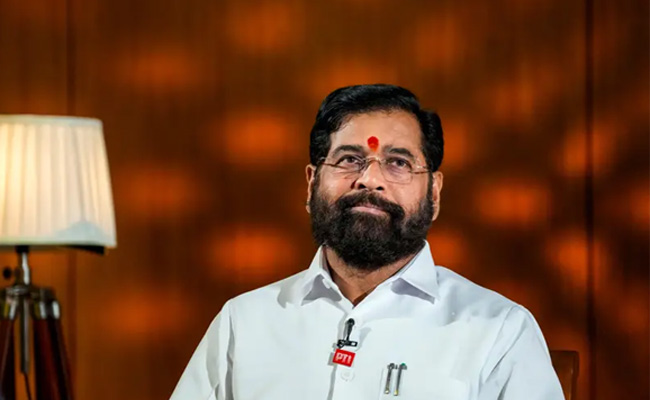
Mumbai (PTI): Maharashtra Deputy Chief Minister Eknath Shinde on Sunday said the long-awaited ‘missing link’ on the Mumbai-Pune Expressway, aimed at bypassing the winding Bhor Ghat section and improving safety, will be inaugurated on May 1.
Shinde, who inspected the project site, said the new stretch will make the expressway fully access-controlled, easing congestion in the hilly section.
Chief Minister Devendra Fadnavis is likely to inaugurate the 13.3-km-long missing link, which connects Khopoli on the Mumbai side to Kusgaon near Lonavala, on Maharashtra Day, which is celebrated on May 1, he said.
The deputy CM said that 99 per cent of the project work has been completed. “I personally inspected the quality of work and found it satisfactory. The remaining minor works will be completed in the next few days,” Shinde said.
Shinde said the new alignment will bypass sharp curves and accident-prone stretches in the ghat section, helping reduce delays and improve commuter safety. He claimed accidents in the section would reduce substantially once the project becomes operational.
“The missing link project will make travel between Mumbai and Pune quicker, safer and more convenient, and will contribute significantly to the state’s development,” he said.
The Rs 6,700-crore project, developed by the Maharashtra State Road Development Corporation (MSRDC), includes two tunnels, high viaducts and a cable-stayed bridge over Tiger Valley.
The missing link will reduce the travel distance between Mumbai and Pune by approximately 6 km and shorten the journey time by 20 to 30 minutes, said officials.
Initially, only light motor vehicles and buses will be permitted on the new stretch to reduce congestion on the existing ghat section, officials said, adding that heavy goods vehicles will be prohibited due to safety concerns.
“There will be no toll hike because of the missing link project. No increase has been proposed at the Khalapur toll plaza either,” Shinde said.
The project comprises two eight-lane tunnels of 1.75 km and 8.92 km in length and two viaducts measuring 850 metres and 650 metres, said officials. It has been designed to bypass the old Khandala ghat section, a winding route that has long slowed down traffic and posed safety risks, said officials.
The 650-metre viaduct will feature what officials described as India’s tallest road cable-stayed bridge, with pylons rising to 182 metres, taller than those on the Bandra-Worli Sea Link.
Officials claimed that the tunnels have a width of 23.75 metres and are among the widest road tunnels in the world. An MSRDC official said the tunnel is likely to be included in the Guinness Book of Records.
The route runs beneath the Lonavala lake area and was executed in difficult terrain marked by heavy rainfall and strong winds, officials said.
Shinde said projects such as the missing link would boost access to tourist destinations such as Lohagad Fort, Visapur Fort and Karla Caves.
MP Shrirang Barne, former corporator Abasaheb Bagul, MSRDC Managing Director Anilkumar Gaikwad and senior engineers from executing agencies were present during the inspection, officials said.
Krishnamurthy Subramanian, executive chairman of construction and engineering company Afcons International Private Limited, said the journey to completion of “India’s highest road cable-stayed bridge” was challenging.
“The bridge, located in the Sahyadri region, presented extreme challenges, including narrow ridges that left little room for heavy machinery, sudden wind speeds reaching up to 100 kmph, and dense fog reducing visibility to a few metres. Despite these conditions, we are proud to deliver this engineering marvel,” he said.
The expressway, spanning approximately 95 km, holds the distinction of being India's first access-controlled highway.