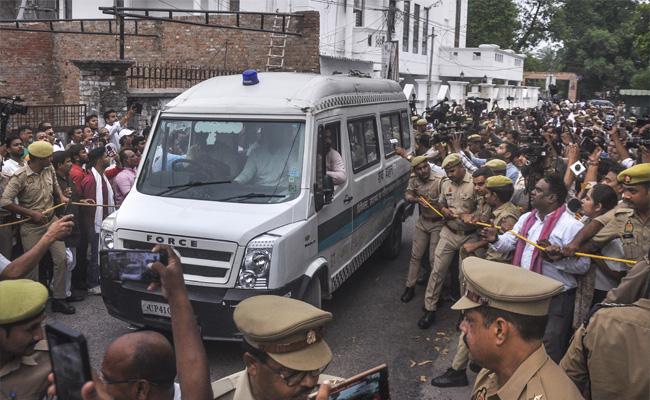
SC refuses to pass interim status quo order on survey of Gyanvapi-Shringar Gauri complex
New Delhi (PTI): The Supreme Court on Friday refused to grant an interim order of status quo on the survey of the Gyanvapi-Shringar Gauri complex at Varanasi in Uttar Pradesh.
The top court, however, agreed to consider listing the plea of a Muslim party against the survey of the Gyanvapi premises.
A bench headed by Chief Justice N V Ramana was told by senior advocate Huzefa Ahmadi, appearing for the Muslim side in the Gyanvapi mosque case, that a plea has been filed against the survey being conducted at the Varanasi site.
Let me see, the CJI said on urgent listing of the plea.
We have filed in relation to a survey which has been directed to be conducted in relation to the Varanasi property. This (Gyanvapi) has been a mosque since time immemorial and this is clearly interdicted by the Places of Worship Act, Ahmadi said.
He said the direction to conduct a survey has been passed and an order of status quo be passed at the moment. I do not know anything. How can I pass such an order? I will read. Let me see, the CJI said.
A Varanasi local court on Thursday rejected a plea to replace the advocate commissioner it had appointed for conducting a videography survey of the Gyanvapi-Shringar Gauri complex here and ordered the completion of the task by May 17.
The district court also appointed two more lawyers to help the advocate commissioner carry out the survey at the mosque, which is located close to the iconic Kashi Vishwanath temple. It ordered the police to register FIRs if there are attempts to scuttle the exercise.
Let the Truth be known. If you read VB and like VB, please be a VB Supporter and Help us deliver the Truth to one and all.
Congress using hijab issue to pacify minority anger, alleges Karnataka LoP R Ashoka
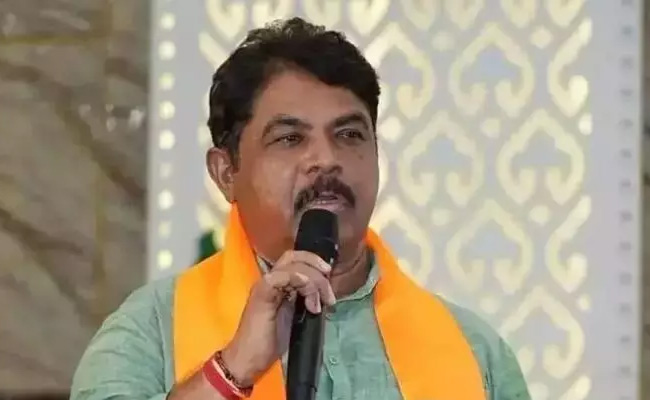
Bengaluru: Leader of Opposition in the Assembly R. Ashoka has accused the Congress government of using the hijab issue to placate what he described as discontent among minority voters after the Davanagere by-election.
In a post on X on Wednesday, Ashoka alleged that the state government, instead of addressing issues such as price rise, corruption, farmers’ distress and law and order, was attempting to retain its minority vote base by reviving the hijab issue.
Referring to the 2022 dress code introduced by the BJP government, which prohibited hijab in schools and colleges, Ashoka said the Karnataka High Court had upheld the policy and emphasised the importance of discipline in educational institutions.
He questioned the Congress government’s move to revisit the issue and asked whether setting aside the court-backed policy to benefit one community could be described as secularism.
Ashoka further alleged that while the government was willing to permit hijab, it continued to prohibit saffron shawls.
He accused the government of dividing students on religious lines rather than treating schools and colleges as spaces of equality.
Drawing a comparison with Mamata Banerjee’s government in West Bengal, Ashoka claimed that excessive appeasement politics had harmed the state and warned that the Congress in Karnataka could face a similar political response.
He said voters in Karnataka would teach the Congress a lesson for what he termed “vote-bank politics” and for compromising constitutional and judicial principles.