SC rejects plea alleging glitches in UMEED waqf portal, grants liberty to approach authorities
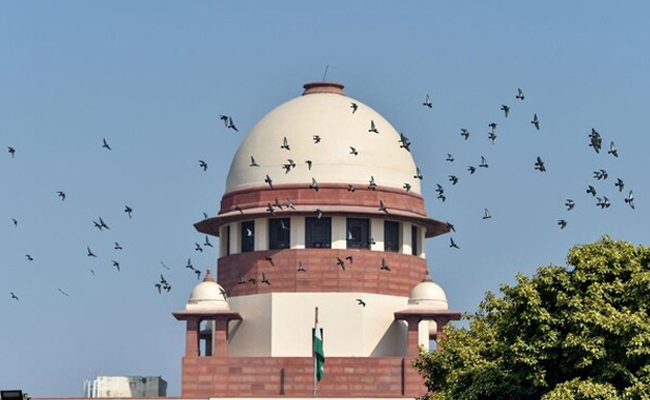
New Delhi (PTI): The Supreme Court on Friday refused to entertain a petition filed by a waqf mutawalli alleging technical and structural deficiencies in the Centre’s UMEED portal meant for uploading details of waqf properties.
Observing that the issues raised were largely administrative in nature, a bench comprising Chief Justice Surya Kant and Justice Joymalya Bagchi dismissed the plea.
The bench, however, granted the liberty to petitioner Hashmat Ali, a mutawalli (caretaker) of a waqf, to approach the appropriate authorities for redressal of grievances.
“We see no ground to entertain this writ petition. The petitioner may be well advised to approach the prescribed authority for clarification or addressing of grievances for which liberty is granted,” the CJI said in the order.
At the outset, the CJI questioned the maintainability of the plea on the ground as to why it was filed in the top court directly. “Why did you not approach the high court?” the CJI asked.
Senior advocate Maneka Guruswamy, appearing for Ali, said the high court was unlikely to entertain the matter since challenges to the 2025 amendments to the Waqf law were already pending before the top court.
However, the CJI noted that the present petition did not raise any substantive constitutional challenge to the amendments, but was instead focused on “administrative difficulties” in using the portal. Such grievances, the court said, could be addressed by the high court or the authorities concerned.
The senior lawyer said apart from technical glitches, the petition also raised concerns regarding the classification of waqfs under the Waqf Rules, 2025.
She said that the category of 'Waqf by survey' had been subsumed under 'Waqf by user,' and that the UMEED Portal did not provide any separate option for 'Waqf by survey' in its drop-down menu.
Justice Bagchi noted that the ministry had clarified that 'Waqf by survey' stood subsumed within the 'Waqf by user' category.
Ali, a mutawalli from Madhya Pradesh, challenged the enforceability of the digital uploading mandate under Section 3B of the Unified Waqf Management, Empowerment, Efficiency and Development Act, 1995.
The petitioner alleged that the UMEED portal, notified under the UMEED Rules, 2025, was structurally defective and technologically unfit for registering waqf properties.
On December 1 last year, the top court had refused to extend time for the mandatory registration of all waqf properties, including 'waqf by user', under the UMEED portal.
The Centre launched the Unified Waqf Management, Empowerment, Efficiency and Development (UMEED) Act central portal on June 6 to create a digital inventory after geo-tagging all waqf properties.
According to the mandate of the UMEED portal, details of all registered waqf properties across India are to be mandatorily uploaded within six months.
Let the Truth be known. If you read VB and like VB, please be a VB Supporter and Help us deliver the Truth to one and all.
Health Minister Dinesh Gundu Rao criticizes Centre for steep hike in commercial LPG price
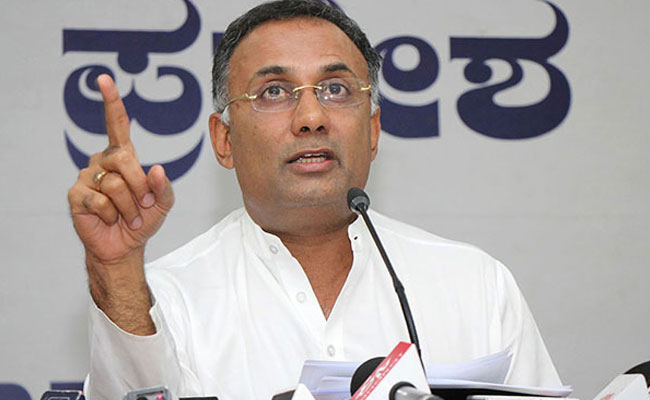
Bengaluru: Karnataka Health Minister Dinesh Gundu Rao has slammed the BJP government in the Centre for the hike in the price of commercial LPG, saying the sudden rise of the fuel rate by Rs 993 a cylinder has hit the common man hard.
Critically commenting that this was expected of the Centre after elections to five states, Rao posted in Kannada on his ‘X’ account on Saturday that the people have been shown only the trailer and, the real struggle is yet to begin.
“Since there is no election in any state, there will certainly be major hikes in the rates of petrol, diesel and domestic LPG in barely a few days,” he has predicted.
The minister has further tweeted, “The rate of commercial LPG has gone up to Rs 3,152 per cylinder, which will hit the hotel industry greatly. Ironically, the direct impact of the hike will be on customers of hotel.”
He pointed out that, earlier, the price used to be hiked by approximately Rs 50 and Rs 100 a cylinder. “This time, the rate has been shot up by Rs 993. What do we call this except daylight robbery? Can this be the ‘Acche Din’ that the BJP has been promising?” Rao asked mockingly.
He also questioned the cause for BJP members’ silence for the rate hike, reminding that the party always ‘threw a tantrum’ when a non-BJP government does so even at a minor level. “Does this reflect their fear of ‘Vishwaguru’ Modi? Is it the party’s sheer disregard for the welfare of the people?” he has questioned.
ಊಹಿಸಿದಂತೆಯೇ ಪಂಚರಾಜ್ಯ ಚುನಾವಣೆ ಬಳಿಕ ಕೇಂದ್ರ ಸರ್ಕಾರ ಬೆಲೆಯೇರಿಕೆಯ ಛಾಟಿ ಬೀಸಲು ಪ್ರಾರಂಭಿಸಿದೆ. ಕಮರ್ಷಿಯಲ್ ಸಿಲಿಂಡರ್ ಬೆಲೆಯನ್ನು ಏಕಾಏಕಿ ₹993 ಏರಿಸುವ ಮೂಲಕ ಮರ್ಮಘಾತ ನೀಡಿದೆ. ಚುನಾವಣೆ ಮುಗಿದ ಕೂಡಲೇ ಬೆಲೆಯೇರಿಕೆ ನಿರೀಕ್ಷಿತವಾಗಿತ್ತು. ಆದರೆ ಒಂದೇ ಭಾರಿ ₹993 ಹೆಚ್ಚಳ ಮಾಡಿರುವುದು ಅನಿರೀಕ್ಷಿತದ ಜೊತೆಗೆ ಆಘಾತ ತಂದಿದೆ.…
— Dinesh Gundu Rao/ದಿನೇಶ್ ಗುಂಡೂರಾವ್ (@dineshgrao) May 2, 2026