SC slams Karnataka HC for granting bail to Darshan, questions discretion of bench
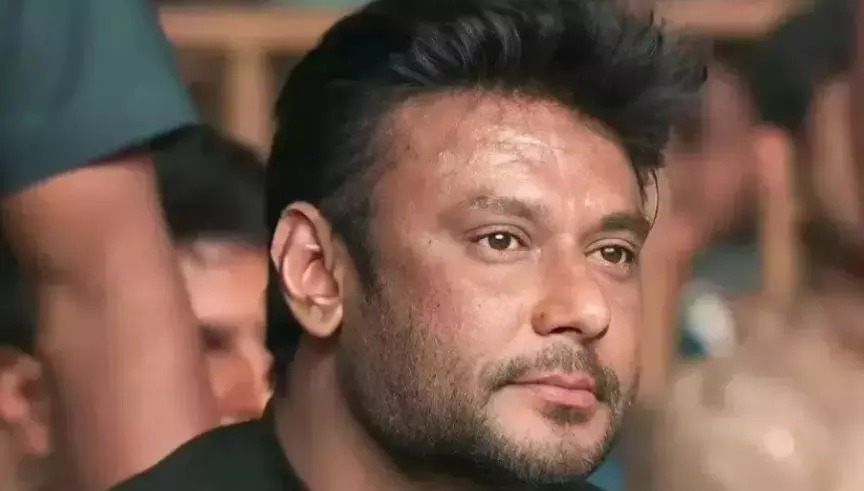
New Delhi: The Supreme Court has slammed Karnataka High Court for the manner in which it handled the Renukaswamy murder case against film actor Darshan, including granting him bail.
The bench comprising Justices JB Pardiwala and R Mahadevan was on Thursday hearing the plea by the Karnataka government challenging the bail granted to the actor. While the bench has reserved its judgment in the case, the judges asked if the HC had exercised discretion while granting bail to Darshan and six other accused.
The apex court asked if the High Court treated all cases in the same vein while granting bail, pointing out the need to handle different case in different manners. It stressed that, with the case being one of murder and conspiracy, it needed to be handled more seriously and with greater discretion.
Stating that High Court judges had committed severe errors while granting bail to the actor, the Supreme Court bench said that it would be understandable if sessions court judges made such mistakes but an error by a High Court judge was greatly worrisome.
Addressing accused Pavithra Gowda’s advocate, the judges said that Gowda was the primary cause for the case as the accused had attacked the victim after she instigated them.
While the advocate denied the allegations of Gowda having received threats on messages and calls, the Supreme Court bench said that the argument lacked logic.
Further, the judges hit out at pictures of the attack that were found in the mobile phone of one of accused, asking if people posed for photographs during an attack.
The judges said that they were withholding the judgment for now and would take the final decision after reviewing the judgment of the High Court.
Let the Truth be known. If you read VB and like VB, please be a VB Supporter and Help us deliver the Truth to one and all.
AIITA welcomes Karnataka’s ban on obscene songs in school events

Bhatkal: The Karnataka unit of the All India Ideal Teachers Association (AIITA) has welcomed the Karnataka government’s decision to strictly ban school children from dancing to obscene songs during educational and cultural programmes in government, aided, and private schools across the state.
AIITA Karnataka State President M. R. Manvi congratulated the government for taking what he termed an important step to preserve the sanctity of education.
“Such decisions to safeguard the dignity of school children and uphold the values of education are the need of the hour. This rule should not be limited to government schools alone but must be strictly implemented in all private educational institutions as well,” he said.
He further urged the government to address other concerns within school programmes.
“The government should not only prohibit obscene dances in the name of school anniversaries, but also ensure that plays and dialogues that incite religious hatred are avoided. Schools should be centres of harmony, not platforms for spreading hatred,” he added.
According to a recent circular issued by the Department of School Education and Literacy, obscene dances are adversely affecting the mental health and moral values of students.
In this regard, schools have been advised to use songs that promote nationalism, positive thinking, the greatness of Kannada culture, and value-based traditions instead of inappropriate content during programmes.
The circular also emphasises that students should be dressed in decent attire.
AIITA also backed the department’s warning that disciplinary action would be taken against head teachers if such guidelines are violated. The association has further demanded that district Deputy Directors of Public Instruction strictly monitor the implementation of these rules.