SC seeks LS secretary general's reply on Moitra's plea against expulsion
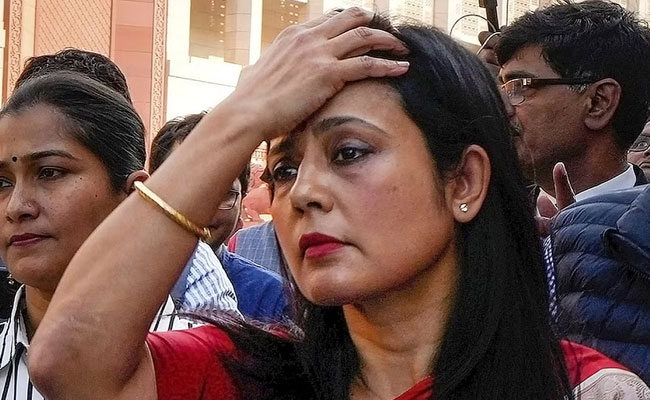
New Delhi (PTI): The Supreme Court on Wednesday sought a reply from the Lok Sabha secretary general on Trinamool Congress leader Mahua Moitra's plea challenging her expulsion from the Lower House.
A bench of Justices Sanjiv Khanna and Dipankar Datta refused to pass any order on an interim prayer of Moitra to let her attend the proceedings of the House, saying, allowing it would be like allowing the main petition.
"We will consider your plea for interim relief in March," Justice Khanna told Senior advocate Abhishek Singhvi, appearing for Moitra.
The top court also refused to issue any notice to Lok Sabha Speaker Om Birla and the Committee on Ethics of Lok Sabha -- both were made a party by Moitra in her plea -- and said it would only seek a reply from the Lok Sabha secretary general.
Solicitor General Tushar Mehta, appearing for the Lok Sabha secretary general, requested the court not to issue a formal notice and said that he would file a reply to Moitra's petition.
Mehta said the court should not venture into the internal matter of discipline in the sovereign organ of the state. The bench then passed the order and listed the matter for further hearing in the week starting March 11.
On December 8, after a heated debate in the Lok Sabha over the panel report, during which Moitra was not allowed to speak, Parliamentary Affairs Minister Pralhad Joshi moved a motion to expel the TMC MP from the House for "unethical conduct," which was adopted by a voice vote.
The ethics committee found Moitra guilty of "unethical conduct" and contempt of the House as she shared her Lok Sabha members' portal credentials -- user ID and password -- with unauthorised people, which had an irrepressible impact on national security, Joshi had said.
The committee had also recommended that in view of the "highly objectionable, unethical, heinous and criminal conduct" of Moitra, an intense legal and institutional inquiry be initiated by the government with a set deadline.
The motion moved by Joshi said Moitra's "conduct has further been found to be unbecoming as an MP for accepting gifts and illegal gratification from a businessman to further his interest, which is a serious misdemeanour and highly deplorable conduct" on her part.
Earlier, ethics committee Chairman Vinod Kumar Sonkar had tabled the first report of the panel on a complaint filed by Bharatiya Janata Party MP Nishikant Dubey against Moitra.
In October last year, Dubey, on the basis of a complaint submitted by Supreme Court lawyer Jai Anant Dehadrai, alleged that Moitra had asked questions in the Lok Sabha in exchange for cash and gifts from businessman Darshan Hiranandani to mount an attack on industrialist Gautam Adani and Prime Minister Narendra Modi.
In an affidavit to the ethics committee on October 19, last year, Hiranandani claimed that Moitra had provided him with her login ID and password for the Lok Sabha members' website.
The Central Bureau of Investigation has already filed a preliminary FIR in the case.
Let the Truth be known. If you read VB and like VB, please be a VB Supporter and Help us deliver the Truth to one and all.
Where is question of offence when there is consensual relationship? SC asks
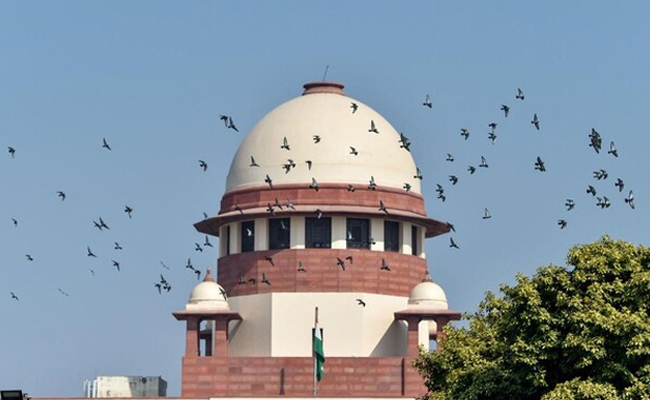
New Delhi (PTI): Where is the question of an offence when a relationship is consensual? the Supreme Court on Monday asked a woman who had challenged an order of the Madhya Pradesh High Court that had quashed an FIR against her former live-in partner in a case of alleged sexual assault on a false promise of marriage.
A bench of Justices B V Nagarathna and Ujjal Bhuyan noted that the woman lived together with the man and also had a child from him.
"Where is the question of offence when there is a consensual relationship? They were living together and she also had a child from him and then there is no marriage and now, she says sexual assault? For 15 years they lived together," Justice Nagarathna remarked.
The woman's counsel told the court that she had lost her husband earlier and was introduced to the accused by her brother-in-law.
The court was also told that the accused had promised to marry her and sexually exploited her.
Justice Nagarathna then asked, "Why did she go and live with him before marriage?"
"She lived with him. She had a child from him. He walks out because there is no marriage bond. Legal bond is not there. He walks out, that is the risk in a live-in relationship. So once he walks out, it does not become a criminal offence," she said.
The woman's lawyer submitted that the accused was already married and had concealed this fact.
"See, if there was marriage, the question of her rights would have been better. She could have filed regarding bigamy. She could have filed for maintenance. She would have got those reliefs. Now since there is no marriage, they live together, this is the risk. They can walk out any day. What do we do?" Justice Nagarathna said.
She suggested that the woman could pursue remedies, such as maintenance for the child, and asked the parties to go for mediation.
"Even if he goes to jail, what will she gain? We can think of some maintenance for the child. Child is now seven years (old). At least, some monetary compensation can be made for the child," Justice Nagarathna said.
The apex court issued a notice in the matter and asked the parties to explore if a settlement could be reached between the petitioner and the accused.