SC seeks replies from Centre & Karnataka on PETA's plea against Kambala race
New Delhi, Dec 7: The Supreme Court Friday issued notices to the Centre and Karnataka government seeking their responses on a plea challenging the validity of a new state law allowing buffalo race, Kambala, in the state.
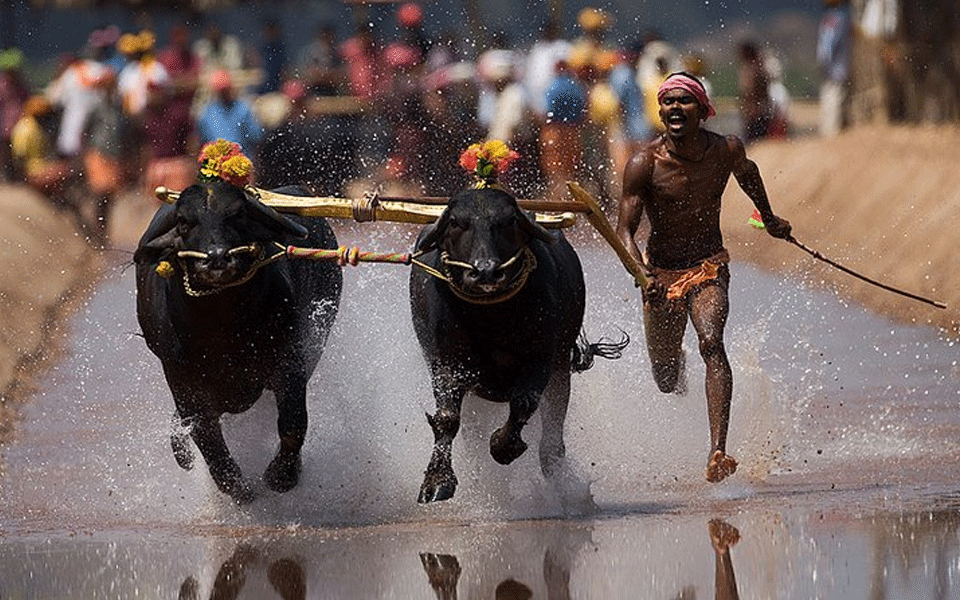
The Kambala race, held between November and March, involves a pair of buffaloes tied to a plough and anchored by one person. They are made to run in parallel muddy tracks in a competition in which the fastest team wins.
It is believed to be held to propitiate the gods for a good harvest, besides being a recreational sport for farmers.
Bullock cart races are held in parts of north Karnataka and in the coastal districts of Udupi and Dakshina Kannada.
People for the Ethical Treatment of Animals (PETA) has filed a petition in the apex court challenging the validity of Prevention of Cruelty to Animals (Karnataka Second Amendment) Act 2017, which allowed Kambala and other races in the state.
The matter came up for hearing on Friday before a bench of Justices Madan B Lokur and Deepak Gupta.
The court, which issued notice on PETA's petition, tagged it with pending petition which has challenged similar state laws allowing use of bulls for 'Jallikattu' in Tamil Nadu and bullock cart races in Maharashtra.
In its petition in Kambala matter, PETA has said the new amended law was contrary to the object and purpose of the Prevention of Cruelty to Animals Act, 1960 which mandates that animals must be protected from unnecessary suffering.
On February 2 this year, the apex court had referred the pleas related to 'Jallikattu' to a five-judge constitution bench which would decide if the bull-taming sport fell under cultural rights or perpetuated cruelty to animals.
Jallikattu, also known 'eruthazhuvuthal', is a bull- taming sport played in Tamil Nadu as part of the Pongal harvest festival.
PETA is one of the petitioners who have challenged the state law that allowed the bull-taming sport in Tamil Nadu.
Let the Truth be known. If you read VB and like VB, please be a VB Supporter and Help us deliver the Truth to one and all.
4 workers die after being buried under coal slurry in Jharkhand's Dhanbad
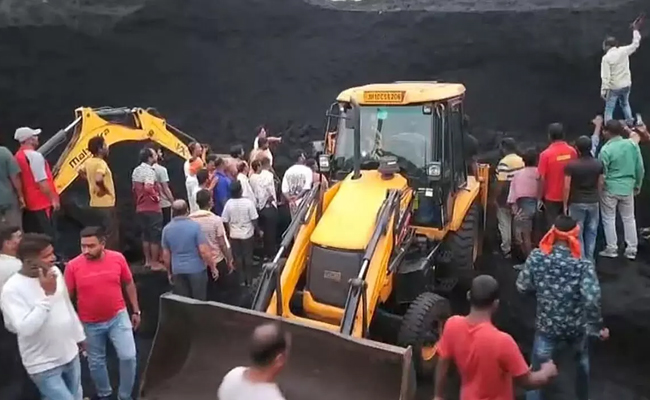
Dhanbad (Jharkhand) (PTI): At least four workers died after being buried under coal slurry in Jharkhand's Dhanbad district on Saturday, a police official said.
The incident took place at Moonidih coal washery in the command area of Bharat Coking Coal Limited (BCCL).
"Bodies of all four workers were dug out of debris during a rescue operation," Putki police station in-charge Waqar Hussain told PTI.
The incident took place when coal slurry was being loaded into trucks by workers, during which a large chunk of slurry fell and trapped several workers underneath, officials said.
The deceased have been identified as Manik Bauri, Dinesh Bauri, Deepak Bauri, and Hemlal Gope.
Meanwhile, the family members of the deceased and local villagers placed the bodies in front of the washery gate and began a protest.
They demanded compensation, jobs for dependents and action against those responsible for the incident.
Police and administration officials are trying to pacify the protesters, an official said.