SC seeks reply of Centre, Kerala governor's office on state govt plea on delay in assenting bills

New Delhi (PTI): The Supreme Court on Monday sought responses from the Centre and the office of Kerala Governor Arif Mohammed Khan on a plea of the state government accusing him of not granting assent to several bills cleared by the legislative assembly.
A bench comprising Chief Justice D Y Chandrachud and Justices J B Pardiwala and Manoj Misra took note of the submissions of senior advocate K K Venugopal, alleging delay on the part of the governor in granting assent to eight bills.
The top court also issued a notice to Attorney General R Venkataramani asking that either he or Solicitor General Tushar Mehta assist it in the hearing. The court will now hear the Kerala government's plea on Friday.
"This is an endemic situation. The governors do not realise that they are part of the legislature under Article 168 of the Constitution," Venugopal said.
In its plea, the state of Kerala claimed that Governor Khan is delaying the consideration of eight bills that have been passed by the state assembly.
"Mr Venugopal submits that- 1. The governor is a part of legislature under Art 162; 2. The governor had promulgated three ordinances which were later converted into those passed by legislature; 3. As many as eight bills are pending consideration for assent ranging from 7 to 21 months," the bench said in its order.
The Kerala government has claimed that the governor is delaying the bills by withholding his assent and this is "defeating the rights of the people".
A similar plea has been filed by the Tamil Nadu government as well and is also being heard by the apex court.
Let the Truth be known. If you read VB and like VB, please be a VB Supporter and Help us deliver the Truth to one and all.
Man kills 12-year-old nephew over property dispute in Karnataka’s Sindhanur
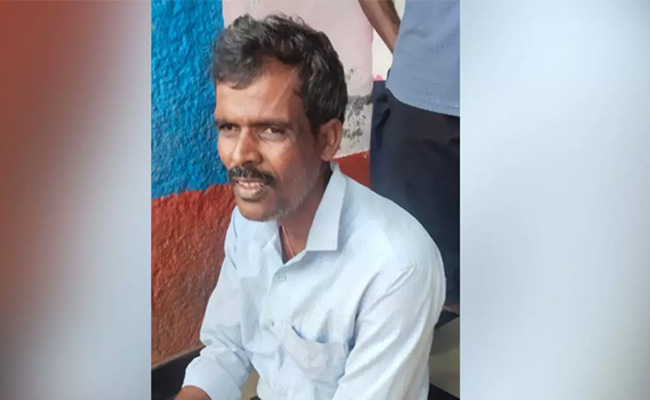
Sindhanur: A 12-year-old boy was killed and his mother seriously injured after a man allegedly attacked his elder brother’s family with a knife over a property dispute in Alabanur village of Sindhanur taluk on Wednesday morning.
The deceased has been identified as Nagaraj Siddappa Alvi (12). Amrutha Siddappa (42) sustained serious injuries in the attack. Police said the accused is Basavaraj Rudrappa Alvi, the younger brother of the victim boy’s father.
According to preliminary information, Basavaraj had arrived in Alabanur village on Tuesday and was staying at his mother’s house.
On Wednesday morning, he allegedly went to the house of his brother Siddappa carrying a knife. At the time, Siddappa’s wife Amrutha and children Nagaraj and Dhanush were present in the house.
Police said the accused allegedly attacked them with the knife. Nagaraj died in the incident, while Amrutha and Dhanush suffered serious injuries.
The injured were shifted to the government hospital in the city for treatment.
Deputy Superintendent of Police G. Chandrashekhar visited the spot and gathered information.
Sources said Chinnamma Rudrappa of Alabanur village has two sons Siddappa, who lives in Alabanur, and Basavaraj, who resides in Alliganur village of Siruguppa taluk.
Police suspect the long-standing property dispute between the two brothers led to the fatal attack.