SC sets aside Bombay HC order acquitting ex-DU professor GN Saibaba in Maoist links case
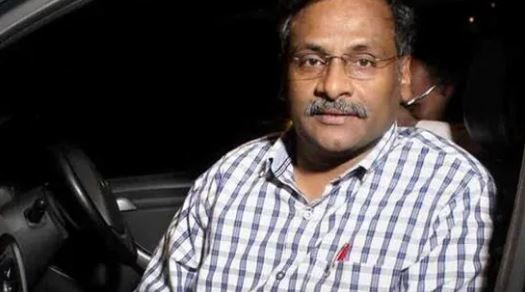
New Delhi, Apr 19: The Supreme Court on Wednesday set aside a Bombay High Court order acquitting former Delhi University professor G N Saibaba in a Maoist links case and remanded it to the high court for fresh consideration on merits within four months.
A bench of justices M R Shah and CT Ravikumar directed the chief justice of the Bombay High Court to place Saibaba's appeal and that of other accused not before the same bench which had discharged them but another bench.
It said that question of law, including sanction under the Unlawful Activities (Prevention) Act (UAPA), is to remain open for adjudication by the high court.
"We set aside the impugned common judgement and order passed by the Bombay High Court. The matters are remitted back to the high court to decide the said appeals afresh in accordance with law and on its own merits, including the question of sanction," the bench said.
The order came on an appeal filed by the Maharashtra government challenging the high court order.
Additional Solicitor General SV Raju and advocate Abhikalp Pratap Singh appeared for the Maharashtra government and senior advocate R Basant represented Saibaba in the case in the apex court.
The top court on October 15 last year had suspended the high court order acquitting Saibaba and others in a Maoist-links case, saying the merits of the case was not considered while granting them the relief.
In a special hearing conducted on Saturday, the apex court had rejected Saibaba's request to order his release from jail due to his disability and health conditions and put him under house arrest after the Maharashtra government opposed the prayer, saying nowadays, there is a new tendency of "urban Naxals" to seek house arrest.
More than eight years after his arrest in 2014, the Bombay High Court on October 14 last year acquitted Saibaba and ordered his release from jail, noting that the sanction order issued to prosecute the accused in the case under the stringent provisions of the UAPA was "bad in law and invalid".
The Nagpur bench of the high court had allowed the appeal filed by Saibaba challenging a 2017 order of the trial court convicting and sentencing him to life imprisonment for offences under provisions of UAPA and the Indian Penal Code.
Apart from Saibaba, the high court had acquitted Mahesh Kariman Tirki, Pandu Pora Narote (both farmers), Hem Keshavdatta Mishra (student) and Prashant Sanglikar (journalist), who were sentenced to life imprisonment, and Vijay Tirki (labourer), who was sentenced to 10 years in jail. Narote died during the pendency of the appeal.
Let the Truth be known. If you read VB and like VB, please be a VB Supporter and Help us deliver the Truth to one and all.
Four booked for tying 18-year-old to tree, beating him up in UP's Pratapgarh

Pratapgarh (UP) (PTI): Four people were booked here for the abduction and assault of a man who they allegedly tied to a tree and beat up, police said on Wednesday.
The incident, a video of which has gone viral, took place on Tuesday afternoon under the Kunda police station limits.
The FIR was registered on Wednesday evening based on a complaint from the victim's father.
According to Keshav Prasad Yadav, a resident of Mauli village, some people called his 18-year-old son Nikhil Yadav on the phone and asked him to come out of his house around 2.30 pm on Tuesday.
As he reached outside the village as instructed, the accused allegedly forced him into a car and took him towards the Tinpedwa forest area, where they tied him to a tree and assaulted, the complainant said.
The attackers also recorded a video of the incident and circulated it on social media. The purported video shows the men thrashing Nikhil one after another, while one of them is assumed to have recorded the act.
Kunda Station House Officer Manoj Pandey confirmed the incident and said efforts are underway to identify and arrest all the accused.
Meanwhile, Samajwadi Party president Akhilesh Yadav has shared the video on social media, describing the incident as reflective of a "dominant mindset" against the PDA (Pichda or Backward, Dalit, and Alpasankhyak or Minority), and demanded strict action against the accused.
_vb_80.png)