SC sets aside Calcutta HC verdict which advised adolescent girls to control sexual urges
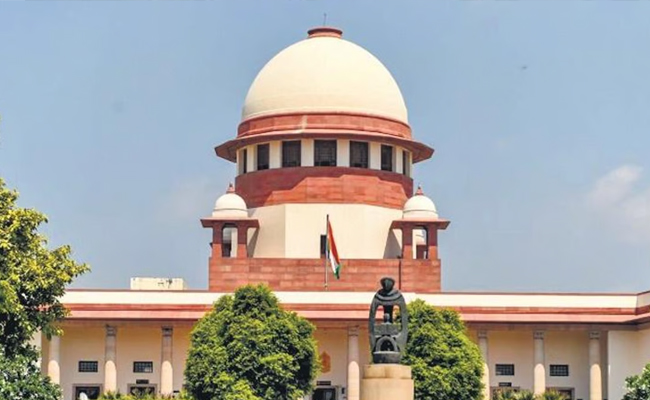
New Delhi (PTI): The Supreme Court on Tuesday set aside an order of the Calcutta High Court in which it acquitted an accused in a sexual assault case and made "objectionable" observations advising adolescent girls to "control sexual urges".
A bench of justices Abhay S Oka and Ujjal Bhuyan said it has passed several directions for the authorities on dealing cases under the Protection of Children from Sexual Offences (POCSO) Act.
Justice Oka, who pronounced the verdict on behalf of the bench, said directions have also been issued on how the judgements should be written by the courts.
The top court had on December 8 last year criticised the verdict and termed as "highly objectionable and completely unwarranted" some observations made by the high court.
The apex court had taken cognisance of some of the observations made by a division bench of the high court and initiated a writ petition on its own, observing that judges are not expected to "preach" while writing judgements.
The West Bengal government had also challenged the October 18, 2023 verdict of the high court in which these “objectionable observations” were made.
In its judgement, the high court had observed that female adolescents should "control sexual urges" as in the "eyes of the society she is the loser when she gives in to enjoy the sexual pleasure of hardly two minutes".
The high court had made the observations while hearing an appeal by a man who was awarded a 20-year sentence for sexual assault. The high court had acquitted the man.
While hearing the matter on January 4, the apex court had observed that certain paragraphs in the high court verdict were "problematic" and writing such judgements was "absolutely wrong".
In its order passed on December 8 last year, the apex court referred to certain observations made by the high court and said, "Prima facie, the said observations are completely in violation of the rights of the adolescents guaranteed under Article 21(right to life and personal liberty) of the Constitution of India."
It had observed the issue before the high court was about the legality and validity of the order and judgement dated September 19/20, 2022 by which a man was convicted of offences under sections 363 (kidnapping) and 366 (kidnapping, abducting or inducing woman to compel her marriage) of the Indian Penal Code as well as section 6 of the Protection of Children from Sexual Offences (POCSO) Act.
"As per the order of the Chief Justice of India, suo motu writ petition under Article 32 of the Constitution of India has been initiated mainly due to sweeping observations/findings recorded by the division bench of the high court of Calcutta in the impugned judgment," it had said.
The apex court had said in the appeal against conviction, the high court was called upon to adjudicate only on the merits of the appeal and nothing else.
"But we find that the high court has discussed so many issues which were irrelevant. Prima facie, we are of the view that while writing a judgment in such an appeal, the judges are not expected to express their personal views. They are not expected to preach," it had said.
In its verdict, the high court had acquitted the man stating that it was a case of "non-exploitative consensual sexual relationship between two consenting adolescents, though consent in view of the age of the victim is immaterial".
The high court had said it is the duty/obligation of every female adolescent to "protect her right to the integrity of her body; protect her dignity and self-worth; thrive for the overall development of herself transcending gender barriers; control sexual urge/urges as in the eyes of the society she is the loser when she gives in to enjoy the sexual pleasure of hardly two minutes; protect her right to autonomy of her body and her privacy".
"It is the duty of a male adolescent to respect the aforesaid duties of a young girl or woman and he should train his mind to respect a woman, her self-worth, her dignity and privacy, and her right to autonomy of her body," the high court had said.
Let the Truth be known. If you read VB and like VB, please be a VB Supporter and Help us deliver the Truth to one and all.
Maharashtra sets up state vaccination task force to strengthen immunisation programme

Mumbai (PTI): The Maharashtra government has set up a State Vaccination Task Force to strengthen the regular immunisation programme and review the progress of related campaigns, a health department official said on Monday.
The State Vaccination Task Force will comprise at least 29 members and will be headed by the administrative head of the health department, he informed.
The government has also constituted separate district-level and municipal vaccination task forces to improve implementation and address challenges at the grassroots level, he said.
Municipal task forces, chaired by respective civic commissioners, have been constituted in view of the vast urban population in Maharashtra and the role of civic bodies in implementing different health programmes.
The district-level task forces will function under the chairmanship of collectors.
"Complete immunisation of children at the appropriate age is an extremely simple, cost-effective and highly effective measure to reduce child mortality and the prevalence of diseases among kids. Immunisation is a powerful tool for reducing illness in children," maintained the official.
To ensure full vaccination of all children, the state government implements various campaigns from time to time as per the central government guidelines, he pointed out.
"Active participation and cooperation of other relevant government departments are essential (in making these campaigns successful)," according to the official.
The state-level body will review the regular immunisation programme, associated campaigns and vaccine-preventable diseases in detail. It will also conduct focused assessments of high-risk districts and municipal corporations, including vacancies at district, municipal and sub-district levels, availability of cold chain equipment, resource gaps and training requirements, he noted.
The state task force will review allocation and utilisation of funds for immunisation and ensure timely action by officers concerned based on reports from district and municipal task forces and state-level monitoring mechanisms, the official said.
It will also ensure active coordination and participation of other government departments in immunisation drives, while district and municipal task forces will carry out similar functions at their respective levels, the official added.