SC, ST employees to get quota in promotion at both Centre, states: Paswan
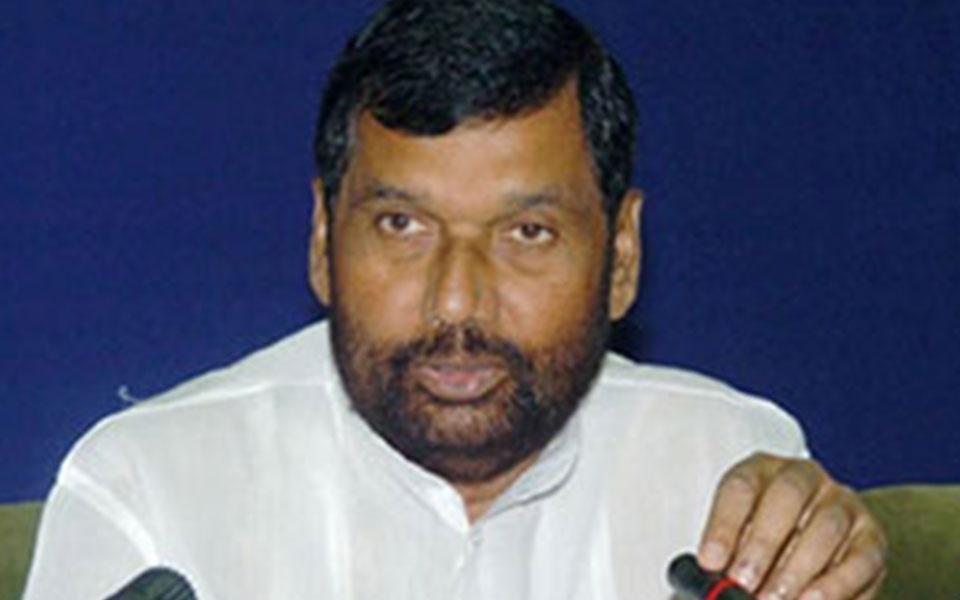
New Delhi, June 13: Union Minister Ram Vilas Paswan on Wednesday said reservation in promotion for Scheduled Castes (SC) and Scheduled Tribes (ST) will continue at both at the Centre and in the states and directives in this regard will be issued soon.
"There was confusion over whether the Supreme Court's order was applicable for just Central government employees or for state government employees. In our meeting of ministers, it was cleared that the reservation is for both Central and state government employees," Paswan told reporters after attending the meeting chaired by Home Minister Rajnath Singh.
The apex court had said last week that the government was not debarred from making promotions in accordance with law, subject to further orders.
On June 5, the Supreme Court permitted the Central government to go ahead with reservation in promotions to certain categories of staff in accordance with law but did not stay a Delhi High Court judgment that quashed an office memorandum on such reservations.
Paswan said the quota in promotion was halted on account of the judgements passed by different high courts in the country.
The minister also said the government was ready with an ordinance to overturn the Supreme Court's March 20 order that puts safeguards against arrests under SC/ST (Prevention of Atrocities) Act but it would wait for the court's final decision on the review petitions.
He also said the University Grant Commission (UGC) will also soon withdraw its order affecting reservation soon.
Paswan also reiterated his demand of reservation for those preferring inter-caste marriages.
Let the Truth be known. If you read VB and like VB, please be a VB Supporter and Help us deliver the Truth to one and all.
Four more arrested in brigadier assault case in Delhi

New Delhi (PTI): Four more accused have been arrested in connection with the alleged assault on an Army brigadier, his son and threatening his wife in southwest Delhi's Vasant Enclave area, police said on Friday.
The accused have been identified as Surjit Singh (36), Sunil Sharma (53) and Ashish (32), all from Mehram Nagar in Delhi, and Satender (35) of Bhiwani in Haryana, police said.
According to police, Surjit Singh was known to the main accused Satender, a director of an aviation company. All of them were sitting together in Mehram Nagar when Satender called them regarding a quarrel in Vasant Enclave.
"Following the call, all four left for the spot in Surjit's white Hyundai Aura. After reaching there, they got involved in the altercation and assault before returning to their respective homes," a senior police officer said.
After learning about the registration of the case, the accused fled and went into hiding, he said.
"Teams were constituted to trace them and all four absconding accused were arrested," he said.
The Hyundai Aura used in the incident has also been recovered, police said.
Further investigation into the case is underway. The role of each accused is being examined, they said.
According to the investigators, the incident took place on the night of April 11, when the brigadier and his son objected to the two men allegedly consuming alcohol inside a car parked outside their residence. Soon, others reached the spot and allegedly assaulted the officer and his son, besides abusing and threatening his wife.