SC stays proposed demolition of jhuggis at Sarojini Nagar, asks Centre to deal humanly
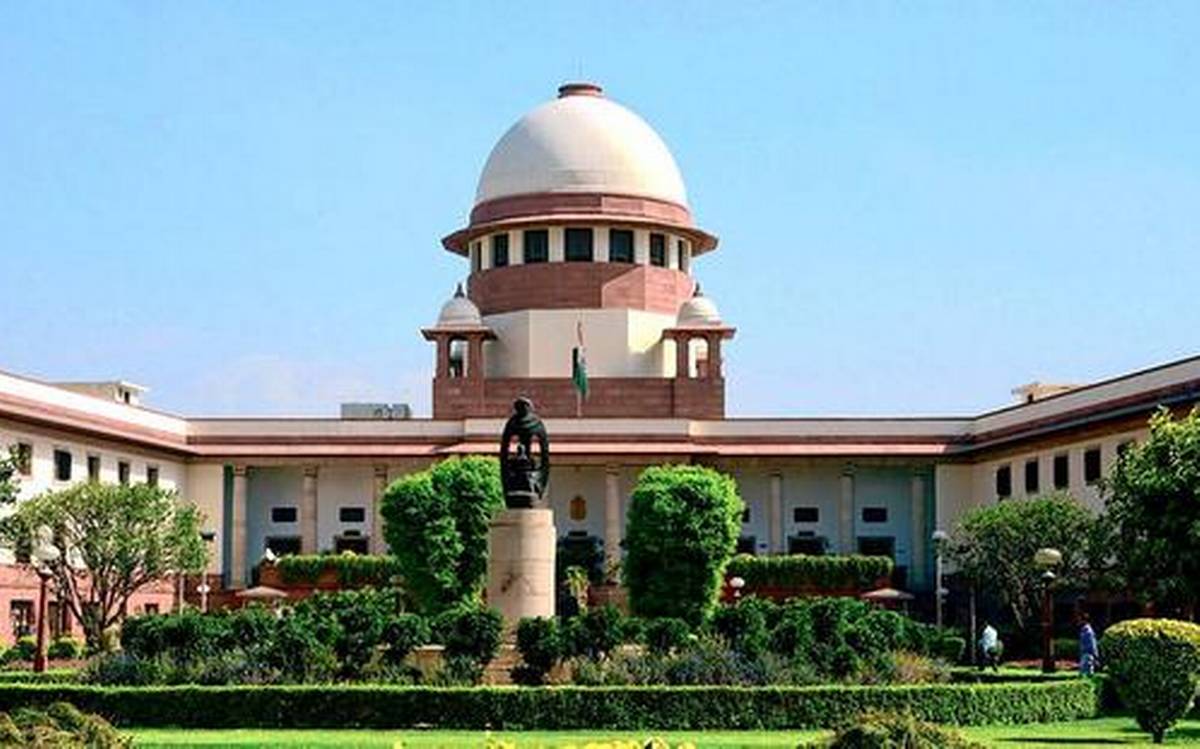
New Delhi, Apr 25: The Supreme Court on Monday came to the rescue of over 1,000 slum-dwellers by staying the Centre's proposed demolition for a week of around 200 jhuggis at Sarojini Nagar here, saying they should be dealt with humanly and cannot be simply thrown.
A bench of Justices K M Joseph and Hrishikesh Roy took note of the submissions of senior advocate Vikas Singh, appearing for two minor residents including Vaishali whose 10th board examinations are starting on April 26, that thousands of people will be ousted without any other rehabilitation scheme in place.
"Deal with them humanly when you deal with them. As a model government, you cannot say you would not have a policy (on rehabilitation) and simply throw them away. You are dealing with families, the bench said.
No coercive steps be taken till the next date of hearing, the bench told Additional Solicitor General K M Natraj, appearing for the Centre, and posted the matter for hearing on May 2.
The interim stay on demolition, granted by the Delhi High Court earlier, was ending on Monday.
The law officer, who wanted the protection against demolition to be confined to the two petitioners who have come to the court, assured the bench that no coercive steps would be taken against all the residents till the next date of hearing.
At the outset, Singh, assisted by lawyer Aman Panwar, said that the residents, who are over one thousand, cannot be banished.
Where do you expect thousands of people to go? Some rehabilitation scheme has to be there. Even in the Haryana matter, the rehabilitation was directed to take place.., the senior lawyer said, adding that the names of over 172 families are there and they have records like Voter ID cards in support of their claims.
"Having some documents where for election they have been enrolled does not confer the right, the law officer said.
The Board examinations are starting from Tuesday and at this moment, they cannot be allowed to be ousted, he said.
The bench asked the Centre not to precipitate the matter till the bench hears and decides the case.
"Look at your notice, what we have found in the impugned notice is that you have said hand over the government land. People from all over India, go occupy lands, something they do not have a choice with. They cannot afford the rates," Justice Joseph said.
The bench did not agree to the submission of the Centre that protection against demolition be confined to those who have come to the court only.
"We are looking at documents which say they have been there since 1996. Should it be that only these people be protected and not the others? When the court is examining the matter, we cannot let the issue be precipitated..., the bench said.
On Friday, a bench headed by Chief Justice N V Ramana had taken note of the submissions that the plea needed an urgent hearing in view of the imminent threat of demolition of jhuggis' (shanties).
The apex court, however, had refused to extend the stay without hearing from authorities last Friday.
The Union ministry of urban development on April 4 issued eviction/demolition notices to all residents of the jhuggis' asking them to vacate the place within one week.
The plea said that the slum dwellers have been living there since 1980 and they do not want to stall any government project at the site.
However, the residents, besides deferment of a proposed demolition, for the time being, wanted rehabilitation and relocation of their jhuggis' as per the provisions of the Delhi Urban Shelter Improvement Board (DUSIB) Act.
The DUSIB Act casts an obligation on government authorities to frame a scheme for rehabilitation and relocation of jhuggis' before any action of eviction is undertaken.
The Delhi government had taken a plea before the Delhi High Court that the jhuggis' in question was not notified under the DUSIB Act and hence, the residents were not eligible for rehabilitation.
The single judge and the division benches of the high court had relied upon the submissions of the DUSIB and dismissed the plea of residents.
The appeal, filed in the apex court, referred to a response received under the Right to Information Act and said that the city government and its authorities have not notified any Jhuggi in Delhi under the DUSIB Act and have only prepared a list of 675 jhuggis.
Let the Truth be known. If you read VB and like VB, please be a VB Supporter and Help us deliver the Truth to one and all.
Congress using hijab issue to pacify minority anger, alleges Karnataka LoP R Ashoka

Bengaluru: Leader of Opposition in the Assembly R. Ashoka has accused the Congress government of using the hijab issue to placate what he described as discontent among minority voters after the Davanagere by-election.
In a post on X on Wednesday, Ashoka alleged that the state government, instead of addressing issues such as price rise, corruption, farmers’ distress and law and order, was attempting to retain its minority vote base by reviving the hijab issue.
Referring to the 2022 dress code introduced by the BJP government, which prohibited hijab in schools and colleges, Ashoka said the Karnataka High Court had upheld the policy and emphasised the importance of discipline in educational institutions.
He questioned the Congress government’s move to revisit the issue and asked whether setting aside the court-backed policy to benefit one community could be described as secularism.
Ashoka further alleged that while the government was willing to permit hijab, it continued to prohibit saffron shawls.
He accused the government of dividing students on religious lines rather than treating schools and colleges as spaces of equality.
Drawing a comparison with Mamata Banerjee’s government in West Bengal, Ashoka claimed that excessive appeasement politics had harmed the state and warned that the Congress in Karnataka could face a similar political response.
He said voters in Karnataka would teach the Congress a lesson for what he termed “vote-bank politics” and for compromising constitutional and judicial principles.