SC takes note of Centre's guidelines, says posters not to be affixed outside homes of COVID patients
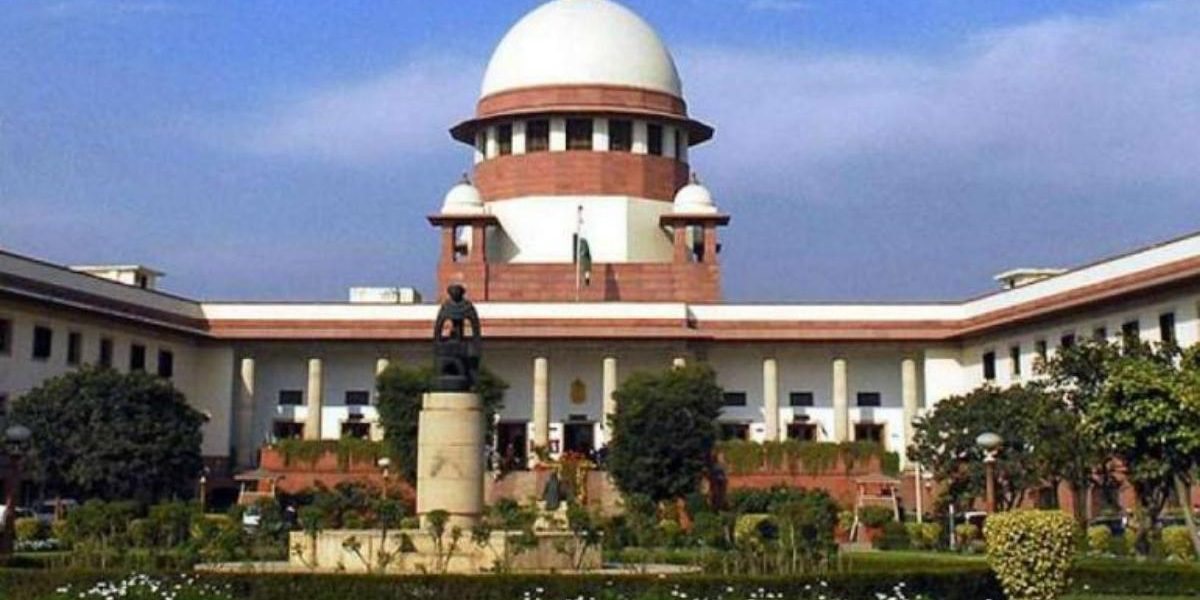
New Delhi, Dec 9: The Supreme Court on Wednesday took note of the Centre's guidelines and said posters and signages should not be affixed by authorities outside homes of COVID-19 patients in the country.
The apex court, however, added that such posters can be affixed only in specific cases when the competent authority issues specific directions under the Disaster Management Act.
A bench headed by Justice Ashok Bhushan said this in its verdict on a plea seeking directions to do away with the practice of pasting posters outside homes of those infected by coronavirus.
The bench, also comprising justices R S Reddy and M R Shah, disposed of the plea, saying the Centre has already issued guidelines, and therefore, states and union territories should not affix such posters.
The Centre had earlier told the top court that its guidelines do not contain any instructions regarding affixing posters and signages outside homes of COVID-19 patients, and there cannot be any stigma attached to it.
The bench had reserved its judgement on the plea on December 3.
Solicitor General Tushar Mehta had on December 3 referred to the affidavit filed in the apex court by the Ministry of Health and Family Welfare (MoHFW) and told the bench that guidelines do not require any such affixation of posters.
The counsel appearing for petitioner Kush Kalra had told the apex court that there are no such instructions in the guidelines to affix posters outside the home of those found COVID positive but the reality is very different .
While hearing the matter on December 1, the top court had observed that once posters or signages are pasted outside the homes of COVID patients, the people affected are treated as "untouchables", reflecting a different "ground reality".
In its affidavit, the ministry had said that its guidelines do not contain any instructions or guidance regarding affixing of posters or other signage outside the residences of those found COVID positive .
Mehta had told the bench that the Centre has not prescribed this practice and some states might be pursuing it on their own to prevent the spread of the virus.
The apex court had earlier asked the Centre to consider issuing guidelines to do away with practice of pasting posters outside the homes of COVID-19 patients.
It had directed so without issuing any formal notice to the Centre on Kalra's plea seeking framing of guidelines in this regard.
In its affidavit, the ministry has said that all states have been intimated to this effect that the MoHFW has not issued any such guideline to identify COVID-19 patients.
The Central government, through MoHFW has already communicated to the Additional Chief Secretaries ...secretaries (Health) of all the states and UTs pointing it out that the MoHFW guidelines do not contain any instructions or guidance regarding affixing of posters or other signage outside the residences of those found COVID-19 positive, the affidavit said.
On November 3, the Delhi government had told the high court that it has instructed all its officials not to paste posters outside homes of COVID-19 positive persons or those in home isolation; and the ones pasted have been ordered to be removed.
Kalra, in his plea before the high court, had contended that names of persons who tested positive for COVID-19 were being freely circulated to the Resident Welfare Associations and on WhatsApp groups and this was "leading to stigmatisation and drawing of unnecessary attention".
Let the Truth be known. If you read VB and like VB, please be a VB Supporter and Help us deliver the Truth to one and all.
NCW chief condemns rape-murder of 4-year-old girl in Pune, calls for swift action

New Delhi (PTI): National Commission for Women (NCW) Chairperson Vijaya Rahatkar has condemned the alleged rape and murder of a four-year-old girl in Maharashtra's Pune, calling it "deeply distressing" and a "blot on humanity".
The girl was allegedly raped and killed by a 65-year-old labourer, who has a criminal record, in Bhor tehsil of Pune on Friday. The accused allegedly lured the child to a cattle enclosure on the pretext of giving her food. After raping her, he killed her by hitting her with a stone, according to police.
The accused has been arrested.
In a post on X on Saturday, Rahatkar said the incident in the Nasrapur area in Pune was heartbreaking and has shaken society.
"The brutal torture and murder of a four-year-old innocent girl in Nasrapur (Bhor, Pune) is deeply painful, heartbreaking, and shocking. It is a blot on humanity," she said.
She said Pune Rural police has arrested the accused and noted that Maharashtra Chief Minister Devendra Fadnavis and Deputy Chief Minister Sunetra Pawar have assured strict action in the case.
Rahatkar said the NCW has taken cognisance of the matter and written to the National Commission for Protection of Child Rights (NCPCR), requesting the body to ensure necessary and prompt action.
It has also been recommended that the case be pursued under stringent provisions of the Protection of Children from Sexual Offences (POCSO) Act and be closely monitored from the filing of the chargesheet to proceedings in a fast-track special court to ensure time-bound justice, she added.
Ensuring justice for the victim and stringent punishment for the accused is a collective responsibility, the NCW chairperson underlined.
In a post on X, the NCW said it has taken suo motu cognisance of the extremely "heinous" incident.
"This heinous crime causes profound pain and outrage, and it highlights serious concerns regarding the safety of young girls," it said.
Strongly condemning this grave "inhuman act", the NCW said such crimes constitute a serious violation of children's rights and raise questions about society's security system.