SC to consider submission for urgent hearing of plea on Bengaluru civic body polls
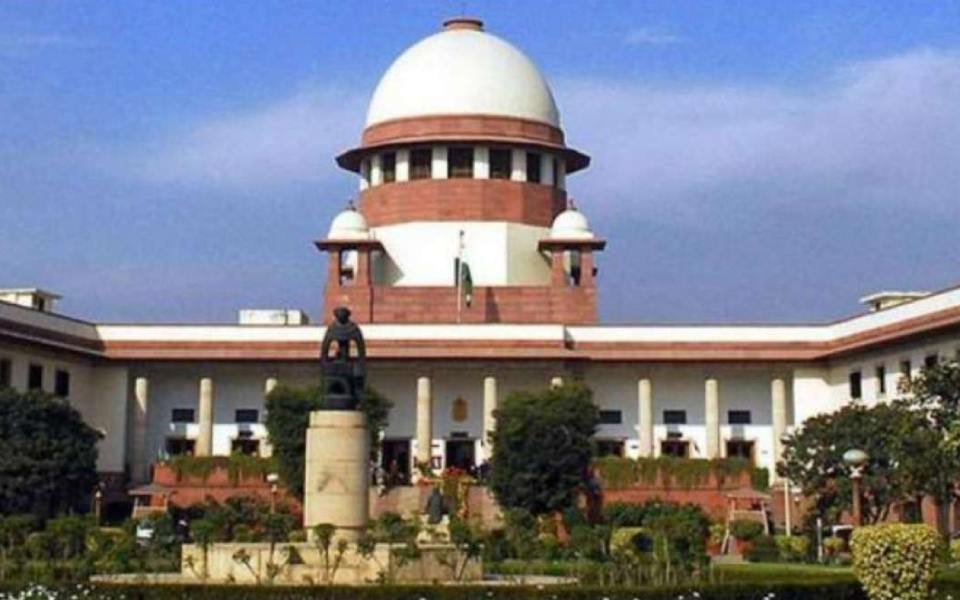
New Delhi, Feb 17: The Supreme Court on Thursday said it would look into submissions for urgent hearing of the plea related to conducting polls for the 'Bruhat Bengaluru Mahanagara Palike' (BBMP), whose term ended on September 10, 2020.
A bench headed by Chief Justice N V Ramana was told by senior advocate Meenakshi Arora, appearing for some of the candidates for the civic body polls, that elections have not taken place despite the fact that the tenure of the civic body ended in September 2020.
The senior lawyer said the poll process has been stayed by an order of the apex court.
"There are enough elections happening in the country," the bench, also comprising justices A S Bopanna and Hima Kohli, said.
When Arora said the issue pertained to the civic poll of a body whose tenure has ended, the bench said, "You have mentioned. Leave it to us. We will see."
Earlier, the Karnataka government had sought urgent hearing of its pending plea against a high court verdict asking the State Election Commission (SEC) to hold elections in 198 wards of the BBMP.
The bench was told that the five-year term of the civic body expired in 2020, and there was an urgency as the poll process had been stayed by a bench headed by the then CJI S A Bobde (since retired).
The high court verdict of December 4, 2020 had asked the SEC to hold the election within six weeks.
The state government had moved the top court, challenging the high court order which directed the BBMP polls as per a delimitation notification of September 23, 2020, instead of the 243 seats as mentioned in the Karnataka Municipal Corporation Third Amendment Act (2020).
The government said the high court judgment had nullified the unanimous will of the state legislature, which is made up of the representatives of the people and had amended the Karnataka Municipal Corporations Act of 1976 to increase the number of wards in Bengaluru to 243.
The state government said the high court had handicapped efforts to improve urban governance in one of the largest and most cosmopolitan cities in India .
The increase in the number of wards was necessitated by the fact that the population and demographics of the city have undergone vast changes since 2009 when the number of wards was increased to 198, the plea said.
After the five-year tenure of the incumbent BBMP Council expired in September last year, the state government appointed a senior IAS officer as administrator of the civic body.
Let the Truth be known. If you read VB and like VB, please be a VB Supporter and Help us deliver the Truth to one and all.
Congress using hijab issue to pacify minority anger, alleges Karnataka LoP R Ashoka
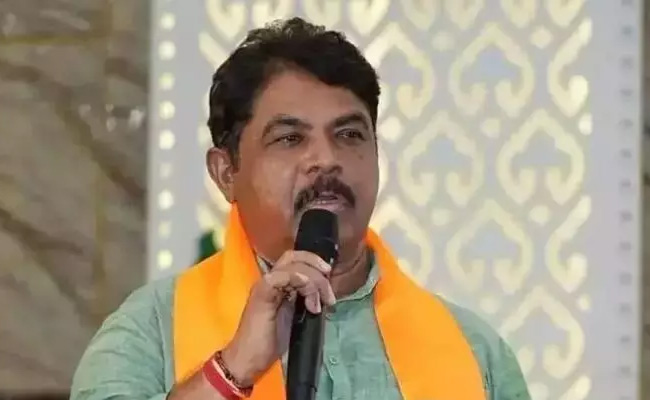
Bengaluru: Leader of Opposition in the Assembly R. Ashoka has accused the Congress government of using the hijab issue to placate what he described as discontent among minority voters after the Davanagere by-election.
In a post on X on Wednesday, Ashoka alleged that the state government, instead of addressing issues such as price rise, corruption, farmers’ distress and law and order, was attempting to retain its minority vote base by reviving the hijab issue.
Referring to the 2022 dress code introduced by the BJP government, which prohibited hijab in schools and colleges, Ashoka said the Karnataka High Court had upheld the policy and emphasised the importance of discipline in educational institutions.
He questioned the Congress government’s move to revisit the issue and asked whether setting aside the court-backed policy to benefit one community could be described as secularism.
Ashoka further alleged that while the government was willing to permit hijab, it continued to prohibit saffron shawls.
He accused the government of dividing students on religious lines rather than treating schools and colleges as spaces of equality.
Drawing a comparison with Mamata Banerjee’s government in West Bengal, Ashoka claimed that excessive appeasement politics had harmed the state and warned that the Congress in Karnataka could face a similar political response.
He said voters in Karnataka would teach the Congress a lesson for what he termed “vote-bank politics” and for compromising constitutional and judicial principles.