SC to hear Karnataka ex-minister Janardhana Reddy's plea to visit Bellari in summer break
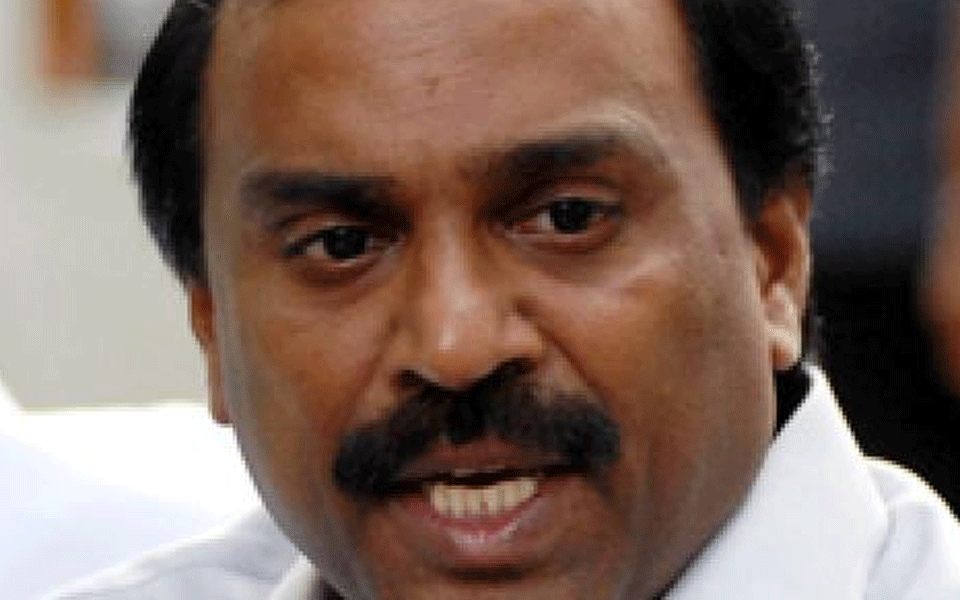
New Delhi: The Supreme Court Monday agreed to hear during ongoing summer vacation the plea of former Karnataka minister and mining baron Gali Janardhana Reddy seeking permission to visit his home town Ballari which was prohibited while being granted bail in a mining case.
Reddy, accused in a multi-crore illegal mining case, is out on bail since 2015 and several conditions including prohibiting him from visiting Ballari in Karnataka and Ananthapur and Kadapa in Andhra Pradesh were imposed by the apex court in its order.
A vacation bench comprising Ashok Bhushan and M R Shah took note of Reddy's fresh plea seeking permission to visit Ballari and said the matter would be listed before another bench probably next week by Chief Justice N V Ramana.
On April 5, a bench comprising Justices Bhushan and R Subhash Reddy had reserved verdict on a similar plea by Reddy seeking modification of the bail conditions imposed by the apex court in 2015.
I have discussed with Justice Reddy. He has also consented to the release of the matter. It will be listed before another bench during the vacation only, Justice Bhsuhan said on Monday, adding the date of hearing and the bench would be decided by the CJI.
The CBI, represented by Additional Solicitor General Madhavi Divan, opposed the plea of senior advocate Mukul Rohatgi, appearing for Reddy, that the interim application be listed during the summer break itself, saying, It looks like a side wind to get into Ballary .
The law officer said the bench had already reserved its order on the similar plea after the arguments got over.
Earlier also, the CBI had opposed Reddy's similar plea saying that he should not be allowed to visit district Bellary in Karnataka as he holds considerable influence and might interfere with the investigation
"He has led multiple petitions, witnesses under police protection have been threatened and vehicles have been set on fire. Over 40 witnesses are there. We do not know what will happen if this gentleman is allowed to enter the area," the probe agency had said.
Reddy was granted conditional bail by the apex court in January 2015 after spending more than three years in jail.
Reddy and his brother-in-law B V Srinivas Reddy, managing director of the Obalapuram Mining Company (OMC), were arrested by CBI on September 5, 2011 from Ballari and brought to Hyderabad.
The company is accused of changing mining lease boundary markings and indulging in illegal mining in the Ballari Reserve Forest area, spread over Ballari in Karnataka and Anantapur district of Andhra Pradesh.
He shall surrender his passport, if not already surrendered, to the learned Principal Special Judge for CBI Cases, Hyderabad. If he has already surrendered his passport before the learned Principal Special Judge, that fact should also be supported by an affidavit, the top court had said while granting bail.
Reddy shall not leave the country without the leave of the trial judge, it had said.
Let the Truth be known. If you read VB and like VB, please be a VB Supporter and Help us deliver the Truth to one and all.
Sujit Nair raises concerns over speculation of DMK-AIADMK understanding to block TVK
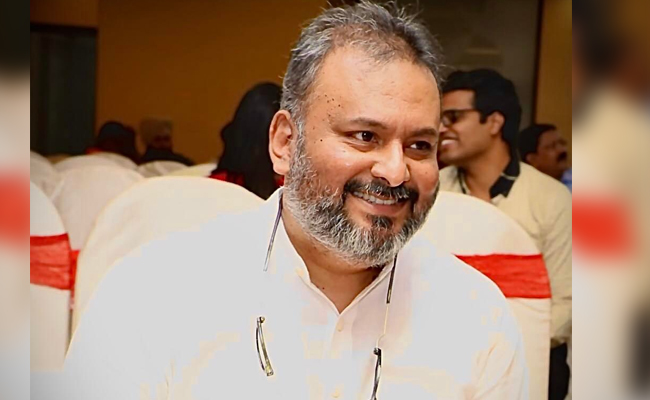
Chennai: Journalist and political commentator Sujit Nair has expressed concern over speculation that the Dravida Munnetra Kazhagam and the All India Anna Dravida Munnetra Kazhagam could explore a post-poll understanding to prevent Vijay-led Tamilaga Vettri Kazhagam from forming the government in Tamil Nadu.
In a social media post, Sujit Nair said the election verdict in Tamil Nadu reflected a clear public demand for political change and argued that the mandate should be respected irrespective of political preferences.
Referring to reports and political discussions surrounding a possible understanding between the DMK and AIADMK, he said he hoped such developments remained only speculative conversations and did not turn into reality.
Nair stated that if such an alliance were to take shape, it would raise serious questions about ideological politics in the country. He said TVK had emerged through a democratic electoral process and that the legitimacy to govern in a parliamentary democracy comes from the people’s verdict.
According to him, attempts to prevent an electoral winner from forming the government through unexpected political arrangements may be constitutionally valid, but many people could view them as politically opportunistic.
He further said that such a move could particularly affect the political image of the DMK, which has historically projected itself around ideology, social justice and opposition politics. Nair said that in ideological terms, the DMK appeared closer to TVK than to the AIADMK, and joining hands with its long-time political rival only to remain in power could weaken its broader political narrative.
He added that the same questions would apply to the AIADMK as well, as the party had spent decades positioning itself against the DMK and such an arrangement could create discomfort among its cadre and supporters.
Drawing a comparison with Maharashtra politics in 2019, Nair said he had expressed similar views when the Shiv Sena formed an alliance with the Indian National Congress and the Nationalist Congress Party after the Assembly elections.
He said post-poll alliances between long-standing political rivals often create a public perception that ideology and electoral mandates become secondary when political power equations come into play.
Nair also said such developments increase public cynicism towards politics and reinforce the belief among voters that ideology is often sidelined after elections.
He maintained that the Tamil Nadu verdict was emphatic and said respecting both the spirit and substance of the mandate was important for the credibility of democratic politics.