SC to hear on Nov 11 pleas against law removing CJI from Election Commissioners’ appointment panel
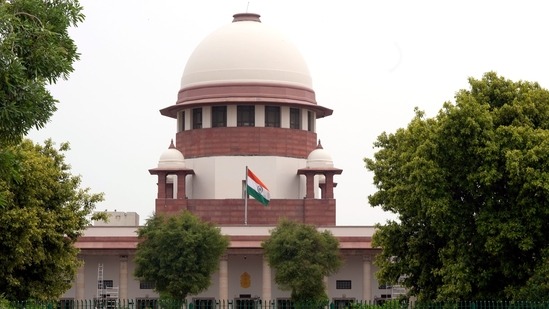
New Delhi: The Supreme Court will hear on November 11 a batch of petitions challenging the constitutionality of the Chief Election Commissioner and Other Election Commissioners Act, 2023, which excludes the Chief Justice of India (CJI) from the panel responsible for appointing Election Commissioners.
The matter was listed before a bench comprising Justices Surya Kant and Joymalya Bagchi on Monday but could not be taken up due to lack of time. Advocate Prashant Bhushan, appearing for the petitioners, mentioned the matter, requesting that the Court allocate a few hours for hearing. Responding, Justice Kant said the case could be mentioned again on the morning of November 11 so that non-urgent matters could be adjourned for the day.
The bench had earlier agreed to hear the case before the appointment of Gyanesh Kumar as Chief Election Commissioner (CEC) following the retirement of Rajiv Kumar. Although it was initially scheduled for hearing in February, the matter was not taken up on the listed dates. Subsequently, Gyanesh Kumar’s appointment as CEC on February 17 prompted petitioners to urge for an early hearing, citing alleged violations of the Supreme Court’s Anoop Baranwal judgment.
The petitioners have argued that recent appointments were made in the same manner as before, contrary to the Court’s earlier ruling intended to safeguard the Election Commission’s independence. However, the Supreme Court had declined to stay the operation of the 2023 Act in March 2024.
The Chief Election Commissioner and Other Election Commissioners Act, 2023 was enacted by Parliament in December 2023, replacing the system prescribed by the Supreme Court’s March 2023 judgment, which mandated that ECs be appointed by a committee comprising the Prime Minister, the Leader of Opposition, and the Chief Justice of India. The new law instead provides for a selection committee consisting of the Prime Minister, a Union Cabinet Minister nominated by the Prime Minister, and the Leader of Opposition or the leader of the largest opposition party in the Lok Sabha.
The legislation has been challenged by Congress leader Dr. Jaya Thakur, the Association for Democratic Reforms (ADR), and other petitioners, who contend that removing the CJI from the panel undermines the independence and impartiality of the Election Commission.
Let the Truth be known. If you read VB and like VB, please be a VB Supporter and Help us deliver the Truth to one and all.
Mudigere: 22-yr-old youngster hangs herself to death after father scolds her for not making curry

Mudigere: A 22-year-old young woman, Soujanya Poojary, who was upset over an apparently trivial issue, has allegedly committed suicide by hanging herself at home in Devavrinda village of the taluk on Saturday evening.
On Saturday morning, Soujanya’s father Natesh Poojary handed her vegetables, instructed her to prepare curry using them and went out. When he returned home in the afternoon, however, he found that his daughter had not prepared the curry and scolded her. He also told her to get curry from a neighbour’s house and again went out.
Soujanya, after being treated harshly by her father, reportedly closed the door of the house and hanged herself to death inside.
Gonibeedu Police officers, who were informed of her death, have registered a case and are investigating.
(Assistance for overcoming suicidal thoughts is available on the state’s health helpline 104, Tele-MANAS 14416.)