SC to hear Ram Janmabhoomi-Babri Masjid land dispute case on Thursday
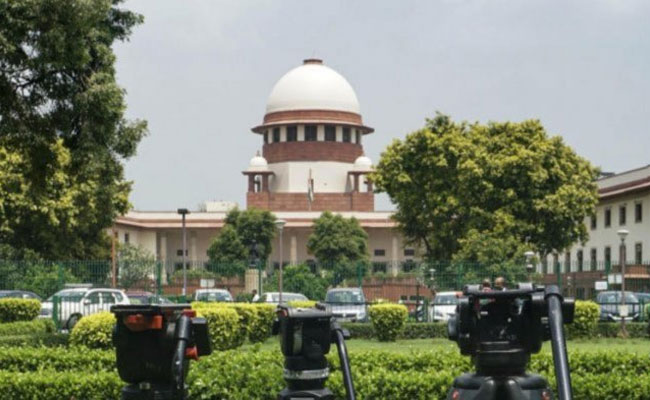
New Delhi, Jul 17: The Supreme Court is likely to peruse on Thursday a report on the "progress of mediation" in the politically sensitive Ram Janmabhoomi-Babri Masjid land dispute case in Ayodhya.
A five-judge Constitution bench, headed by Chief Justice Ranjan Gogoi, had on July 11 sought a report on the issue and said that a day-to-day hearing may commence from July 25 if the court decides to conclude the mediation proceedings.
The bench had requested former apex court judge Justice (Retd) F M I Kalifulla, chairperson of the three-member mediation panel, to apprise it by July 18 the progress of mediation till date and its present stage.
"It will be convenient to have the said report latest by July 18, on which date further orders will be passed by this court," the bench, also comprising justices S A Bobde, D Y Chandrachud, Ashok Bhushan and S A Nazeer, had said on July 11.
It passed the order while hearing an application filed by a legal heir of one of the original litigants, Gopal Singh Visharad, seeking a judicial decision on the dispute and conclusion of the mediation process, alleging that nothing much was happening there.
It had said that the court would pass appropriate orders on July 18 after perusing the report filed by the mediation committee.
The panel, also comprising spiritual guru and founder of the Art of Living foundation Sri Sri Ravishankar and senior advocate and renowned mediator Sriram Panchu, was earlier granted time till August 15 by the apex court for completion of mediation after its earlier report had said that the mediators were "optimistic" about an amicable solution.
The top court had fixed the seat for the mediation process in Faizabad of Uttar Pradesh, around 7 km from Ayodhya, and said adequate arrangements, including those related to the venue of the mediation, place of stay of the mediators, their security and travel, should be arranged forthwith by the state government so that the proceedings could commence immediately.
The bench was earlier told by Hindu bodies, except the Nirmohi Akhara, and the Uttar Pradesh government that they were not in favour of the court's suggestion for mediation. The Muslim bodies had supported the proposal.
Fourteen appeals have been filed in the apex court against the 2010 Allahabad High Court judgment, delivered in four civil suits, that the 2.77-acre land in Ayodhya be partitioned equally among the three parties -- the Sunni Waqf Board, the Nirmohi Akhara and Ram Lalla.
On December 6, 1992, the Babri Masjid, constructed at the disputed site in the 16th century by Shia Muslim Mir Baqi, was demolished.
Let the Truth be known. If you read VB and like VB, please be a VB Supporter and Help us deliver the Truth to one and all.
Karnataka CM Siddaramaiah accuses EC of ‘bias’, defends state guarantee schemes ahead of bypolls
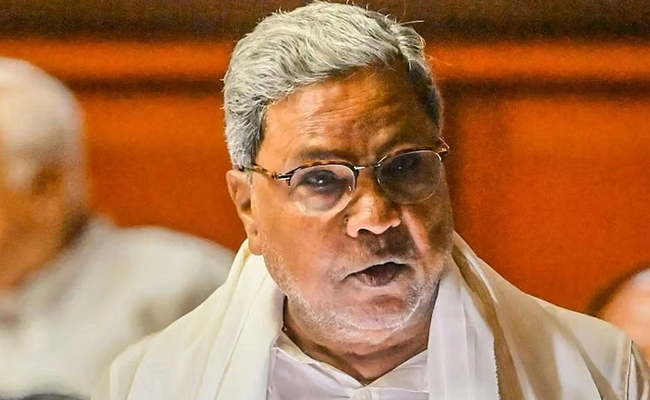
Bengaluru (PTI): Karnataka Chief Minister Siddaramaiah has accused the EC of "double standards" and "bias" after it sought details on the state’s guarantee schemes in Davanagere and Bagalkot districts, where bypolls are scheduled for Thursday.
In a post on 'X' on Wednesday, Siddaramaiah said the Election Commission of India had asked the Karnataka government for information on fund releases under five ongoing guarantee schemes in the constituencies going to polls.
The polls were necessitated following the deaths of senior Congress MLAs Shamanur Shivashankarappa and H Y Meti, respectively.
The schemes are Gruha Jyothi, which provides 200 units of free electricity to every household; Gruha Lakshmi, offering Rs 2,000 to women heading families; and Anna Bhagya, supplying 10 kg of rice per month to each member of BPL families.
In addition, Yuva Nidhi grants Rs 3,000 to unemployed graduates and Rs 1,500 to unemployed diploma holders aged 18–25 for two years, while Shakti enables women to travel free of charge within Karnataka on government non-luxury buses.
Siddaramaiah alleged that the ECI had remained silent when similar cash transfer schemes were announced in Maharashtra and Bihar ahead of elections, calling the scrutiny of Karnataka’s schemes a "clear case of bias".
"In states like Maharashtra and Bihar, cash transfer schemes were announced or fast-tracked just before elections, directly benefiting voters. Yet the ECI remained silent. This is not neutrality—it is complicity," he said.
The CM accused the BJP and NDA governments of "a double standard", noting that when they act, the ECI "looks the other way", but when Karnataka fulfils its promises, it faces "intense scrutiny".
He added that targeting the state’s guarantee schemes is "not just political but anti-poor, anti-women, and anti-Karnataka."
Siddaramaiah clarified that these schemes were not launched in connection with the bypolls but are ongoing programmes implemented as part of the Congress government’s commitments from the 2023 Assembly elections.
Funds are transferred regularly to beneficiaries in a transparent and structured manner, he added.
"The guarantees are part of governance—a direct investment in human dignity, household stability, and economic participation, not inducement," he said.
He also accused the BJP of "hypocrisy", saying that while it criticises Karnataka’s schemes as "freebies", it rolls out similar programmes in states it governs.
"The Karnataka model has set a benchmark for the country. What is deeply concerning, however, is the ECI’s selective approach," Siddaramaiah added.