SC to hear review pleas on SC/ST recall verdict on May 3
New Delhi, April 27: The Supreme Court will hold further hearing on May 3, on Centre's plea seeking the recall of its judgement holding that arrest on a complaint under the SC/ST (Prevention of Atrocities) Act is not mandatory.
A bench headed by Justice Adarsh Kumar Goel said that it would hear the Centre's plea after Attorney General K.K. Venugopal told the bench that in compliance of the court's April 3 order all parties have submitted their written submissions.
The Centre had moved the top court for the review of the judgement that generated a lot of protests including by the lawmakers, who felt that the Supreme Court verdict had diluted the provisions of the SC/ST (Prevention of Atrocities) Act meant to protect the people of Scheduled Castes and Scheduled Tribes.
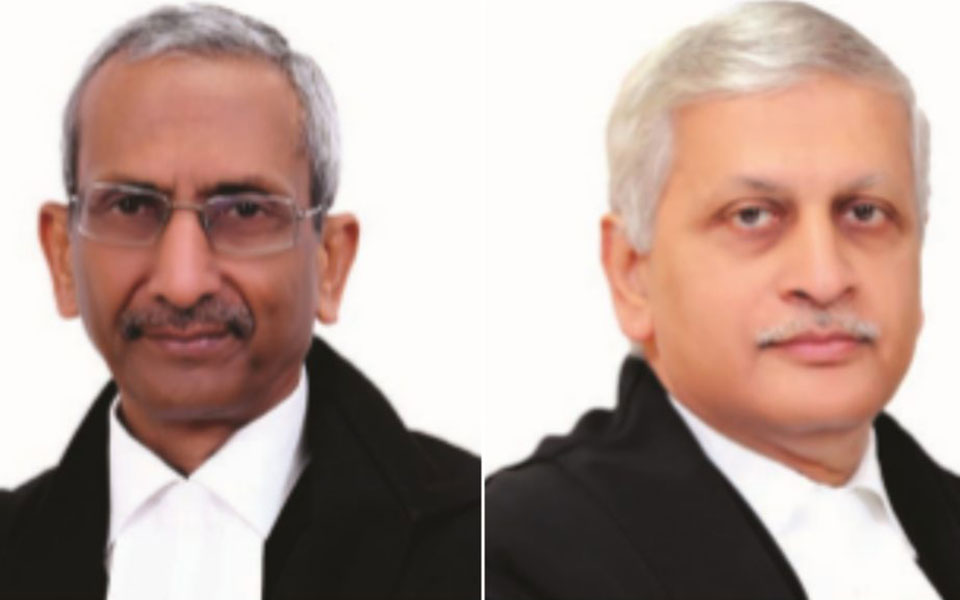
The judgement sought to be reviewed was pronounced by a bench of Justice Goel and Justice Uday Umesh Lalit on March 20.
In the last hearing of the matter on April 3, the top court had refused to stay the operation of the judgement but made it clear that the compensation can be paid to victims of alleged atrocities under the Scheduled Castes and Scheduled Tribes (Prevention of Atrocities) Act, 1989, even without an FIR being registered.
Refusing to budge on its five directions issued on March 20, the court had in the last hearing said: "We are not against the law or its implementation" and the directions in no way "diluted" the law but were aimed to protect the innocent people from being punished.
It described its direction for preliminary inquiry before an FIR is registered on a complaint as "filter" to protect the innocent, the court said, "We don't want to deprive anyone of his rights under (the SC/ST (Prevention of Atrocities) Act) but we don't want an innocent is punished."
The court had said in its April 3 hearing that all they have done is to read Article 21 of the Constitution -- guaranteeing protection of life and personal liberty -- in the SC/ST (Prevention of Atrocities) Act and that should happen with every statute.
Let the Truth be known. If you read VB and like VB, please be a VB Supporter and Help us deliver the Truth to one and all.
SC refuses to entertain plea seeking guidelines for display of Ashoka Chakra
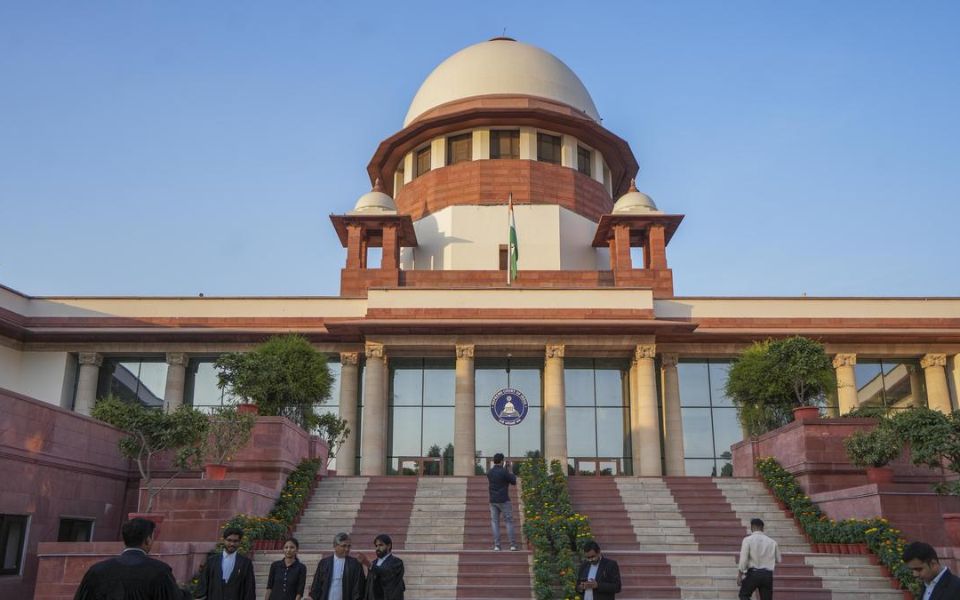
New Delhi (PTI): The Supreme Court on Thursday refused to entertain a plea seeking a direction to the Centre and others to frame guidelines for the display of the Ashoka Chakra on the national flag.
A bench of Chief Justice of India (CJI) Surya Kant and Justices Joymalya Bagchi and Vipul M Pancholi told the petitioner, who appeared in person, to do something constructive for society.
"There is no need to be so emotional about these things. Your idea is good. You have informed the authorities. Now it is for the authorities to see what they want to do," the CJI told the petitioner.
"You do some constructive work for society," the bench said.
The petitioner showed a picture of the Ashoka Chakra installed at a roundabout in Varanasi, but the bench refused to entertain the plea.