SC will share cause lists, info about filing and listing of cases through WhatsApp: CJI
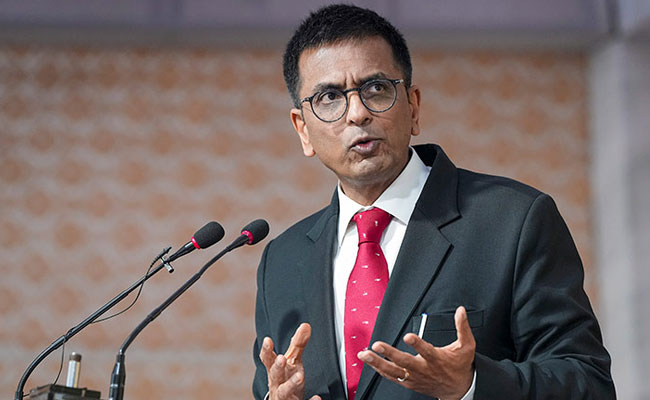
New Delhi (PTI): The Supreme Court will start sharing information relating to cause lists, and filing and listing of cases to advocates through WhatsApp messages, Chief Justice of India D Y Chandrachud announced on Thursday.
The announcement was made by the CJI before a nine-judge bench headed by him commenced the hearing on a vexed legal question arising from the petitions whether private properties can be considered "material resources of the community" under Article 39(b) of the Constitution, which is a part of the Directive Principles of State Policy (DPSP).
"In the 75th year, the Supreme Court launches an initiative to strengthen access to justice by integration of WhatsApp messages with the IT services of the Supreme Court," the CJI said.
Now, the advocates will receive automated messages about filing the cases, he said, adding that the members of the bar will also get the cause lists, as and when they are published, on mobile phones.
A cause list features the cases to be heard by a court on a given day.
"This is another revolutionary step...," Solicitor General Tushar Mehta said.
The CJI also shared the top court's official WhatsApp number and said it will not be receiving any messages and calls.
"This will bring a significant change in our working habits and will go a long way in saving papers," Justice Chandrachud said.
The top court under the leadership of CJI Chandrachud has been taking steps to digitise the functioning of the judiciary.
He said the Centre has sanctioned Rs 7,000 crore for the e-court project.
The solicitor general shared the views of the central government and said it was committed to the digitisation of the judiciary to enhance the access for common litigants and lawyers.
Let the Truth be known. If you read VB and like VB, please be a VB Supporter and Help us deliver the Truth to one and all.
Karnataka School Edu Dept prohibits children from being made to dance to obscene songs
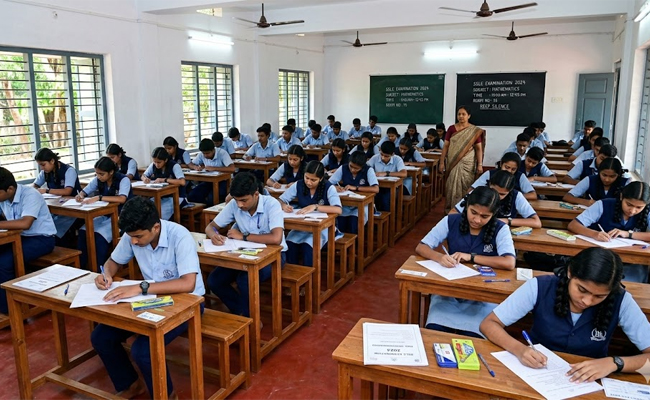
Bengaluru (PTI): The Karnataka School Education Department has issued a circular strictly prohibiting children from being made to dance to obscene songs in educational and cultural programmes.
It stated that such dances would negatively impact students' mental health and moral values. It will create indiscipline and harm the sanctity of education.
"All the Deputy Directors (Administration) of the state's School Education Department have been asked to take strict measures to prevent children or students from dancing to obscene songs in all government, aided and unaided schools in the state," the office of the commissioner of the School Education Department said in a recent circular.
"If it is found that children are being made to dance to obscene songs, appropriate action will be taken against the headmaster or management of such school," it added.
The department also listed certain measures in this regard, which include: strictly prohibiting children from being made to dance to obscene songs during educational and cultural programmes; selecting songs that are inspiring, positive, instilling national pride in children and reflecting the greatness, dignity, values, culture, and morality of the state.
Stating that the school headmaster and management are responsible for selecting songs and dances for cultural programmes, it said, they should also ensure that students wear decent clothes in dance or cultural programmes.