SC won't interfere with first round of CLAT-2018 counselling
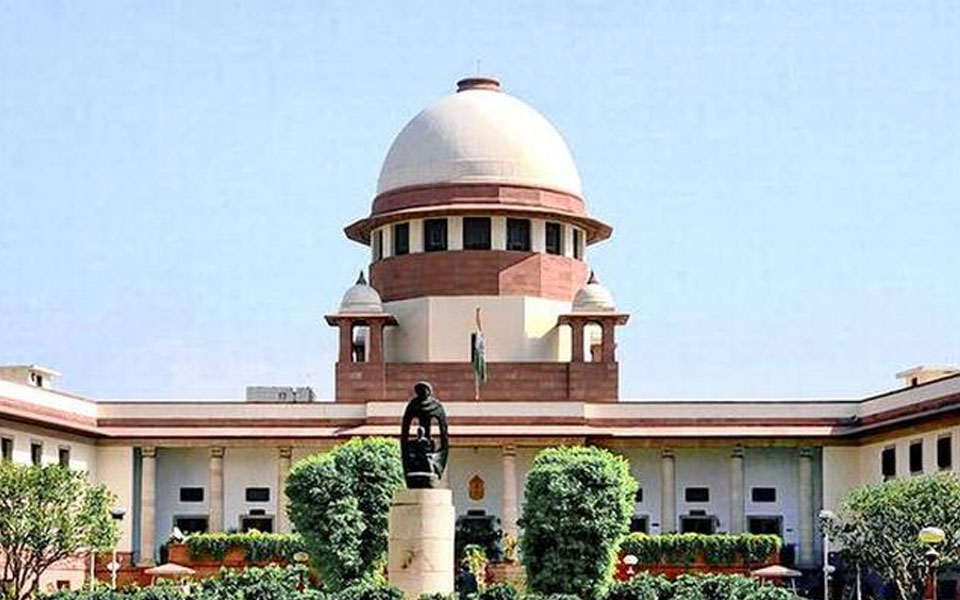
New Delhi, June 13 : The Supreme Court on Wednesday refused to interfere with the first round of CLAT-2018 counselling for admissions to 19 national law universities and colleges.
The first round of counselling that commenced on June 10 will be over by Friday.
A bench of Justice U.U. Lalit and Justice Deepak Gupta directed Kochi-based National University of Advanced Legal Studies (NUALS) to complete by June 15 the exercise of compensating students who faced technical glitches in the Common Law Admission Test (CLAT) 2018.
It also asked NULAS, which conducted the CLAT-2018, to come up with a revised list by June 16 based on the formula suggested by two-member Grievance Redressal Committee (GRC) and include qualified students in the second round of counselling.
On June 11, the apex court had refused to issue order to re-conduct the CLAT-2018 or stop the counselling process for admissions over complaints of technical glitches during the May 13 examination, and asked the GRC to go through the complaints of time lost by students during the test.
Headed by former Kerala High Court Judge M.R. Hariharan Nair and comprising Professor Santosh Kumar, the GRC -- set up by the court on May 25 to look into the complaints -- has to complete the task of evaluating 400 complaints and deciding, based on normalisation formula linked to time lost due to technical glitches, the compensation of marks by June 15.
The committee has suggested that students, who suffered time loss due to technical glitches, can be awarded compensatory marks after taking note of the data of total correct and incorrect answers given by them during the online test.
The court's order came on a batch of petitions by students who sought scrapping of the CLAT-2018 online test.
They said there were technical glitches during the exam. There were also allegations of cheating as some centres gave excess time to some students to make up for the lost time on account of the glitches in operating the computers.
The online CLAT-2018 examination was held on May 13 in which more than 54,464 candidates appeared aspiring for admission to 19 law university colleges.
Let the Truth be known. If you read VB and like VB, please be a VB Supporter and Help us deliver the Truth to one and all.
Illegal sand mining has created environmental crisis in National Chambal Gharial Sanctuary: SC
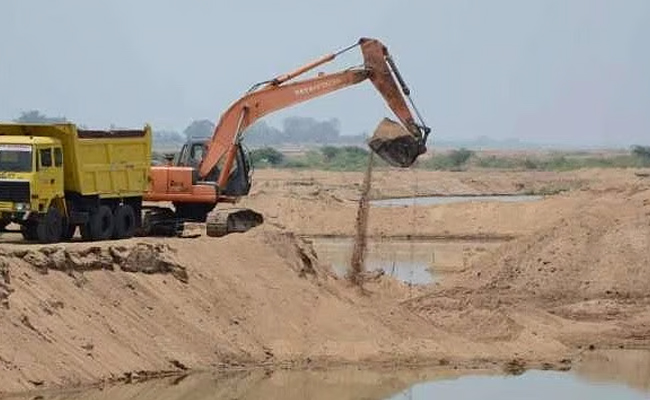
New Delhi (PTI): The Supreme Court on Friday said rampant illegal riverbed sand mining has created an "environmental crisis" and wreaked "havoc" in the National Chambal Gharial Sanctuary, causing a grave risk to the gharial (long-snouted crocodile) preservation project.
Slamming the states of Rajasthan, Madhya Pradesh and Uttar Pradesh for their utter failure in dealing with the issue, the apex court directed them to install high-resolution Wi-Fi-enabled CCTV cameras along all routes frequently used for illegal sand mining in the area.
A bench of Justices Vikram Nath and Sandeep Mehta directed that live feed of such surveillance cameras shall be placed under the direct control, supervision and operational oversight of the superintendent of police or the senior superintendent of police of the concerned district and the divisional forest officer.
It said these officers shall ensure continuous and effective monitoring of the CCTV feeds by designating appropriate officers.
"It can't be gainsaid that the issues involved are of great concern in as much as the rampant illegal mining activities in the river bed have created an environmental crisis and havoc in the National Chambal Gharial Sanctuary causing a grave risk to the very project of gharial preservation of which the state governments themselves were proponents and were under an obligation to foster and promote," Justice Mehta said while pronouncing the order.
The bench directed the authorities in these three states to initiate prompt and necessary action under law if any instance of illegal mining or allied activities comes to light.
It said the authorities shall ensure seizure of vehicles or machinery found involved in illegal sand mining and also initiate prosecution of persons involved in it.
The bench, which passed several other directions, posted the matter for hearing on May 11.
The top court passed the order in a suo motu case titled 'In Re: Illegal sand mining in the National Chambal Sanctuary and threat to endangered aquatic wildlife'.
The National Chambal Sanctuary, also called the National Chambal Gharial Wildlife Sanctuary, is a 5,400-sq km tri-state protected area.
Besides the endangered gharial, it is home to the red-crowned roof turtle and the endangered Ganges river Dolphin.
Located on the Chambal river near the tripoint of Rajasthan, Madhya Pradesh and Uttar Pradesh, the sanctuary was first declared a protected area in Madhya Pradesh in 1978 and now constitutes a long and narrow eco-reserve co-administered by the three states.
On March 13, the top court took suo motu cognisance of news reports about rampant illegal sand mining on the banks of the Chambal river.