Schools will not be allowed to become ‘laboratories of communalism’: Kerala government

Thiruvananthapuram: The Kerala government has issued a strong warning that schools will not be allowed to turn into “laboratories of communalism,” taking serious note of reports that some private school managements in the state imposed restrictions on Christmas celebrations and refunded money collected from students for the event.
According to reports, certain private schools allegedly run by organisations affiliated with the Sangh Parivar, as well as a privately managed school under a Hindu management, had cancelled Christmas celebrations. These allegations were published in Deshabhimani, the mouthpiece of the CPI(M). However, the schools and their managements concerned have denied the claims.
Describing such developments as unprecedented in a state known for its high level of democratic consciousness and long-standing secular tradition, the Kerala government has ordered an urgent inquiry into the matter.
Kerala Education Minister V. Sivankutty stated that no one would be allowed to introduce the “North Indian model” of dividing people on the basis of religion or religious belief in educational institutions in Kerala.
Speaking to reporters, the minister said schools are spaces where children learn and grow together, and any attempt to divide students on the basis of caste or religion, or to instil divisive ideas among them, is unacceptable.
He further noted that festivals such as Onam, Christmas, and Eid have traditionally been celebrated in schools across the state, helping children learn values of mutual respect, love, and peaceful coexistence.
Let the Truth be known. If you read VB and like VB, please be a VB Supporter and Help us deliver the Truth to one and all.
Heavy rain, hailstorms likely to lash Uttarakhand on Tuesday; IMD issues warning
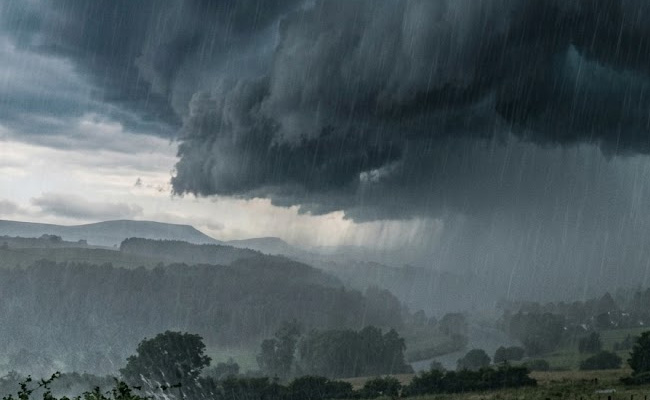
Dehradun/Pithoragarh (PTI): The India Meteorological Department (IMD) has issued a warning for heavy rain and hailstorms across several districts of Uttarakhand on Tuesday, as temperatures remained markedly below normal in the region.
Heavy rainfall is likely at isolated places in Dehradun, Haridwar, Tehri, Pauri, Nainital, Champawat, and Udham Singh Nagar districts. Most places across all districts are expected to receive light to moderate rain or thunderstorms, while higher reaches are likely to witness snowfall, officials said on Monday.
The weather department warned of thunderstorms accompanied by lightning, hail and intense spells of rain in six districts, including Dehradun and Nainital. Gusty winds with speeds reaching 40-50 kmph are also expected at isolated locations in these areas and other hilly districts.
In the state capital, Dehradun, the sky is forecast to remain partly cloudy with light rain and thunderstorms accompanied by gusty winds of 30-40 kmph.
The maximum and minimum temperatures in the city are expected to hover around 31 degrees Celsius and 19 degrees Celsius, respectively.
Maximum temperatures during the past 24 hours remained markedly below normal in the hills and appreciably below normal in the plains. While no significant change in temperature is expected over the next 2-3 days, the IMD predicts a rise of 3-5 degrees Celsius during the subsequent 3-4 days.
Rainfall was recorded in several areas after 8.30 am today, with Ramnagar receiving 31.5 mm and Nainital recording 26.5 mm. Other areas, including Pithoragarh, Khatima and Champawat, also reported moderate precipitation.
Authorities have stopped a batch of 36 Adi Kailash pilgrims at the Dharchula base camp and placed the high-altitude yatra route on high alert following heavy rains and hailstorms in the district on Monday.
Dharchula SDM Ashish Joshi said the pilgrimage was halted due to adverse weather conditions. The issuance of new inner-line passes has been suspended until the weather normalises.
With 1,700 passes issued so far, pilgrims already at higher camps are being monitored for safety, the official added.