Scientists decode how coronavirus damages lung cells within hours
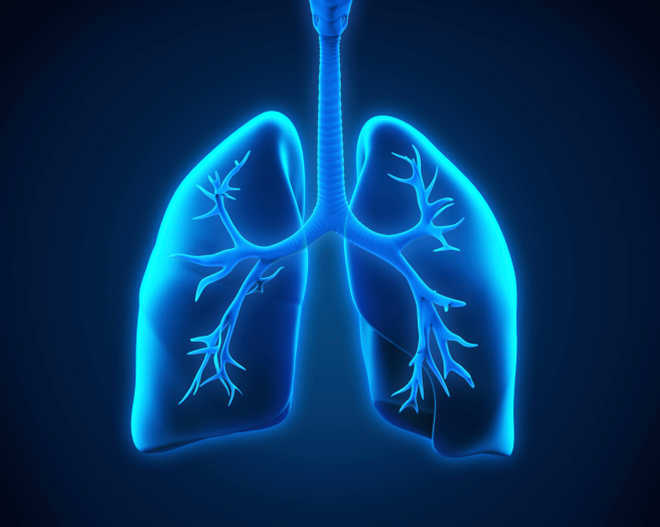
Boston, Jan 31: Following months of interdisciplinary research assessing tens of thousands of lung cells infected with the novel coronavirus, scientists have created one of the most comprehensive maps to date of the molecular activities that are triggered inside these cells at the onset of the viral infection, an advance that may lead to the development of new drugs to combat COVID-19.
From their analysis, the scientists, including those from Boston University in the US, discovered close to 18 existing drugs approved by the US Food and Drug Administration (FDA) that could potentially be repurposed to combat COVID-19 soon after a person becomes infected.
They said five of these drugs could reduce the spread of the coronavirus in human lung cells by more than 90 per cent.
In the research, published in the journal Molecular Cell, the scientists simultaneously infected tens of thousands of lab-grown human lung cells with the SARS-CoV-2 virus, and tracked what happens in these cells during the moments after infection.
They said these engineered cells are not completely identical to the living, breathing cells inside our bodies, but are the "closest thing to it."
"What makes this research unusual is that we looked at very early time points [of infection], at just one hour after the virus infects lung cells. It was scary to see that the virus already starts to damage the cells so early during infection," said study co-author and virologist Elke Muhlberger from Boston University (BU).
According to the researchers, "the virus does wholesale remodeling of the lung cells."
"It's amazing the degree to which the virus commandeers the cells it infects," said Andrew Emili, another co-author of the study from BU.
Since viruses cannot replicate themselves, they hijack the host cell machinery to make copies of its genetic material.
In the study, the scientists found that when SARS-CoV-2 takes over, it completely changes the cells' metabolic processes.
The virus even damages the cells' nuclear membranes within three to six hours after infection, which the team said was very surprising.
In contrast, "cells infected with the deadly Ebola virus don't show any obvious structural changes at these early time points of infection, and even at late stages of infection, the nuclear membrane is still intact," Muhlberger said.
The scientists explained that the cell's nuclear membrane surrounds the nucleus, which holds the majority of the genetic information, and controls and regulates normal cellular functions.
With the nucleus compromised by the coronavirus, they said "things rapidly take a bad turn for the entire cell."
The lung cells -- which normally play a role in maintaining the essential gas exchange of oxygen and carbon dioxide that occurs when we breathe -- die under this siege, the study noted.
According to the researchers, the cells also emit distress signals which boost inflammation as they die, triggering a cascade of biological activity that accelerates more cell death.
This eventually leads to pneumonia, acute respiratory distress, and lung failure, they explained.
"I couldn't have predicted a lot of these pathways, most of them were news to me. That's why our [experimental] model is so valuable," said Andrew Wilson, one of the study's senior authors.
Let the Truth be known. If you read VB and like VB, please be a VB Supporter and Help us deliver the Truth to one and all.
Heavy rain, hailstorms likely to lash Uttarakhand on Tuesday; IMD issues warning

Dehradun/Pithoragarh (PTI): The India Meteorological Department (IMD) has issued a warning for heavy rain and hailstorms across several districts of Uttarakhand on Tuesday, as temperatures remained markedly below normal in the region.
Heavy rainfall is likely at isolated places in Dehradun, Haridwar, Tehri, Pauri, Nainital, Champawat, and Udham Singh Nagar districts. Most places across all districts are expected to receive light to moderate rain or thunderstorms, while higher reaches are likely to witness snowfall, officials said on Monday.
The weather department warned of thunderstorms accompanied by lightning, hail and intense spells of rain in six districts, including Dehradun and Nainital. Gusty winds with speeds reaching 40-50 kmph are also expected at isolated locations in these areas and other hilly districts.
In the state capital, Dehradun, the sky is forecast to remain partly cloudy with light rain and thunderstorms accompanied by gusty winds of 30-40 kmph.
The maximum and minimum temperatures in the city are expected to hover around 31 degrees Celsius and 19 degrees Celsius, respectively.
Maximum temperatures during the past 24 hours remained markedly below normal in the hills and appreciably below normal in the plains. While no significant change in temperature is expected over the next 2-3 days, the IMD predicts a rise of 3-5 degrees Celsius during the subsequent 3-4 days.
Rainfall was recorded in several areas after 8.30 am today, with Ramnagar receiving 31.5 mm and Nainital recording 26.5 mm. Other areas, including Pithoragarh, Khatima and Champawat, also reported moderate precipitation.
Authorities have stopped a batch of 36 Adi Kailash pilgrims at the Dharchula base camp and placed the high-altitude yatra route on high alert following heavy rains and hailstorms in the district on Monday.
Dharchula SDM Ashish Joshi said the pilgrimage was halted due to adverse weather conditions. The issuance of new inner-line passes has been suspended until the weather normalises.
With 1,700 passes issued so far, pilgrims already at higher camps are being monitored for safety, the official added.