Scientists find 75-90 % decline in Leopard population in India
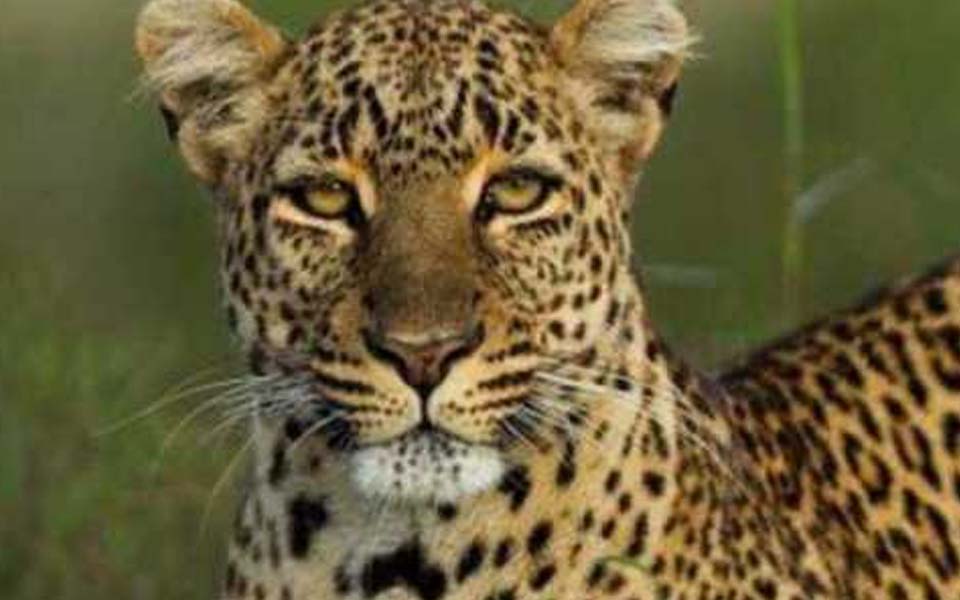
Bengaluru, Feb 7: Leopard population has declined 75-90 per cent in India, according to a study which has suggested that the carnivore demand similar conservation attention like tigers in the country.
The study was conducted by scientists from the Centre for Wildlife Studies (CWS India) and the Wildlife Institute of India.
The scientists have used genetic data from leopards sampled across the Indian subcontinent to investigate population structure and patterns of demographic decline, a CWS India press release said.
They investigated the demographic history of each identified subpopulations and compared genetic decline analyses with countrywide local extinction probabilities.
The study was conducted by Supriya Bhatt, Suvankar Biswas, Dr Bivash Pandav, Dr Samrat Mondol (all from Wildlife Institute of India) and Dr Krithi K Karanth (Centre for Wildlife Studies).
They collected faecal samples and identified 56 unique individuals using a panel of 13 microsatellite markers, and merged this data with already available 143 leopard individuals.
The study revealed population structure and recent decline in leopards.
"Coalescent simulations with microsatellite loci revealed, across India, a possibly human-induced 7590 per cent population decline between approximately 120200 years ago," it said.
The population-specific estimates of genetic decline are in concordance with ecological estimates of local extinction probabilities in these subpopulations, it was stated.
"Our results are both interesting and alarming- using two different methodological approaches we have established that even one most adaptable big cats in India has experienced decline in population structure and distribution," Krithi K Karanth, Chief Conservation Scientist at Bengaluru-based CWS, said.
The study suggested that leopards demand similar conservation attention like tigers in India.
Let the Truth be known. If you read VB and like VB, please be a VB Supporter and Help us deliver the Truth to one and all.
SRH beat CSK by 10 runs

Hyderabad (PTI): Nitish Kumar Reddy and Eshan Malinga shared five wickets between them as hosts Sunrisers Hyderabad defeated Chennai Super Kings by 10 runs in their IPL match here on Saturday.
Defending 195, Hyderabad restricted struggling CSK to 184 for eight. CSK have crashed to fourth defeat in six matches.
Abhishek Sharma (59) and Heinrich Klaasen (59) took CSK to 194 for nine with their splendid batting. For CSK, Jamie Overton and Anshul Kamboj picked up three wickets apiece while Mukesh Choudhary bagged two.
Brief Scores:
Sunrisers Hyderabad: 194 for 9 in 20 overs (Abhishek Sharma 59, Heinrich Klaasen 59; Jamie Overton 3/37, Anshul Kamboj 3/22).
Chennai Super Kings: 184 for 8 in 20 overs. (Ayush Mhatre 30, Matthew Short 34; E Malinga 3/29, N Reddy 2/31).