Scientists identify unique patterns in COVID-19 transmission in India
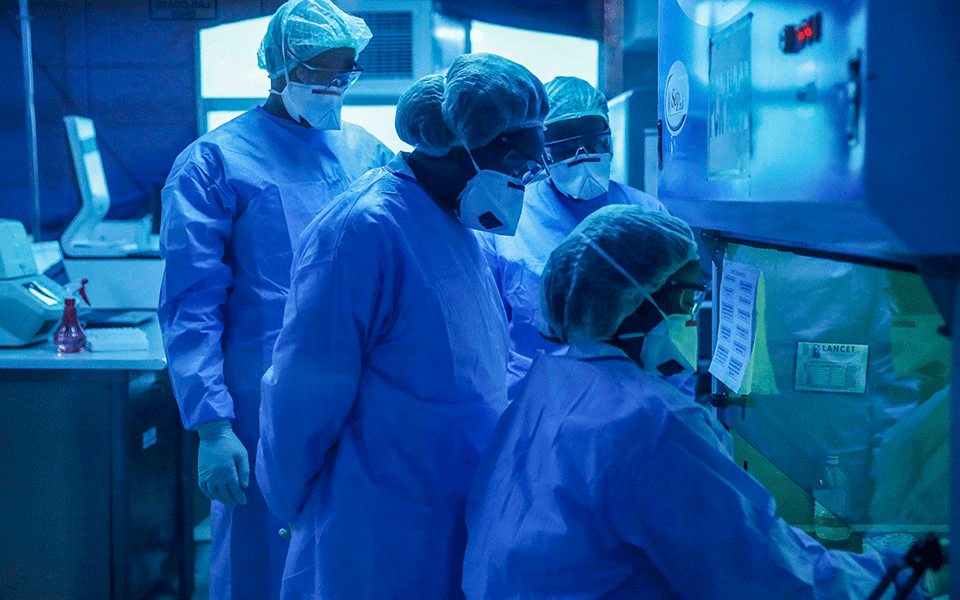
New Delhi: Researchers, including those from the Government of Tamil Nadu, and Andhra Pradesh, have conducted one of the largest analysis of COVID-19 epidemiology to date, and have found that both cases and deaths due to the disease have been more heavily concentrated in the 40-69 year age group in India than is seen in high-income countries, among other trends.
The study, published in the journal Science on Wednesday, assessed the disease transmission patterns in 5,75,071 individuals exposed to 84,965 confirmed cases of COVID-19 in the two states based on data collected by tens of thousands of contact tracers.
According to the scientists, including Ramanan Laxminarayan from the Center for Disease Dynamics, Economics, and Policy in New Delhi, the findings offer a peek into the pandemic's trajectory in a low- and middle-income country, where most COVID-19 cases have occurred.
Based on the data, the scientists said both cases and deaths in the two Indian states were concentrated in younger cohorts than expected from observations in higher-income countries.
The study noted that contacts with the same age were associated with the greatest infection risk -- a pattern, which the researchers said, was strongest among children between 0-14 years of age, and among adults older than 65 years.
They said the proportion of deaths to the number of infected people, known as the case-fatality ratio (CFR), spanned 0.05 per cent at ages 5-17 years to 16.6 per cent at ages exceeding 85.
The researchers also noted that COVID-19 patients in the two states have a median stay of five days in the hospital before death compared to 13 days to death from the date of hospital admission in the US.
Follow-up testing of exposed contacts revealed that 70 per cent of infected individuals did not infect any of their contacts, while 8 per cent of coronavirus positive patients accounted for 60 per cent of observed new infections.
The researchers said this finding presents the largest empirical demonstration of superspreading. They said the findings "may indicate the identification of less-severe infections through active case-finding."
Andhra Pradesh and Tamil Nadu are among the Indian states with the largest healthcare workforce and public health expenditures per capita, and are known for their effective primary healthcare delivery models, the study noted.
It said 63 per cent of those who died had at least one co-morbidity, and 36 per cent had two or more underlying health conditions that made them more susceptible to the disease.
About 45 per cent of those who died were diabetic, the scientists said. Unlike observations in high-income countries, they said the deaths in India are concentrated at ages 50-64 years.
In the two Indian states in particular, they said only 17.9 per cent of COVID-19 deaths occurring on or before 1 August, 2020 were among people older than 75, compared with 58.1 per cent of deaths due to the disease in the US.
"This study was made possible by the significant contact tracing effort in Andhra Pradesh and Tamil Nadu, which involved tens of thousands of healthcare workers," Laxminarayan said.
"The results on disease transmission and mortality have the potential to inform policy to fight COVID-19. The study also speaks to the capacity of research emerging from India to help inform the global response to COVID-19," he added.
Let the Truth be known. If you read VB and like VB, please be a VB Supporter and Help us deliver the Truth to one and all.
Kharge has put 'full stop' to leadership speculation in Karnataka: Minister Parameshwara
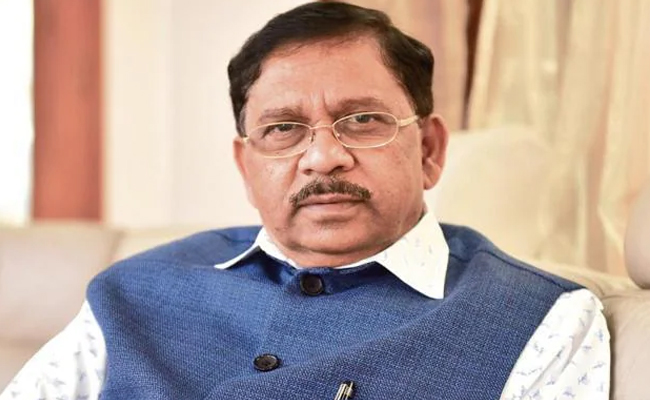
Bengaluru (PTI): Karnataka Home Minister G Parameshwara on Friday said AICC chief Mallikarjun Kharge has put a "full stop" on the issue of leadership change in the state.
Kharge's statement has a lot of significance and there ends the matter for now. Everyone in the party should respect and accept this, he said.
Parameshwara was referring to Kharge's statement on Thursday that there was no chief minister change in Karnataka "for now" and that the leadership issue in the state will be resolved soon.
Kharge's statement came amid speculation within the party and political circles about a possible decision on leadership change and cabinet reshuffle after May 4, once the results for assembly elections in four states and one union territory, along with bypolls to two assembly segments in Karnataka, are announced.
"Mallikarjun Kharge is our party's national president. He has a lot of experience. Several people, including me, have said that in the case of change (in leadership), if he (Kharge) comes (as CM), no one could speak in front of his experience and everyone would accept it. While replying to it, Kharge said that there is a chief minister now, and there is no question of change as of now," Parameshwara said.
Speaking to reporters here, he said, "I welcome his (Kharge) statement because I feel he has expressed his opinion after a discussion involving him, Rahul Gandhi, Sonia Gandhi, K C Venugopal and Randeep Singh Surjewala (both AICC general secretaries). I may be right or wrong. I feel that his statement has a lot of significance. So that matter ends there for now."
Responding to a question on repeated statements by several party leaders regarding leadership change, the home minister said, what the AICC chief has said on the matter is final. It should be respected and accepted by all in the party. There is no meaning in interpreting it further.
"I cannot respond to what others say, but I can say my opinion. In my opinion, the AICC chief is the supreme authority in the party. He, along with Rahul Gandhi and Sonia Gandhi, are our high command. If the high command has said something, we should both respect and accept it. There ends the matter," he said.
Kharge has put a "full stop" on the issue, he further said, adding that, "When he has said there is no change. It is a full stop."
Responding to a question on Parameshwara's recent statement about Kharge becoming chief minister, the AICC chief on Thursday said, "You (media), he (Parameshwara), and people at the top say that it is better if I become CM. But more than fate, as per my ideology and my service to the party so far, Sonia Gandhi makes decisions regarding me."
He had further said, "But that question does not arise now. There is already a CM here. If Sonia Gandhi, Rahul Gandhi, and I together have to take any decision in that direction, it will take some time. Let's wait and see."
Kharge on Friday too said no date has been fixed yet to discuss a possible leadership change in Karnataka.
Supporters of Deputy Chief Minister D K Shivakumar have been insisting on his elevation in line with a reported power-sharing agreement with Chief Minister Siddaramaiah when the party won the 2023 Assembly elections. Some have even claimed that "sweet news" is expected by May 15, which is Shivakumar's birthday.
The leadership tussle within the ruling party has intensified amid speculation about a possible change of chief minister after the Congress government completed the halfway mark of its five-year term on November 20, 2025.
The speculation has been fuelled by a reported "power-sharing" arrangement between Siddaramaiah and Shivakumar at the time of government formation in 2023.