SC's Rafale verdict has no apparent error warranting its review: Centre
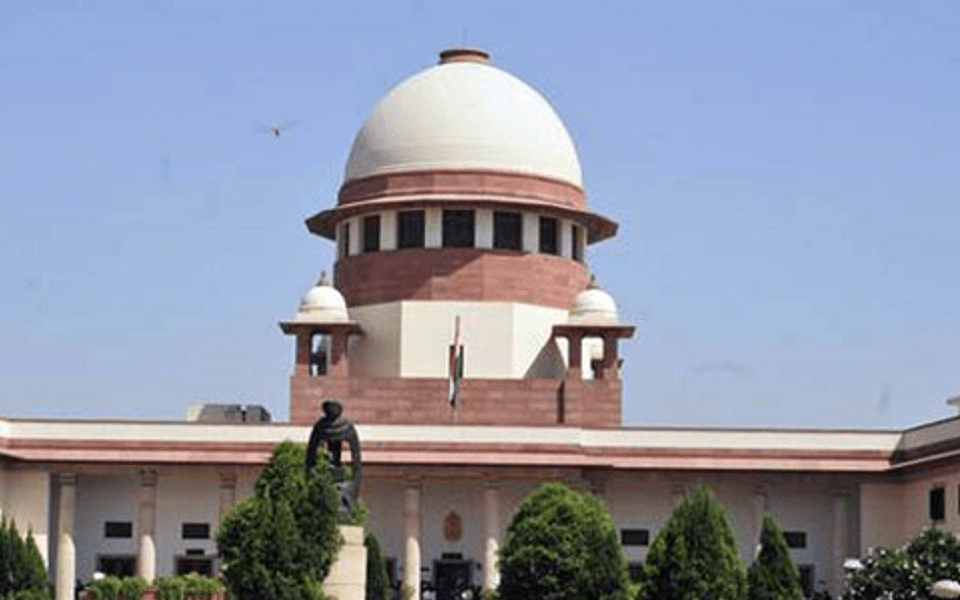
New Delhi: The Centre has told the Supreme Court that "categorical and emphatic" findings recorded by the top court in its December 14 last year verdict in the Rafale deal case has no apparent error warranting its review.
It said the petitioners, in the garb of seeking review of the verdict and placing reliance on some press reports and some incomplete internal file notings procured unauthorisedly and illegally, cannot seek to re-open the whole matter since the scope of review petition is "extremely limited".
The Centre's reply came on pleas filed by former Union ministers Yashwant Sinha, Arun Shourie and activist-advocate Prashant Bhushan seeking review of the December 14 verdict by which their plea seeking probe into alleged irregularities in the multi-crore Rafale fighter jet deal was dismissed.
Two other review petitions have been filed by AAP leader Sanjay Singh and advocate Vineet Dhandha.
All the review petitions are scheduled to be taken up for hearing next week by a bench headed by Chief Justice Ranjan Gogoi.
"The review petition...is an attempt to get a fishing and roving inquiry ordered, which this court has specifically declined to go into based on perception of individuals. A non-existent distinction is sought to be created between an inquiry by the CBI and the court by playing on words," the Centre's affidavit said.
It said the apex court had come to the conclusion that on all the three aspects -- the decision making process, pricing and choosing Indian offset partner -- there is no reason for intervention by the court on the sensitive issue of purchase of 36 Rafale fighter aircraft.
The Centre said media reports cannot form the basis for seeking review of the judgement since it is well settled law that courts do not take decision on the basis of media reports.
It said that internal file notings and views contained therein are mere expression of opinion or views for consideration of the competent authority for taking final decision in the matter.
"It cannot form the basis for a litigant to question the final decision. Therefore, there is no ground made out either for entertaining the review petition on this ground either," the Centre said.
It added that the review petitioners were relying on information which are based on unsubstantial media reports or part of internal file notings deliberately projected in a selective manner which cannot form the basis for a review of the verdict.
Referring to the April 10 order of the apex court, by which the Centre's preliminary objection to placing reliance on leaked documents was rejected by the top court, the Centre's reply said the order "would imply that any document marked secret obtained by whatever means and placed in public domain can be used without attracting any penal action".
It said, "This has happened in the case of Combat Aircraft which the Court has upheld by its Judgment dated 10th April, 2019. This could lead to the revelation of all closely guarded State Secrets relating to space, nuclear installations, strategic defence capabilities, operational deployment of forces, intelligence resources in the country and outside, counter-terrorism and counter insurgency measures etc."
"This could have implications in the financial sector also if say budget proposals are published before they are presented in Parliament. Such disclosures of Secret Government information will have grave repercussions on the very existence of the Indian State," it said.
It said that the April 10 order "opens the window for any person making the request not only to seek papers from Ministry of Defence but from other Ministries and Departments dealing with subjects mentioned above if they are stolen and placed in public domain by the Press or a Website."
The Centre pointed out that all papers and files have been made available to the CAG who has given his report "concluding that the price of 36 Rafale is 2.86 per cent lower than the audit aligned price, apart from additional benefits which would accrue because of change from firm and fixed pricing to non-firm price."
It said that waiver of sovereign or bank guarantee in government-to-government agreements or contracts is not unusual.
"Furthermore, assuming that Dassault Aviation or MBDA France meet difficulties in the execution of their respective supply protocols and would have to reimburse all or part of the intermediary payments to the Government of the Republic of India, the Government of the French Republic will take appropriate measures so as to make sure that said payments or reimbursements will be made at the earliest," it said while seeking dismissal of the review plea.
In an another reply to an application filed by review petitioners, the Centre said that "monitoring of the progress by PMO of this government-to-government process cannot be construed as interference or parallel negotiations."
"It is submitted that in the garb of seeking review of the judgement, and placing reliance on some media reports and some incomplete internal file notings procured unauthorisedly and illegally, the petitioners cannot seek to re-open the whole matter by asking for production of documents in review petition since the scope of review petition itself is extremely limited," the reply said.
Let the Truth be known. If you read VB and like VB, please be a VB Supporter and Help us deliver the Truth to one and all.
Sujit Nair raises concerns over speculation of DMK-AIADMK understanding to block TVK
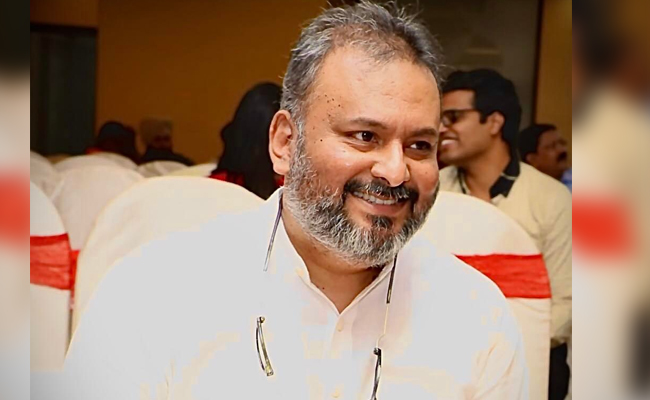
Chennai: Journalist and political commentator Sujit Nair has expressed concern over speculation that the Dravida Munnetra Kazhagam and the All India Anna Dravida Munnetra Kazhagam could explore a post-poll understanding to prevent Vijay-led Tamilaga Vettri Kazhagam from forming the government in Tamil Nadu.
In a social media post, Sujit Nair said the election verdict in Tamil Nadu reflected a clear public demand for political change and argued that the mandate should be respected irrespective of political preferences.
Referring to reports and political discussions surrounding a possible understanding between the DMK and AIADMK, he said he hoped such developments remained only speculative conversations and did not turn into reality.
Nair stated that if such an alliance were to take shape, it would raise serious questions about ideological politics in the country. He said TVK had emerged through a democratic electoral process and that the legitimacy to govern in a parliamentary democracy comes from the people’s verdict.
According to him, attempts to prevent an electoral winner from forming the government through unexpected political arrangements may be constitutionally valid, but many people could view them as politically opportunistic.
He further said that such a move could particularly affect the political image of the DMK, which has historically projected itself around ideology, social justice and opposition politics. Nair said that in ideological terms, the DMK appeared closer to TVK than to the AIADMK, and joining hands with its long-time political rival only to remain in power could weaken its broader political narrative.
He added that the same questions would apply to the AIADMK as well, as the party had spent decades positioning itself against the DMK and such an arrangement could create discomfort among its cadre and supporters.
Drawing a comparison with Maharashtra politics in 2019, Nair said he had expressed similar views when the Shiv Sena formed an alliance with the Indian National Congress and the Nationalist Congress Party after the Assembly elections.
He said post-poll alliances between long-standing political rivals often create a public perception that ideology and electoral mandates become secondary when political power equations come into play.
Nair also said such developments increase public cynicism towards politics and reinforce the belief among voters that ideology is often sidelined after elections.
He maintained that the Tamil Nadu verdict was emphatic and said respecting both the spirit and substance of the mandate was important for the credibility of democratic politics.