Section 144 cannot be used to prevent exercise of democratic rights, says SC
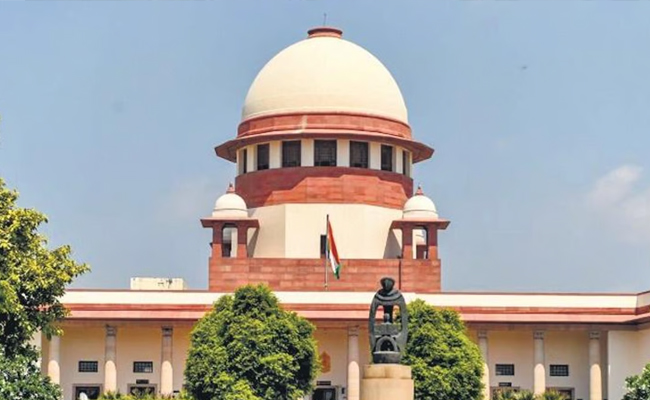
New Delhi, Jan 10: Section 144, which prohibits assembly of four or more people, cannot be used as a tool to prevent legitimate expression of opinion, grievance or exercise of democratic rights, the Supreme Court said on Friday.
Orders passed under the section have direct consequences on the fundamental rights of the public and such power, if used in a casual and cavalier manner, would result in severe illegality, the apex court said.
Section 144 of the Code of Criminal Procedure (CrPC) enables the State to take preventive measures to deal with imminent threats to public peace.
"This power should be used responsibly, only as a measure to preserve law and order. The order is open to judicial review, so that any person aggrieved by such an action can always approach the appropriate forum and challenge the same. But, the aforesaid means of judicial review will stand crippled if the order itself is unreasoned or un notified," the bench said.
The Constitution protects the expression of divergent views, legitimate expressions and disapproval, and this cannot be the basis for invocation of Section 144 unless there is sufficient material to show that there is likely to be an incitement to violence or threat to public safety or danger, it added.
The top court said further said that power under Section 144 is exercisable not only where there exists present danger, but also when there is an apprehension of danger and repetitive orders under this provision would be an abuse of power.
It directed the authorities to immediately review the need for continuance of any existing orders passed under Section 144.
"However, the danger contemplated should be in the nature of an 'emergency' and for the purpose of preventing obstruction and annoyance or injury to any person lawfully employed. The power under Section 144, CrPC cannot be used to suppress legitimate expression of opinion or grievance or exercise of any democratic rights.
"An order passed under Section 144, CrPC should state the material facts to enable judicial review of the same. The power should be exercised in a bona fide and reasonable manner, and the same should be passed by relying on the material facts, indicative of application of mind. This will enable judicial scrutiny of the aforesaid order," the bench said.
While imposing Section 144, the Magistrate cannot apply a straitjacket formula without assessing the gravity of the prevailing circumstances and the restrictions must be proportionate to the situation concerned, it added.
"In view of the above, 'law and order', 'public order' and security of State' are distinct legal standards and the Magistrate must tailor the restrictions depending on the nature of the situation. If two families quarrel over irrigation water, it might breach law and order, but in a situation where two communities fight over the same, the situation might transcend into a public order situation.
"However, it has to be noted that a similar approach cannot be taken to remedy the aforesaid two distinct situations. The Magistrate cannot apply a straitjacket formula without assessing the gravity of the prevailing circumstances; the restrictions must be proportionate to the situation concerned," the bench said.
It said that preventive measures under Section 144 should be based on the type of exigency, extent of territoriality, nature of restriction and the duration of the same.
"In a situation of urgency, the authority is required to satisfy itself of such material to base its opinion on for the immediate imposition of restrictions or measures which are preventive/remedial. However, if the authority is to consider imposition of restrictions over a larger territorial area or for a longer duration, the threshold requirement is relatively higher," the bench said.
The top court said that an order passed under Section 144 should be indicative of proper application of mind, which should be based on the material facts and the remedy directed.
"Proper reasoning links the application of mind of the officer concerned, to the controversy involved and the conclusion reached. Orders passed mechanically or in a cryptic manner cannot be said to be orders passed in accordance with law," it said.
Let the Truth be known. If you read VB and like VB, please be a VB Supporter and Help us deliver the Truth to one and all.
Power tariffs under BESCOM to rise from May 1
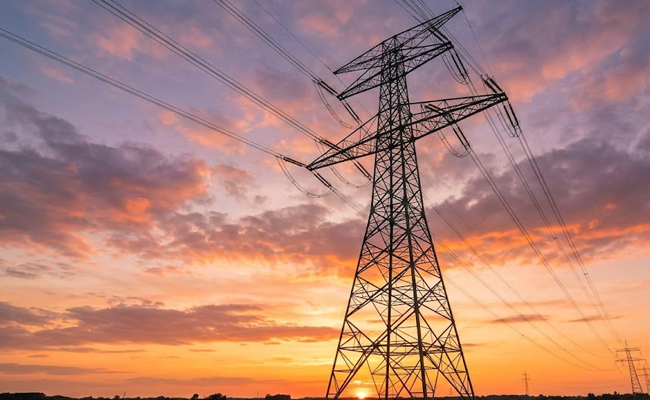
Bengaluru (PTI): Power bills for consumers under the Bangalore Electricity Supply Company Limited (BESCOM) will go up from May 1, following an order issued by the Karnataka Electricity Regulatory Commission (KERC) on Friday.
The hike comes after KERC allowed the BESCOM to recover a revenue deficit of Rs 2,068 crore incurred in 2024-25, from the consumers.
As a result, for every unit of electricity consumed in 2024-25, the customers will be charged an additional 56 paise, it said.
"BESCOM shall calculate, for each of the active consumers of FY2024-25 the amount to be recovered based on their actual energy consumption during FY2024-25. Such amount shall be recovered during FY 2026-27 in equal monthly instalments, to be called as 'FY25 True up Charges', commencing from the first meter reading date falling on or after 1 May 2026 and concluding with the reading date ending on 30 April 2027," the order said.
"It is further ordered that BESCOM shall maintain a separate head of account, allocated for the purpose, to record the adjustment of the said amount to ensure full recovery of the deficit," it added.
Similarly Chamundeshwari Electricity Supply Corporation Limited (CESC) has also recorded a revenue deficit of Rs 121.71 crore and can collect an additional 15 paisa per unit for consumption in 2024-25, official sources said.