Sensex tanks over 2,000 pts in global equity carnage; Nifty gives up 9,400
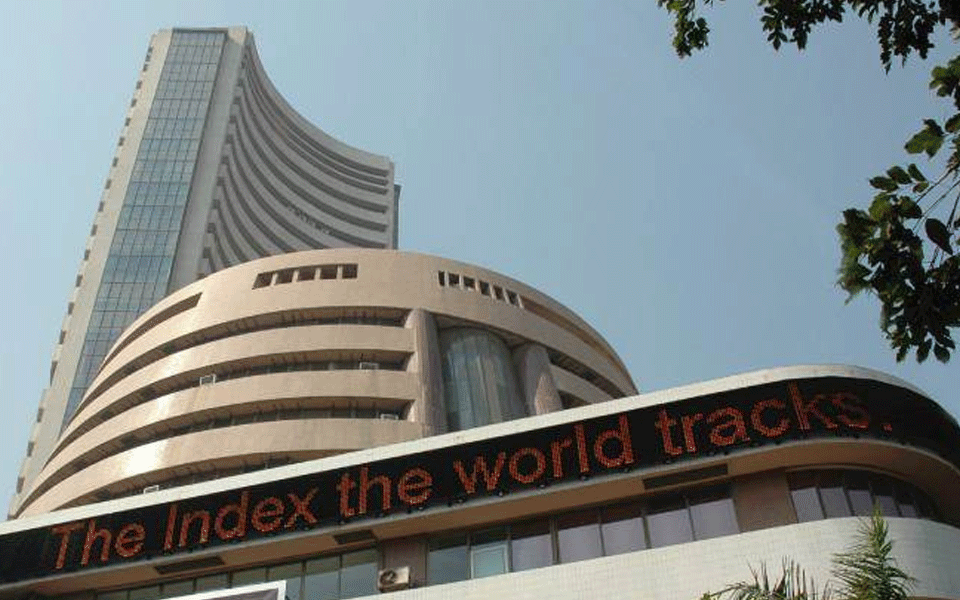
Mumbai: Equity benchmark Sensex plummeted over 2,000 points and the Nifty gave up the 9,400 level in opening session on Monday after the Federal Reserve's rate cut fanned concerns over the impact of Covid-19 on world economy.
The rupee too depreciated 41 paise to 74.16 against US dollar in morning session.
Resuming its downward spiral, domestic BSE Sensex sank 2004.20 points or 5.88 per cent to 32,099.28 in morning session. Similarly, the NSE Nifty cracked 596.25 points, or 5.99 per cent, to 9,358.95.
In the previous session, the 30-share BSE barometer recovered over 5,380 points from its intra-day low of 29,388.97, ending 1,325.34 points or 4.04 per cent higher at 34,103.48. The Nifty settled 365.05 points, or 3.81 per cent, up at 9,955.20.
All Sensex components were trading in the red. IndusInd Bank was the top loser, tanking up to 12 per cent, followed by ICICI Bank, HDFC, Axis Bank, Titan, Tata Steel and Bajaj Finance.
According to traders, volatility heightened in global markets as US Federal Reserve's interest rate cut stoked concerns over an impending economic recession.
Faced with a growing economic shutdown amid the new coronavirus (Covid-19) pandemic, the US Fed on Sunday made its second emergency rate cut in less than two weeks, cutting the benchmark borrowing rate to a range of 0-0.25 percent, where it was during the 2008 global financial crisis.
US stock futures fell sharply after the Federal Reserve slashed interest rates.
Meanwhile, the Reserve Bank of India on Friday said it is closely monitoring the current global situation and assured that it will take all steps to keep markets adequately liquid and stable.
Further, Bank of Japan (BOJ) convened an emergency policy meeting after the Fed rate cut. A BOJ statement said the meeting was to discuss monetary control matters based on recent economic and financial developments."
Japan's Nikkei was the sole Asian benchmark that did not lose ground early Monday. Elsewhere in Asia, Shanghai Composite Index, Hang Seng and Kospi fell up to 2 per cent. Incessant foreign fund outflow also kept market participants on edge, traders said.
On a net basis, foreign institutional investors sold equities worth Rs 6,027.58 crore on Friday, data available with stock exchanges showed.
Meanwhile, Brent crude oil futures plunged over 2.98 per cent to USD 32.84 per barrel. Covid-19 has claimed over 6,000 lives and infected more than 1,62,000 people across the globe.
The number of infected cases in the country stood at 110 on Monday, the Union Health Ministry said.
Let the Truth be known. If you read VB and like VB, please be a VB Supporter and Help us deliver the Truth to one and all.
Sujit Nair raises concerns over speculation of DMK-AIADMK understanding to block TVK
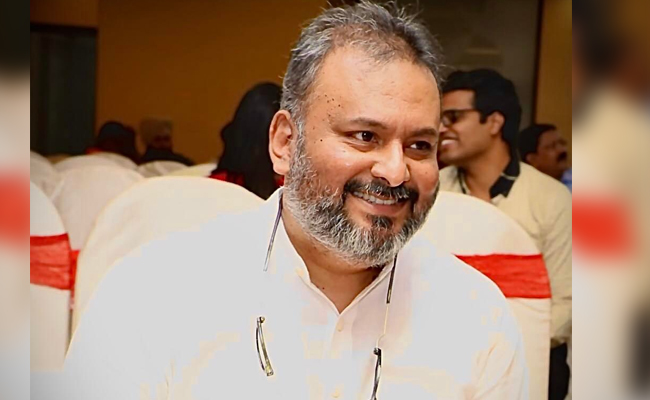
Chennai: Journalist and political commentator Sujit Nair has expressed concern over speculation that the Dravida Munnetra Kazhagam and the All India Anna Dravida Munnetra Kazhagam could explore a post-poll understanding to prevent Vijay-led Tamilaga Vettri Kazhagam from forming the government in Tamil Nadu.
In a social media post, Sujit Nair said the election verdict in Tamil Nadu reflected a clear public demand for political change and argued that the mandate should be respected irrespective of political preferences.
Referring to reports and political discussions surrounding a possible understanding between the DMK and AIADMK, he said he hoped such developments remained only speculative conversations and did not turn into reality.
Nair stated that if such an alliance were to take shape, it would raise serious questions about ideological politics in the country. He said TVK had emerged through a democratic electoral process and that the legitimacy to govern in a parliamentary democracy comes from the people’s verdict.
According to him, attempts to prevent an electoral winner from forming the government through unexpected political arrangements may be constitutionally valid, but many people could view them as politically opportunistic.
He further said that such a move could particularly affect the political image of the DMK, which has historically projected itself around ideology, social justice and opposition politics. Nair said that in ideological terms, the DMK appeared closer to TVK than to the AIADMK, and joining hands with its long-time political rival only to remain in power could weaken its broader political narrative.
He added that the same questions would apply to the AIADMK as well, as the party had spent decades positioning itself against the DMK and such an arrangement could create discomfort among its cadre and supporters.
Drawing a comparison with Maharashtra politics in 2019, Nair said he had expressed similar views when the Shiv Sena formed an alliance with the Indian National Congress and the Nationalist Congress Party after the Assembly elections.
He said post-poll alliances between long-standing political rivals often create a public perception that ideology and electoral mandates become secondary when political power equations come into play.
Nair also said such developments increase public cynicism towards politics and reinforce the belief among voters that ideology is often sidelined after elections.
He maintained that the Tamil Nadu verdict was emphatic and said respecting both the spirit and substance of the mandate was important for the credibility of democratic politics.