Sensex tumbles over 850 pts on weak global cues, FII outflows; sinks below 75k
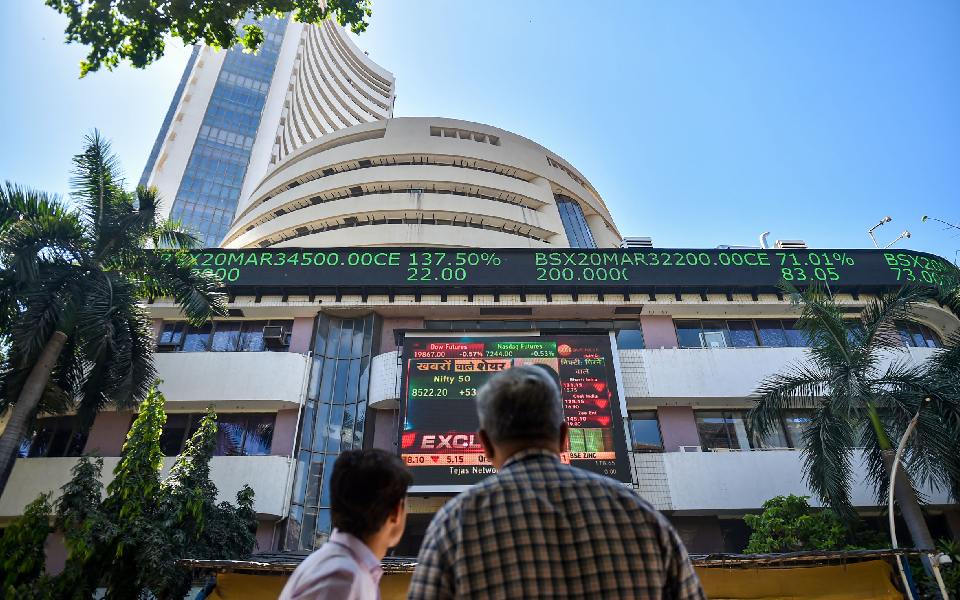
Mumbai, Feb 24 (PTI): Falling for the fifth straight session on Monday, equity benchmark BSE Sensex plunged over 850 points to drop below the crucial 75,000 level, tracking a weak global market trend and unabated foreign fund outflows amid escalating trade tensions.
Besides, deep losses in IT, telecom and metal stocks added to the gloom, analysts said.
The 30-share BSE benchmark tanked 856.65 points or 1.14 per cent to settle at 74,454.41. During the day, it plummeted 923.62 points or 1.22 per cent to 74,387.44.
The NSE Nifty dropped 242.55 points or 1.06 per cent to 22,553.35.
As many as 2,810 stocks declined, while 1,207 advanced and 183 remained unchanged on the BSE.
"The market is more concerned about the US' likely move to reciprocate higher tariff levies on exporting nations, which could impact developing countries, including India. Also, FIIs showing no signs of putting brakes on their India exit strategy continue to weigh heavily on markets, with expensive valuations driving investors to curb their equity bets here.
"Heavy selling in banking, IT, telecom and other old economy sectors saw benchmark Sensex end below the crucial level of 75k mark," Prashanth Tapse, Senior VP (Research), Mehta Equities Ltd, said.
In the last five trading sessions, the BSE barometer lost 1,542.45 points or 2 per cent, and the Nifty tanked 406.15 points or 1.76 per cent.
From the Sensex pack, HCL Tech, Zomato, Tata Consultancy Services, Infosys, Tech Mahindra, Bharti Airtel, Tata Steel and NTPC were among the biggest laggards.
In contrast, Mahindra & Mahindra, Kotak Mahindra Bank, Maruti, Nestle and ITC were among the gainers.
Among BSE sectoral indices, BSE Focused IT dropped 2.65 per cent, IT (2.60 per cent), teck (2.56 per cent), telecommunication (2.26 per cent), metal (2.16 per cent), commodities (1.53 per cent) and utilities (1.42 per cent).
On the other hand, Auto and FMCG were the gainers.
The BSE smallcap gauge declined 1.31 per cent, and the midcap index dipped 0.78 per cent.
Foreign Institutional Investors (FIIs) offloaded equities worth Rs 3,449.15 crore on Friday, according to exchange data.
Foreign investors have pulled out over Rs 23,710 crore from equity markets so far this month, pushing total outflows past Rs 1 lakh crore in 2025 amid rising global trade tensions.
"The D-Street indices experienced a sharp drop to an eight-month low as market sentiment remained subdued. The decline was primarily driven by significant losses in heavyweight stocks, especially within the IT sector. This weakness followed reports of declining consumer confidence in the US, casting a shadow over the country's growth outlook.
"The broader market felt the impact, pulling down both small and midcap indices," Ameya Ranadive, Chartered Market Technician, CFTe, Sr Technical Analyst, StoxBox, said.
In Asian markets, Seoul, Shanghai and Hong Kong settled lower. Equity markets were closed in Tokyo for a holiday.
European markets were trading mostly in positive territory. US markets ended significantly lower on Friday.
"Global headwinds continue to weigh on the domestic market, with persistent volatility causing uncertainty among retail investors, who generally have a lower risk appetite. Weak US consumer sentiment and tariff concerns may further pressure export-oriented sectors such as IT," Vinod Nair, Head of Research, Geojit Financial Services, said.
Global oil benchmark Brent crude rose 0.04 per cent to USD 74.46 a barrel.
On Friday, the BSE benchmark dropped 424.90 points or 0.56 per cent to settle at 75,311.06. The Nifty declined 117.25 points or 0.51 per cent to 22,795.90.
Let the Truth be known. If you read VB and like VB, please be a VB Supporter and Help us deliver the Truth to one and all.
Allahabad HC orders probe into 'reinstatement' of teacher in UP's Barabanki
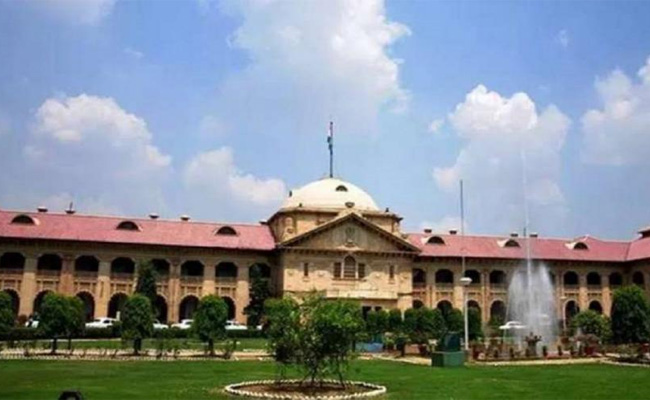
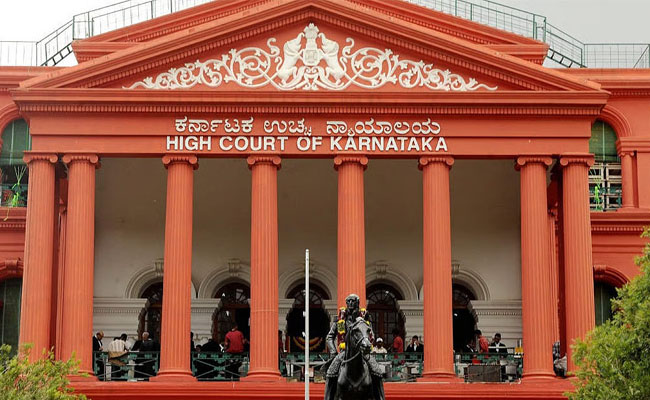
Lucknow (PTI): The Lucknow Bench of the Allahabad High Court on Friday ordered a probe by the special task force (STF) into alleged irregularities in the rejoining of a teacher at City Intermediate College in Barabanki, observing that the reinstatement appeared to be prima facie illegal.
The court also directed the recovery of the salary paid to the teacher during the disputed period.
A bench of Justice Rajeev Singh passed the order on a petition filed by the college management committee. The court expressed doubts over the roles of the District Inspector of Schools (DIOS), Barabanki, the college principal and the teacher concerned and hence, directed a detailed inquiry into the matter.
Taking note of alleged manipulation of records and misleading submissions, the court ordered the immediate transfer of the Barabanki DIOS to ensure a fair probe. It also directed the initiation of disciplinary proceedings against the then joint director of education of the Ayodhya division.
In its order, the court found that the teacher, Abhay Kumar, was initially appointed as an assistant teacher in 2018 but joined an Eklavya Model Residential School in Chhattisgarh as a lecturer in June 2024 without obtaining permission from the management. His subsequent request to retain the lien was rejected.
Despite this, he was allowed to rejoin the Barabanki College in September 2025 on the directions of the joint director of education and the DIOS, and was even paid the salary for October 2025. The court termed the rejoining "wholly illegal" and lacking any legal basis.
The bench also expressed concern over lapses in communication within the education department and directed the Uttar Pradesh chief secretary to ensure that official orders are communicated through email and WhatsApp as well, to prevent disputes.
The matter is next listed for hearing on May 28 when a compliance report is sought.