Serious questions which must be addressed, EC must act: Tharoor on Rahul's poll rigging claims
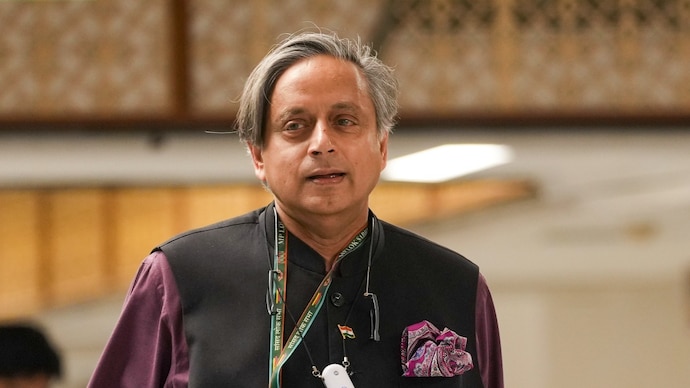
New Delhi (PTI): Citing Rahul Gandhi's poll rigging claims, Congress leader Shashi Tharoor on Friday said these are "serious questions" which must be seriously addressed in the interest of all voters and urged the Election Commission to act urgently.
In a post on X, the Thiruvananthapuram MP said India's democracy is too precious to allow its credibility to be destroyed by incompetence, carelessness or worse, deliberate tampering.
Tagging a post by the Congress on Gandhi's press conference, in which the leader of opposition in the Lok Sabha alleged a "huge criminal fraud" in polls, Tharoor said these are "serious questions" which must be seriously addressed in the interest of all parties and all voters.
"Our democracy is too precious to allow its credibility to be destroyed by incompetence, carelessness or worse, deliberate tampering. @ECISVEEP must urgently act & @SpokespersonECI should keep the nation informed," Tharoor said in his post.
Tharoor's remarks demanding action over Gandhi's claims assume significance as of late, he has been at odds with the party's stance on certain issues, including Operation Sindoor.
The differences first emerged after the government picked Tharoor to lead a diplomatic delegation to the US and other countries to convey India's zero-tolerance stance on terrorism following the April 22 Pahalgam attack.
At a press conference on Thursday, Gandhi made explosive claims of a "huge criminal fraud" in polls through collusion between the BJP and the Election Commission. He cited an analysis in a constituency in Karnataka and said it was "a crime against the Constitution".
Claiming the "vote chori model" was being used in many constituencies across the country, Gandhi also said that the judiciary needs to get involved in this because "the democracy that we love so much, does not exist anymore".
Gandhi said what his party collected through research was "criminal evidence" and alleged that the Election Commission was busy destroying such proof across the country.
Let the Truth be known. If you read VB and like VB, please be a VB Supporter and Help us deliver the Truth to one and all.
Riyan Parag likely to be fined 25 percent of match fees for vaping inside dressing room
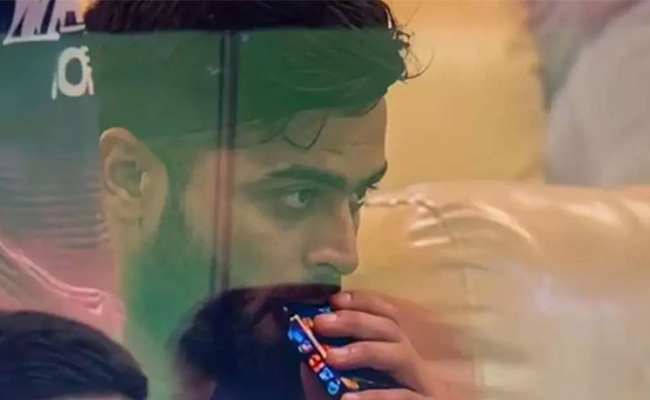
New Delhi (PTI): Rajasthan Royals captain Riyan Parag is set to be fined 25 per cent of his match fee for bringing the game into "disrepute" after being caught vaping on camera during the IPL game against Punjab Kings in Mullanpur.
Parag's actions during the Royals' chase on Tuesday night drew condemnation on social media.
PTI has learned that on field umpires Tanmay Srivastava and Nitin Menon had not reported the matter to match referee Amit Sharma right after the game. They only did that after seeing visual proof and Sharma found Parag guilty for a code of conduct breach as per the IPL guidelines.
The Level 1 offences carries 25 per cent deduction from match fees and one demerit point.
"He is set to be fined a portion of his match fees and a demerit point for a Level 1 offence," said an IPL source.
The Indian government had banned e-cigarettes back in 2019, prohibiting their production, sale and distribution. As per the law, the offender faces imprisonment up to one year and/or a Rs one lakh fine for a first time offence.
"Article 2.21 of IPL Code of Conduct is intended to cover all types of conduct that bring the game into disrepute and which is not specifically and adequately covered by the specific offences set out elsewhere in this Code of Conduct, including Article 2.20," the IPL Code of Conduct states.
"By way of example, Article 2.21 may (depending upon the seriousness and context of the breach) prohibit, without limitation, the following: (a) public acts of misconduct; (b) unruly public behaviour; and (c) inappropriate comments which are detrimental to the interests of the game.
"When assessing the seriousness of the offence, the context of the particular situation, and whether it was deliberate, reckless, negligent, avoidable and/or accidental, shall be considered.
"Further, the person lodging the Report shall determine where on the range of severity the conduct lays (with the range of severity starting at conduct of a minor nature (and hence a Level 1 Offence) up to conduct of an extremely serious nature (and hence a Level 4 Offence)."
Since it is a Level 1 offence there was no need for a hearing.
Parag, who has not had the best of times with the bat this IPL, was seen inhaling an e-cigarette, also known as vaping, in the dressing room during the live broadcast of their game against Punjab Kings. Royals won the game to end Kings' unbeaten run in the tournament.
This is not the first controversy to hit the Royals this season. Earlier this month, team manager Romi Bhinder was fined Rs one lakh for breaching PMOA protocol after being found using his phone in the dugout.
IPL and BCCI officials involved in the conduct of the IPL termed it as a careless act in the age of social media and prying TV cameras.
Royals next host Delhi Capitals at home on Friday night.