Seven firms that failed drug quality test gave money to political parties through bonds: Report
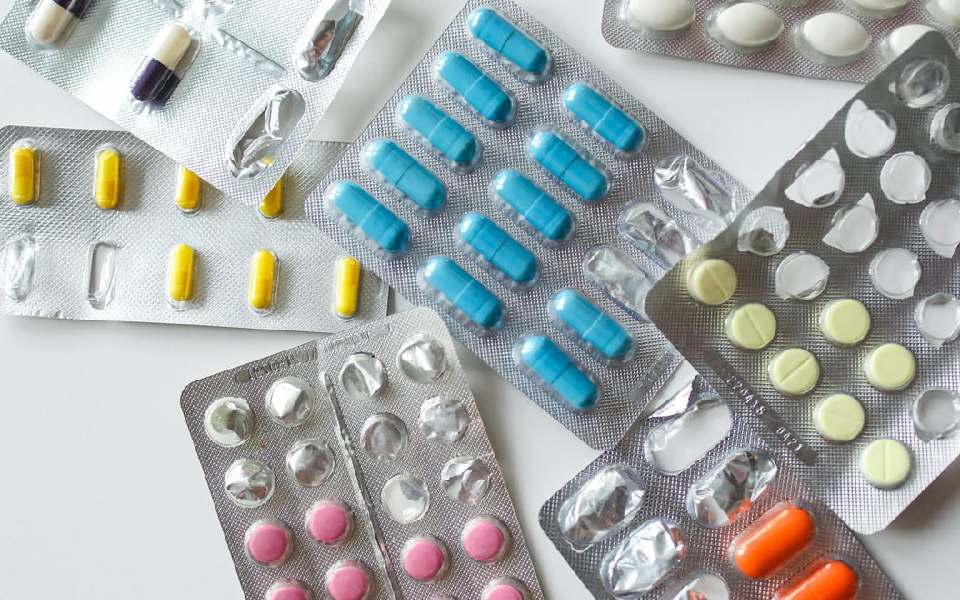
In a startling revelation, data released by the Election Commission on March 14 has exposed the deep ties between the pharmaceutical industry and political parties in India. According to the report, thirty-five pharmaceutical companies in India have collectively contributed nearly Rs 1,000 crore to various political parties through electoral bonds. What's more concerning is that at least seven of these companies were under investigation for the production of substandard drugs at the time they made these hefty contributions.
Regulatory Framework and Concerns
Under the Drugs and Cosmetics Act, 1940, pharmaceutical manufacturers in India are subject to regulation by state-controlled Food and Drug Administrations. These regulatory bodies are tasked with inspecting manufacturing units and ensuring the quality of medicines in the market. However, experts have raised concerns about the efficacy of drug regulators at both state and central levels, citing instances of lax enforcement and compromised oversight.
Amar Jesani, the editor of the Indian Journal of Medical Ethics, highlighted the possibility of pharmaceutical companies financing political parties to influence regulatory cases at the state level. This raises questions about the integrity of the regulatory process and the potential for undue influence on drug quality standards.
Electoral Bonds and Regulatory Action
The data reveals a troubling correlation between electoral bond purchases and regulatory scrutiny faced by pharmaceutical companies. Here are the details of the seven companies under investigation:
1. Hetero Labs and Hetero Healthcare bought electoral bonds for Rs 39 crore in April 2022. In the preceding 10 months, the Maharashtra Food and Drug Administration issued six notices issued to the Hyderabad-based company for substandard drugs.
At least three of them pertained to Remdesivir, an antiviral drug widely used to treat COVID-19, that helped Hetero expand its business during the pandemic.
A lab test conducted by the Maharashtra Food and Drug Administration found that a Remdesivir sample had yellow-coloured liquid instead of clear liquid. A notice regarding this was issued to Hetero in July 2021. A second sample had less than required quantity of the drug and a notice was issued in October that year. A third sample of Remdesivir was found "not of standard quality" with a notice issued in December 2021.
Such a violation could lead to the suspension of a company’s manufacturing licence, said Omprakash Sadhwani, former joint commissioner of drugs in Maharashtra. But the Telangana regulator did not act against Hetero.
Two other products of Hetero were also found substandard in 2021: an antifungal medicine, Itbor capsule, and Monocef, used for bacterial infection.
In addition to the Rs 39 crore bonds Hetero bought in 2022, it also purchased bonds worth Rs 10 crore in July 2023 and Rs 11 crore in October 2023 – a total of bonds worth Rs 60 crore.
2. Torrent Pharma bought electoral bonds worth Rs 77.5 crore between May 2019 till January 2024.
The Gujarat-based company’s antiplatelet medicine Deplatt-150 had failed the salicylic acid test and was declared substandard by the Maharashtra Food and Drug Administration in 2018.
In October 2019, the United States Food and Drug Administration issued a warning to the firm for repeated quality-related failures at its manufacturing unit. Such a notice attracts inspection by Indian authorities and could lead to the suspension of a company’s manufacturing licence. However, the Gujarat government did not take any action against the pharmaceutical company.
In September 2019, Torrent Pharma’s drug Losar H, used to lower blood pressure, was found to be substandard by the Gujarat Food and Drug Administration. In December 2021, its medicine Nicoran LV, used to treat heart diseases, failed to meet standards when tested by the Maharashtra Food and Drug Administration.
In February 2023, its Lopamide medicine, used to treat diarrhoea, failed the dissolution test and was found substandard.
The pharmaceutical company purchased electoral bonds worth Rs 12.5 crore in May and October 2019, Rs 7.50 crore in April 2021, Rs 25 crore in January and October 2022 , Rs 7 crore in October 2023 and Rs 25.5 crore in January 2024.
3. Zydus Healthcare purchased electoral bonds worth Rs 29 crore between 2022 and 2023.
In 2021, the Bihar drug regulator had declared a batch of remdesivir medicines manufactured by the Gujarat-based company as "not of standard quality" after traces of bacterial endotoxin were found in them. Several patients were reported to have suffered adverse drug reactions from the medicines.
But the Gujarat drug regulator did not collect samples of these batches for further testing and nor did it initiate any action against the manufacturing unit of Zydus.
4. Glenmark received five notices for its substandard drugs between 2022 and 2023. Four of these were issued by the Maharashtra Food and Drugs Administration, which flagged its blood pressure regulating medicine Telma as substandard, mostly failing a dissolution test. The pharmaceutical company purchased Rs 9.75 crore of electoral bonds in November 2022.
5. Cipla received four show-cause notices for its drugs between 2018 and 2022. Since 2019, it has purchased bonds worth Rs 39.2 crore.
In August 2018, its RC cough syrup failed to meet standards during an inspection. It purchased bonds worth Rs 14 crore the next year.
In July 2021, it received notices twice for its remdesivir medicine, Cipremi. Like Hetero, Cipremi was found to have less than the required quantity of remdesivir in it. Cipla bought bonds worth Rs 25.2 crore in November 2022.
6. IPCA Laboratories Limited bought bonds worth Rs 13.5 crore between November 2022 and October 2023. In October 2018, its anti-parasitic medicine, Lariago, had lower than required chloroquine phosphate levels and was found substandard. The medicine, flagged by the Mumbai Food and Drugs Administration, was manufactured in a Dehradun plant of IPCA.
7. Intas Pharmaceutical bought 20 crore worth of bonds in October 2022. In 2020, the company’s Enapril-5 tablet had failed the dissolution test by the Maharashtra FDA.Implications and Expert Commentary
The financial contributions made by pharmaceutical companies to political parties raise concerns about potential conflicts of interest and the influence of corporate interests on policymaking. Malini Aisola from the All India Drug Action Network emphasized how political financing enables pharmaceutical companies to wield influence over government policies.
Prashant Reddy, a researcher in drug regulatory laws, pointed out that political funding by the pharmaceutical sector may be aimed at shaping the legal framework in its favor. Recent legislative changes introduced by the central government have been criticized for reducing punitive action against makers of substandard drugs, raising questions about regulatory integrity and public health safeguards.
Let the Truth be known. If you read VB and like VB, please be a VB Supporter and Help us deliver the Truth to one and all.
J-K: Six held with drugs, assets worth Rs 73 lakh attached in Udhampur
Jammu (PTI): Six persons were taken into custody during an intensified anti-narcotics crackdown, with police recovering contraband substances and over Rs 23 lakh in Doda and Kathua districts of Jammu and Kashmir, police said on Monday.
In a parallel action, properties worth over Rs 73 lakh linked to drug peddlers were also attached in Udhampur district under relevant legal provisions, the police said.
Additional Superintendent of Police, Doda, Mohd Aslam said three persons, including a woman, were detained during a raid on a house at Dak Mohalla in the main town following recovery of 85 grams of suspected brown sugar and over Rs 23 lakh on Sunday evening.
He identified the woman as Zareena Begum, stating that she had been under police surveillance following inputs indicating her involvement in drug peddling.
Besides Zareena, officials said her daughter and son-in-law were also picked up by police during the raid.
“We have taken three individuals into custody. Their roles are being examined, and based on that, arrests will be made. We are continuing raids at other suspected locations,” Aslam said.
Three drug peddlers --Pardeep Singh of Hiranagar, Rahees Butt of Billawar and Ali Sen of Amritsar (Punjab) -- were arrested along with heroin at different places in Kathua district, a police spokesman said.
He said while 2.79 gm of heroin was seized from Singh, 2.66 gm were recovered Butt. Similarly, 303 gm of heroin was seized from Sen who was intercepted near Berrian-Pattan village while moving in a private car from Bhagthali to Maggar Khad on the Jammu-Pathankot highway.
All the three were booked under the NDPS Act and further investigations are on, the spokesman said.
In Udhampur, the spokesman said properties worth Rs 73 lakh were attached in two separate cases registered under the Narcotic Drugs and Psychotropic Substances (NDPS) Act.
The attached properties included a newly constructed residential house, a car, a motorcycle and a mobile phone with a total value of Rs 65 Lakh, belonging to accused Saif Ali who was booked under the NDPS case in Majalta area early this year, he said.
In another action, movable property worth Rs 8 lakh comprising a car, belonging to accused Danish Butt of Doda has been attached under Section 68(F) NDPS Act in connection with an FIR registered at Rehambal police station, the spokesman said.