Several organisations oppose proposal of changing Mount Abu's name
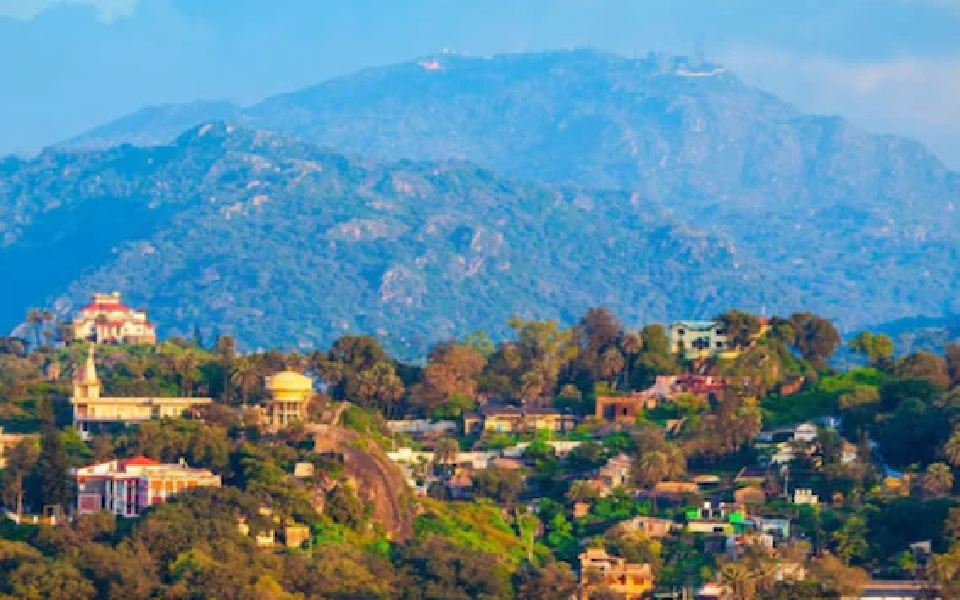
Jaipur, May 6 (PTI): Protests against a proposal to change the name of Mount Abu to 'Aburaj Teerth' and banning non-vegetarian food and alcohol in Rajasthan’s only hill station are mounting with locals saying it will severely impact the town's economy.
A letter from the department of local self government to the nagar parishad commissioner on April 25 had sought a "factual comment" of the commissioner regarding renaming Mount Abu as 'Aburaj Teerth' and prohibiting meat and liquor consumption in the open.
Looking at the religious significance of Mount Abu, a proposal to change the name to 'Aburaj Teerth' was passed in the board meeting of the Nagar Parishad in October last year. The proposal was sent to the state government, where it is pending.
After this, several MLAs of the ruling party wrote letters to Chief Minister Bhajanlal Sharma to change Mount Abu's name due to its religious significance and ban liquor and meat consumption in the open.
Local businessmen argue that Mount Abu is known worldwide by this name and changing the name will create confusion. Moreover, prohibiting non-veg food and liquor consumption will drastically reduce the number of tourists, they argued.
Twenty-three organisations, including Mount Abu Hotel Association, Laghu Vyapar Sangh, Sindhi Seva Samaj, Valmiki Samaj, Muslim Auquaf Committee, and Nakki Lake Vyapar Sansthan, handed over a memorandum, addressed to the chief minister to Sub Divisional Officer Dr Anshu Priya on Monday.
The SDM said that the proposal is pending at the state government level.
Saurabh Gangadia, secretary of Mount Abu Hotel Association, said that nearly five to six thousand tourists visit Mount Abu daily, and most of them come from neighbouring Gujarat, which is a dry state.
"The entire economy of Mount Abu is run on tourism activities and such a move to declare Mount Abu a 'Teerth' and prohibiting liquor and meat will destroy the economy," he said.
He claimed that nearly 15000 people were directly or indirectly associated with tourism-related activities in Mount Abu and if the number of tourists drops, it will have a negative impact on their livelihood.
"With a sharp decline in tourists, there will be an increase in unemployment and migration and business units will shut down," Dinesh Mali, secretary of Street Vendors Committee, said.
"There is absolutely no need to change the name and take such steps which have the potential of causing great harm to the economy and its people," he added.
The local business stakeholders said that the name 'Mount Abu' is internationally established and it features in global travel books, Google Maps, Wikipedia, tourism portals, travel advisories, foreign tour packages, international directories and academic texts.
According to the tourism department, the history of Mount Abu can be traced back to the Puranas. Known as "Arbudaranya" or "the forest of Arbhuda" in the Puranic Age, Mount Abu is described to have served as a retreat for sage Vashistha.
A popular mythological story associated with Mount Abu mentions a serpent named Arbhuda, who had saved the life of Nandi, Lord Shiva's mount, here.
Let the Truth be known. If you read VB and like VB, please be a VB Supporter and Help us deliver the Truth to one and all.
Rupee falls 20 paise to 95.43 against US dollar in early trade

Mumbai (PTI): The rupee depreciated 20 paise to 95.43 against US dollar in early trade on Tuesday as market sentiments remained fragile after renewed military exchanges between US and Iranian forces in the Gulf region.
Forex traders said investor anxiety due to instability in the Gulf is causing massive capital flight into safe-haven assets, with the US dollar acting as the primary beneficiary.
Moreover, Brent oil prices is hovering near USD 113 per barrel, maintaining pressure on oil-importing economies like India.
At the interbank foreign exchange market the rupee opened at 95.30 then lost ground to touch 95.43 against the US dollar, in initial trade, registering a fall of 20 paise over its previous close.
Rupee fell 39 paise to close at an all-time low of 95.23 against the US dollar on Monday.
"With oil boiling rupee on Monday fell to a closing low of 95.0875 and this morning the opening was still lower as it becomes more and more vulnerable when dollar index rises due to safe-haven buying and oil prices rise due to the continuous fighting in the Gulf Region," Anil Kumar Bhansali, Head of Treasury and Executive Director, Finrex Treasury Advisors LLP, said.
The higher oil prices will keep rupee sold off against the dollar as oil companies and FPIs intensify dollar buying, Bhansali added.
Meanwhile, the dollar index, which gauges the greenback's strength against a basket of six currencies, was trading at 98.51, up 0.15 per cent.
Brent crude, the global oil benchmark, was trading lower by 1.07 per cent at USD 113.22 per barrel in futures trade.
"Market sentiments remained fragile after renewed military exchanges between US and Iranian forces when Iranian forces launched fresh attacks in the Gulf as both sides sought to assert control over the strategic waterway," Bhansali said.
On the domestic equity market front, Sensex declined 361.62 points to 76,907.78 in early trade, while the Nifty dropped 134.90 points to 23,980.60.
Foreign Institutional Investors purchased equities worth Rs 2,835.62 crore on Monday, according to exchange data.