Sexual harassment allegations: CJI meets inquiry committee
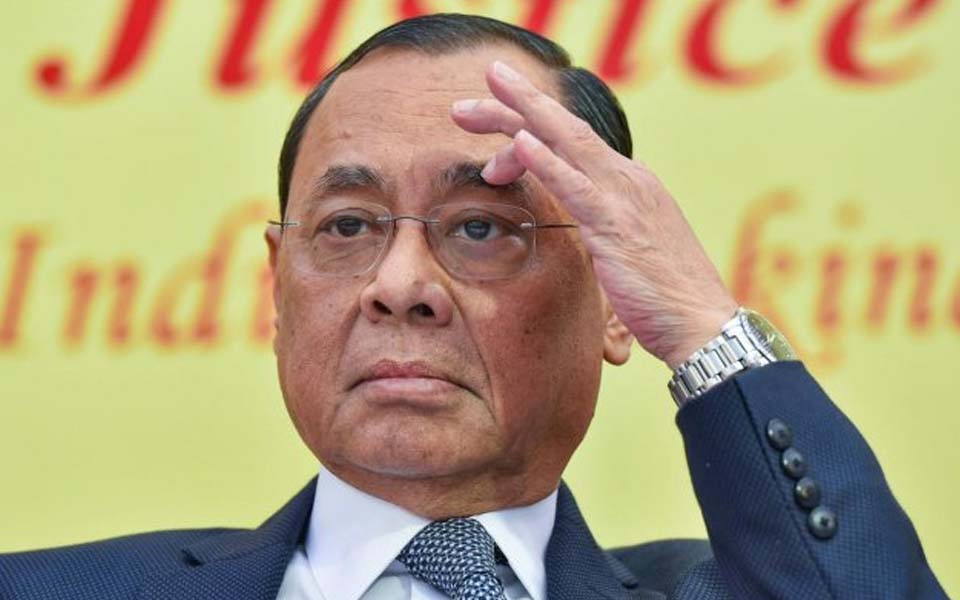
New Delhi, May 1: Chief Justice of India Ranjan Gogoi Wednesday appeared before an in-house inquiry committee looking into allegations of sexual harassment levelled against him by a former woman employee of the Supreme Court, an official source said.
This is for the first time in the history of Indian judiciary that a CJI appeared before a committee over allegations of sexual harassment, the source said.
"A letter of request was issued to the Chief Justice of India asking him to meet the committee and he responded it and he met the committee on this issue," the source told PTI.
The in-house inquiry committee is headed by Justice S A Bobde, who is the senior-most judge in the Supreme Court after the CJI, and its two other members are women judges of the apex court justices Indu Malhotra and Indira Banerjee.
The source said "the CJI met the committee and he has done the needful."
The woman, who levelled the allegations, walked out of the inquiry committee on Tuesday, raising objections over various issues, including denial of her lawyer's presence.
The source said the woman opted not to participate in the proceedings despite being told about the consequence that the committee can go ahead with its task ex-parte. She had appeared before the panel for three days.
"The fact that the committee would proceed ex-parte was told to the woman. She said okay and opted herself out from participating," the source said.
The woman in a press statement Tuesday described as "very frightening" the atmosphere of the in-house inquiry committee and said she was also "scared of her safety" as she was followed by two to four men while returning from the proceedings.
The woman also expressed apprehension that she was "not likely to get justice" from the panel which not only refused her request for presence of lawyer Vrinda Grover during the proceedings but also told her if she did not participate "they would proceed ex-parte".
She said the panel conducted the proceedings without video or audio recording and she was not even supplied with a copy of her statement recorded on April 26 and 29.
She claimed that the committee, set up on April 23, also did not inform about the procedure that was to be followed during the inquiry.
Justice N V Ramana, who was next in seniority to Justice Bobde, was a member of the committee but he recused himself after some reservations were expressed by the woman.
Justice Ramana's place was taken by Justice Indu Malhotra.
Justice Bobde on April 23 had told PTI "This is going to be an in-house procedure which does not contemplate representation of advocate on behalf of parties. It is not a formal judicial proceeding."
He had clarified that there is no time frame to complete the inquiry and future course of action will depend on "what comes out of the inquiry" which will be "confidential".
A three-judge bench headed by CJI on April 20 had held an unprecedented hearing in the wake of allegations made against Justice Gogoi.
The former apex court staffer had levelled the allegations against the CJI which was brought into public domain by some news web portals on April 20.
The woman had worked at Justice Gogoi's home office in Delhi and the allegations were carried by news portals based on the affidavit by her.
Describing the allegations of sexual harassment against him as "unbelievable", the CJI had convened the extraordinary hearing at the Supreme Court during which he said a larger conspiracy was behind it and he would not stoop so low even to deny these allegations.
Justice Gogoi had said some "bigger force" wanted to "deactivate" the office of the CJI.
Let the Truth be known. If you read VB and like VB, please be a VB Supporter and Help us deliver the Truth to one and all.
Sujit Nair raises concerns over speculation of DMK-AIADMK understanding to block TVK
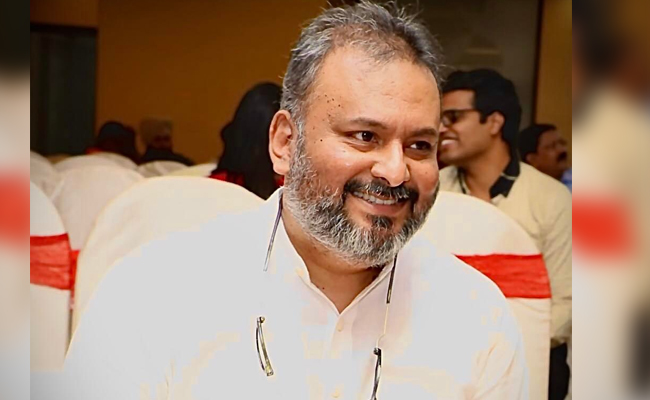
Chennai: Journalist and political commentator Sujit Nair has expressed concern over speculation that the Dravida Munnetra Kazhagam and the All India Anna Dravida Munnetra Kazhagam could explore a post-poll understanding to prevent Vijay-led Tamilaga Vettri Kazhagam from forming the government in Tamil Nadu.
In a social media post, Sujit Nair said the election verdict in Tamil Nadu reflected a clear public demand for political change and argued that the mandate should be respected irrespective of political preferences.
Referring to reports and political discussions surrounding a possible understanding between the DMK and AIADMK, he said he hoped such developments remained only speculative conversations and did not turn into reality.
Nair stated that if such an alliance were to take shape, it would raise serious questions about ideological politics in the country. He said TVK had emerged through a democratic electoral process and that the legitimacy to govern in a parliamentary democracy comes from the people’s verdict.
According to him, attempts to prevent an electoral winner from forming the government through unexpected political arrangements may be constitutionally valid, but many people could view them as politically opportunistic.
He further said that such a move could particularly affect the political image of the DMK, which has historically projected itself around ideology, social justice and opposition politics. Nair said that in ideological terms, the DMK appeared closer to TVK than to the AIADMK, and joining hands with its long-time political rival only to remain in power could weaken its broader political narrative.
He added that the same questions would apply to the AIADMK as well, as the party had spent decades positioning itself against the DMK and such an arrangement could create discomfort among its cadre and supporters.
Drawing a comparison with Maharashtra politics in 2019, Nair said he had expressed similar views when the Shiv Sena formed an alliance with the Indian National Congress and the Nationalist Congress Party after the Assembly elections.
He said post-poll alliances between long-standing political rivals often create a public perception that ideology and electoral mandates become secondary when political power equations come into play.
Nair also said such developments increase public cynicism towards politics and reinforce the belief among voters that ideology is often sidelined after elections.
He maintained that the Tamil Nadu verdict was emphatic and said respecting both the spirit and substance of the mandate was important for the credibility of democratic politics.