SEZ rules to be aligned with GST laws by month-end: Official

New Delhi, July 24 : The Special Economic Zones (SEZ) Rules, 2006 will be aligned with the Goods and Services Tax (GST) laws by July-end, a senior official said on Tuesday.
Speaking at an industry event organised by Assocham, Department of Commerce's Additional Secretary Bidyut Behari Swain said: "We have been working for a few months on the amendment of SEZ Rules, 2006 to synchronise it with the GST laws, this is under active consideration of the government."
"With due consultation process with Department of Revenue, I am glad to tell you that this fairly elaborate amendments of the rules is likely to come out now by the end of this month, it is almost at the final stage and we shall be issuing it," Swain was quoted as saying in a statement.
According to Swain, the Commerce Ministry has constituted a group of eminent persons to develop a road map for the future of SEZs.
"This group is deliberating today for the second time in this month itself, we really put a lot of hope on this and we feel that the ideas they come up with eventually in another one month or so would be really helpful for us in the policy making process," Swain said.
Noting that while the Department of Commerce consistently looks at facilitating ease of doing business by removing bottlenecks wherever they exist, it was observed that there is a possibility of different authorities handling administrative and financial matters being at slight variance with each other.
"We have taken up a project in which we would like to have a very clear set of guidelines regarding how administrative and financial matters by the authorities are carried out and we are hopeful that we will come out with a report in two months which should be implemented in three months," informed Swain.
At the same event, Central Board of Indirect Taxes and Customs (CBIC) Special Secretary and Member Customs Pranab Kumar Das said that CBIC will explore the possibility of connecting SEZ Online with NIDB (National Import Database) with the Commerce Ministry.
"We will definitely get in touch with Ministry of Commerce and try to find out whether the SEZ Online can also be housed in our system and with facilities provided to development commissioners and officials posted there so that they get benefit not only from SEZ Online but also the robust facility that is already available within CBIC," Das said.
Let the Truth be known. If you read VB and like VB, please be a VB Supporter and Help us deliver the Truth to one and all.
4 workers die after being buried under coal slurry in Jharkhand's Dhanbad
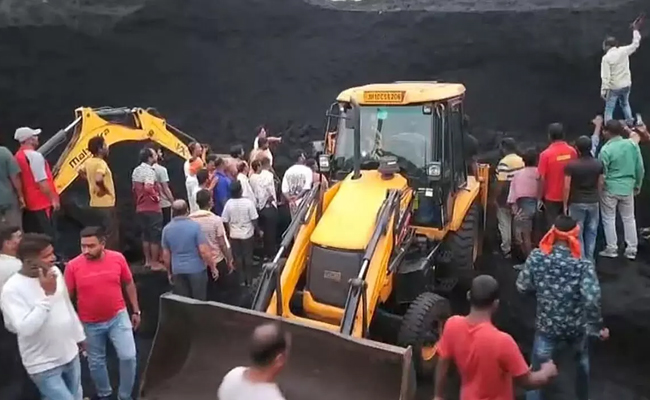
Dhanbad (Jharkhand) (PTI): At least four workers died after being buried under coal slurry in Jharkhand's Dhanbad district on Saturday, a police official said.
The incident took place at Moonidih coal washery in the command area of Bharat Coking Coal Limited (BCCL).
"Bodies of all four workers were dug out of debris during a rescue operation," Putki police station in-charge Waqar Hussain told PTI.
The incident took place when coal slurry was being loaded into trucks by workers, during which a large chunk of slurry fell and trapped several workers underneath, officials said.
The deceased have been identified as Manik Bauri, Dinesh Bauri, Deepak Bauri, and Hemlal Gope.
Meanwhile, the family members of the deceased and local villagers placed the bodies in front of the washery gate and began a protest.
They demanded compensation, jobs for dependents and action against those responsible for the incident.
Police and administration officials are trying to pacify the protesters, an official said.