Shah Commission is wrong; mining scam only around Rs 100 cr: Parrikar
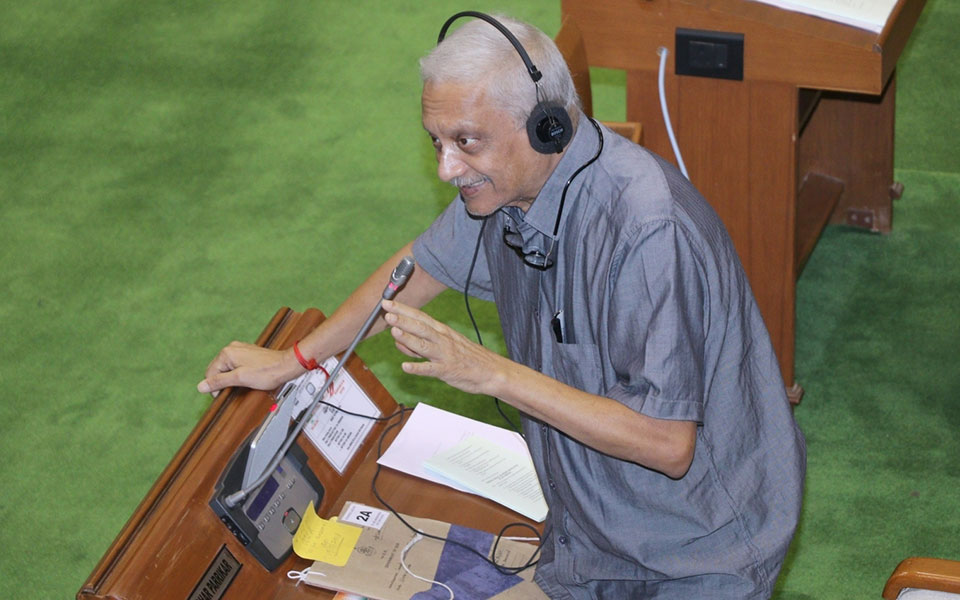
Panaji, July 25 : The Justice M.B. Shah Commission's estimate of Goa's mining scam being a whopping Rs 35,000 crore is based on a wrong survey and its real extent is unlikely to be more than Rs 50 crore to Rs 100 crore, Chief Minister Manohar Parrikar said on Wednesday.
"The Shah Commission report is based on survey carried out by hand-held gadgets... They did not do a proper survey. They should have done a proper survey," Parrikar told the assembly during Question Hour in reply to a question by former Chief Minister and Congress legislator Luizinho Faleiro.
Parrikar, who holds the mines portfolio, said the Commission had estimated that lease boundaries had been shifted by mining companies and an additional 580 odd hectares of land was appropriated by them.
But a detailed survey conducted by the state government has revealed that only around 10 hectares of land had been encroached upon by the mining companies, he added.
"The Shah Commission survey is wrong," Parrikar said, adding that the total value of the ore extracted does not represent a loss to the state government, thus lowering the actual loss estimated by the Commission.
"Value of the ore is not loss to the government. The loss to the government is of the royalty (on ore extracted)," Parrikar said.
He also said that the component of revenues earned by the mining sector in Goa's Gross Domestic Product (GDP) was only five per cent in 2018, in comparision to 2012, when it used to be 17 to 18 per cent.
Mining was stopped in Goa by a series of bans by the state and central governments, as well as by the Supreme Court in 2012.
Goa's GDP is approximately Rs 70,000 crore.
Parrikar also said that early resumption of mining in Goa, which was banned in February, was one of the top priority of the Bharatiya Janata Party-led coalition government in the coastal state.
The mining issue has been hanging fire in Goa, every since the apex court banned extraction and transportation of iron ore from 88 mining leases from March, while also directing the state to re-issue mining leases.
The is the second time is less than a decade that all mining in the state has come to a standstill.
The 2012 ban was later lifted by the apex court in 2014, but the court was forced to impose the fresh restrictions while slighting the state government for messing up with the lease renewal processes.
Let the Truth be known. If you read VB and like VB, please be a VB Supporter and Help us deliver the Truth to one and all.
4 workers die after being buried under coal slurry in Jharkhand's Dhanbad
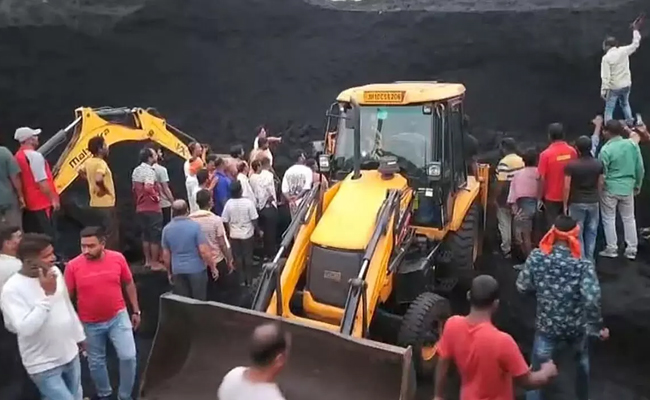
Dhanbad (Jharkhand) (PTI): At least four workers died after being buried under coal slurry in Jharkhand's Dhanbad district on Saturday, a police official said.
The incident took place at Moonidih coal washery in the command area of Bharat Coking Coal Limited (BCCL).
"Bodies of all four workers were dug out of debris during a rescue operation," Putki police station in-charge Waqar Hussain told PTI.
The incident took place when coal slurry was being loaded into trucks by workers, during which a large chunk of slurry fell and trapped several workers underneath, officials said.
The deceased have been identified as Manik Bauri, Dinesh Bauri, Deepak Bauri, and Hemlal Gope.
Meanwhile, the family members of the deceased and local villagers placed the bodies in front of the washery gate and began a protest.
They demanded compensation, jobs for dependents and action against those responsible for the incident.
Police and administration officials are trying to pacify the protesters, an official said.